Full Article
about Villanueva de Bogas
Small Manchego town; known for its Living Passion at Easter.
Hide article Read full article
First Light in a Toledo Village
At eight in the morning in Villanueva de Bogas, the air still carries the dampness of the night and the only sound is the occasional song of a blackbird. The early light, cool and restrained, slips through the openings of whitewashed windows. In the centre of the village, the main square remains empty, as if waiting for someone to cross it. There is no rush, no sense of urgency. The countryside seems to hold everything in a brief pause at dawn.
This small municipality in the province of Toledo sits around 652 metres above sea level. It does not demand attention, only a willingness to look closely. Its streets are lined with white façades and wrought-iron grilles, maintaining the straightforward layout of a settlement that has endured with few dramatic changes. The Iglesia de San Bartolomé stands at the heart of the village. With its austere façade and modest bell tower, it acts as a clear point of reference when navigating the surrounding streets. The building combines elements from different periods, reflecting the alterations and adjustments made over centuries.
Villanueva de Bogas is a place that can be understood without a list of sights. Its rhythm is defined less by landmarks and more by the steady continuity of rural life.
Open Horizons and Rural Landscapes
The land around Villanueva de Bogas is flat and expansive. Cereal fields stretch across the plain, turning a deep gold in summer. Olive groves extend towards the horizon, and vineyards bring patches of colour against the grey tones of the soil. The scenery is unmistakably Manchego, referring to La Mancha, the wide plateau in central Spain known for its agricultural traditions and open skies.
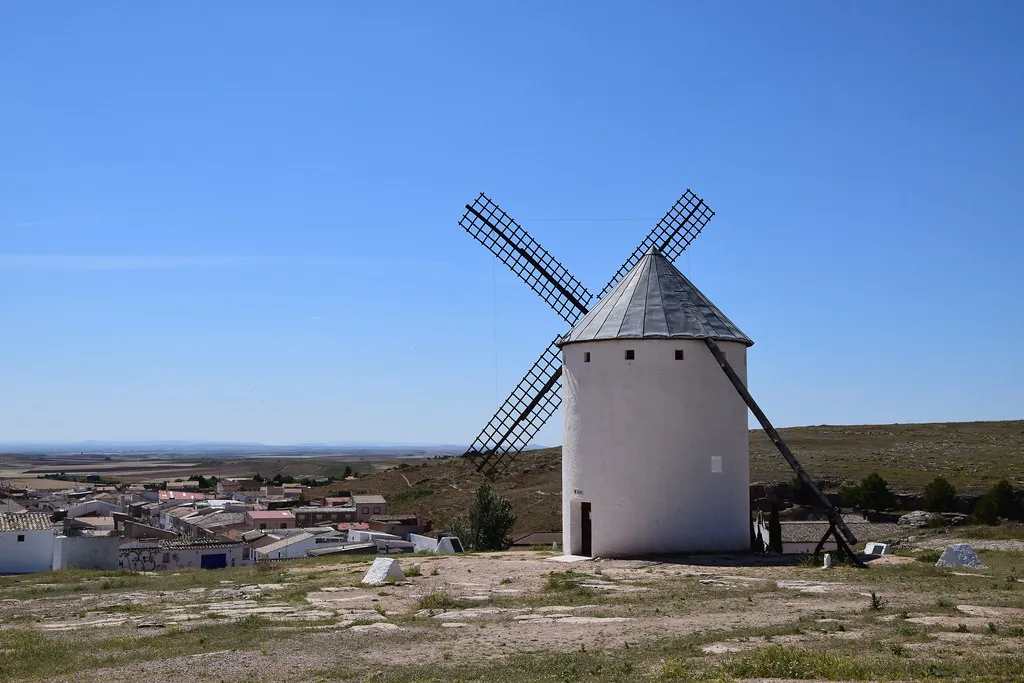
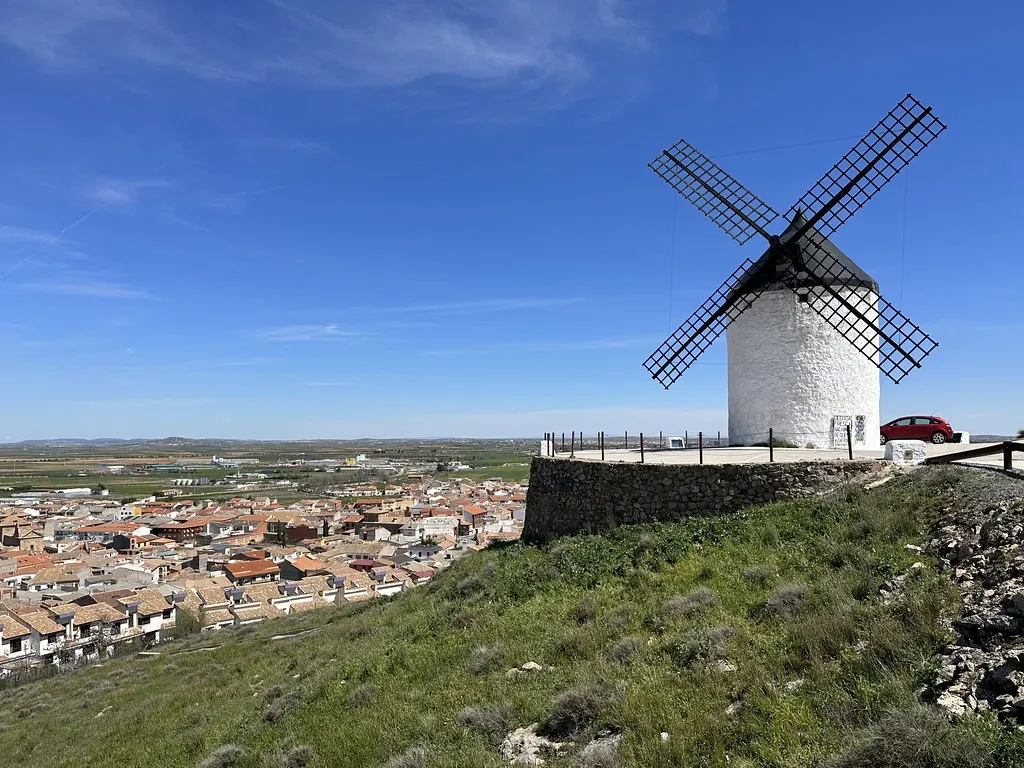
Although they are not within the village itself, the old windmills associated with La Mancha form part of the wider cultural landscape. They often prompt short drives to nearby towns, where these structures still punctuate the skyline. Here, the horizon seems to merge with the sky, particularly at times of day when the light is flatter and less intense.
The openness shapes the experience of being outdoors. There are no dramatic changes in elevation, no abrupt natural features. Instead, the land offers long perspectives and a sense of scale that becomes more apparent the longer one looks.
Walking, Cycling and Watching the Skies
For those who enjoy gentle walking or cycling, rural tracks link Villanueva de Bogas with neighbouring villages. The terrain does not present major gradients, making it accessible for unhurried outings. Even so, preparation matters. In both summer and winter, the area is exposed to strong sunlight and sudden shifts in wind.
The quiet encourages small pauses. It is easy to stop and observe the crops at different stages of growth or to listen to the dry rustle of leaves underfoot. There is little traffic and few distractions.
Birdwatchers may find opportunities in the surrounding countryside, especially during migratory periods when species typical of the Manchego ecosystem pass through. The open landscapes also lend themselves to photography focused on wide horizons and clear skies rather than on monuments or ornate architecture. The emphasis here is on space and light.
Flavours of La Mancha
Local cooking in Villanueva de Bogas is rooted in traditional recipes that reflect the agricultural character of the region. In village bars and simple eateries, gazpacho manchego appears on the menu. Despite sharing a name with the cold tomato soup from southern Spain, this version is different and is usually served hot. Migas with grapes, a dish based on fried breadcrumbs, and pisto made with fresh vegetables are also typical.
Manchego cheeses and homemade cured meats accompany these dishes, reinforcing the link between table and terrain. The ingredients are closely tied to what the land produces.
During the grape harvest, or vendimia, the village becomes more active. Work in the vineyards shapes daily life, and the process of winemaking takes centre stage. Arriving at this time offers the chance to observe how the fields are worked during one of their busiest periods. In autumn, once the harvest has ended, activities connected to wine culture reflect what is often the most dynamic stage of the agricultural year.
Traditions Through the Year
The festive calendar in Villanueva de Bogas preserves long-established customs. In August, the fiestas patronales in honour of San Bartolomé bring together residents and visitors. Processions move through the streets, and evening gatherings known as verbenas fill the square. The atmosphere is straightforward and communal, shaped more by participation than spectacle.
Semana Santa, or Holy Week, unfolds with silent processions along the narrow streets. There are no large-scale displays, yet the mood evokes older traditions that remain important to the community. The pace is measured, and the emphasis is on continuity.
In January, celebrations dedicated to San Antón include the blessing of domestic animals, a custom that reflects the village’s rural identity. Autumn, following the vendimia, sees further activities linked to wine and the close of the agricultural cycle.
These events do not transform Villanueva de Bogas into a major destination. Instead, they reinforce its role as a working village where traditions remain woven into everyday life.
A Place to Pause
Villanueva de Bogas can be explored comfortably in a few hours. A single morning is enough to walk its main streets, pause in front of the Iglesia de San Bartolomé or sit in the central square as the afternoon light begins to soften over the fields. There are no hidden stories waiting to be uncovered, no grand monuments demanding attention.
What becomes clear instead is how the village functions much like many others across La Mancha. It offers a vantage point from which to understand a way of life that is simple and direct, shaped by agriculture, seasonal rhythms and long horizons.
In the end, Villanueva de Bogas leaves an impression that is quiet rather than dramatic. The memory is less about specific sights and more about atmosphere: the cool air at eight in the morning, the empty square, the muted bell tower against a wide sky. It is a small corner of Castilla La Mancha that asks only for time and attentiveness, and rewards both with a sense of stillness rooted in the land itself.