Full Article
about Villar de Cañas
A farming village in the Záncara basin, known for energy projects.
Hide article Read full article
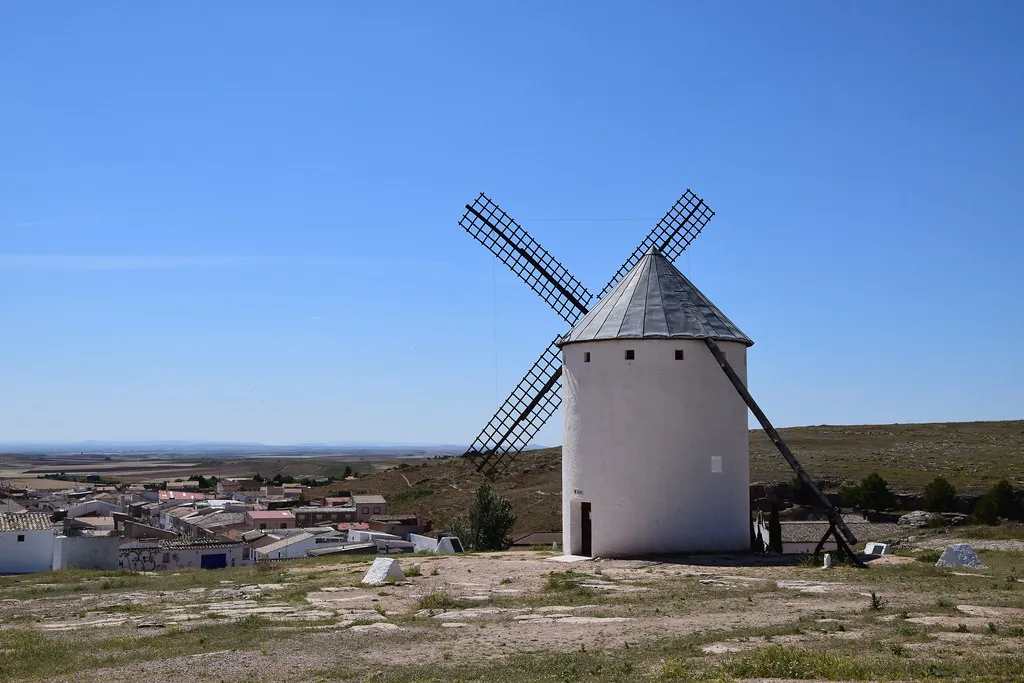
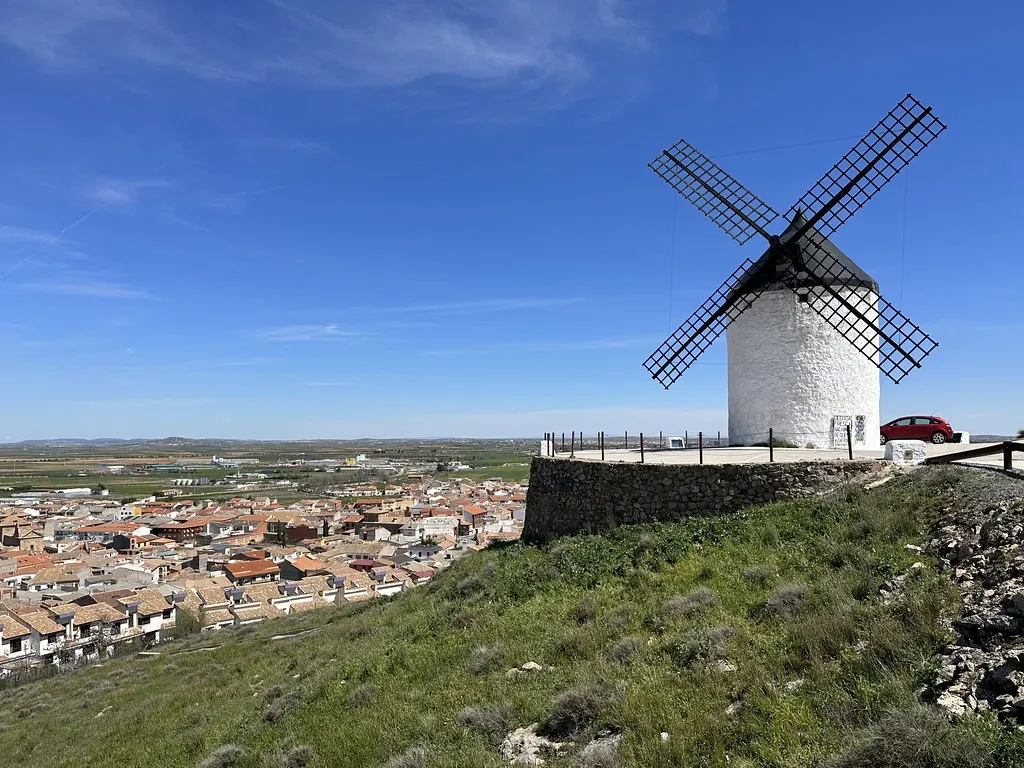
The wind arrives before the car does. On the road to Villar de Cañas, the asphalt runs straight and true through open fields. The sky occupies most of the view. This village in La Mancha, home to fewer than four hundred people, sits within a sea of cereal crops and long horizons.
Distance here is measured in light. The plain holds a bluish, cold tint at dawn. By late afternoon, the ground turns a dusty gold and the air smells of baked earth. The landscape does not surround the village so much as it simply continues, flat and exposed, shaping the day as much as any street.
A Walk Through the Streets
The parish church tower marks the central square. The building is sober, built from stone and masonry with the solid presence of centuries. It speaks of continuity, not ornament.
Low, whitewashed houses cluster nearby. Many still have large wooden gates meant for carts or storing tools. A slow walk reveals ordinary sounds: a radio from an open kitchen window, a shutter rolling up, footsteps in a near-empty lane. The quiet feels like a substance, not an absence.
At the western edge of town stands the chapel of Nuestra Señora del Carmen. Smaller and more discreet than the parish church, it lives in local memory. People mention it when they talk about summer festivities, linking the building to dates on the calendar that pull the community together.
The Plain Beyond the Pavement
Past the last houses, the Manchegan plain opens fully. Wheat and barley fields dominate, their colour shifting with the months. A brief, vivid green appears in spring. Summer brings ochre tones at harvest and a fine dust that hangs in the air.
These are fields for steppe birds. With patience, you might spot great bustards at a distance, moving slowly through the crops. Bring binoculars if you care to look, and keep a respectful distance—this is working land, with tracks and boundaries meant to be observed.
The landscape seems simple, but its changes are subtle. Light, wind, and season alter it weekly. No forests interrupt the view; few trees offer shade. That exposure defines everything here.
Paths Across the Flatland
Broad agricultural tracks lead from Villar de Cañas toward neighbouring villages. They run straight for kilometres. Walking or cycling them presents no real climb.
The challenge is the sun. In summer, the midday hours are harsh with so little shade. An early start or a late afternoon walk is better, when the light softens and the air begins to move again. The plain feels less severe then.
Secondary roads in the area also suit cycling. Traffic is usually light, but caution is necessary. The sense of space is constant—the road ahead disappears into a line where crops meet sky.
These routes connect Villar de Cañas to its surroundings practically, yet they underline its isolation. Movement here follows straight lines drawn for farming, not for scenery.
The Taste of the Kitchen
Food in this part of Castilla-La Mancha stays hearty. Gazpacho manchego appears in colder months—a hot stew of game and flatbread called torta, nothing like the cold tomato soup of the south.
Other dishes like gachas or morteruelo persist. They are old recipes meant to sustain long workdays, their ingredients born from farming and hunting.
Many homes still keep sheep’s cheese, cured sausages from the matanza, and homemade preserves. Talk of food brings out these details; each household has its own method, and the small variations matter to those who make them. What’s on the table follows the rhythm of work and season.
Marking Time Together
The festivities for the Virgen del Carmen anchor the summer calendar. For a few days, activity focuses on the square and her chapel, with processions and music after dark.
August shifts the pace. Families who live elsewhere return, and the village breathes differently for weeks. Simple activities move outdoors, familiar faces reappear on benches.
Holy Week is observed with restraint. Processions move slowly through the streets, neighbours following the pasos in a quiet, reflective atmosphere that contrasts with summer’s animation.
These moments punctuate the year. They don’t transform the place, but they change its tempo and draw people into shared space.
A Practical Note on Arrival
From Cuenca, the drive takes about an hour. From Madrid, it’s closer to two—first on motorways, then on secondary roads that cut across the plain. You will need a car.
If you walk into the countryside, carry water and sun protection. La Mancha is open terrain; summer heat and winter cold both shape how you experience it.
In the last hour of daylight, when the wind drops and the horizon bleeds orange, Villar de Cañas grows still. Only the sound of air moving through dry stubble remains, and maybe a distant tractor heading home. That’s when you feel the weight of this sky.