Full Article
about Villar de la Encina
Town with castle ruins and a La Mancha feel; crossroads
Ocultar artículo Leer artículo completo
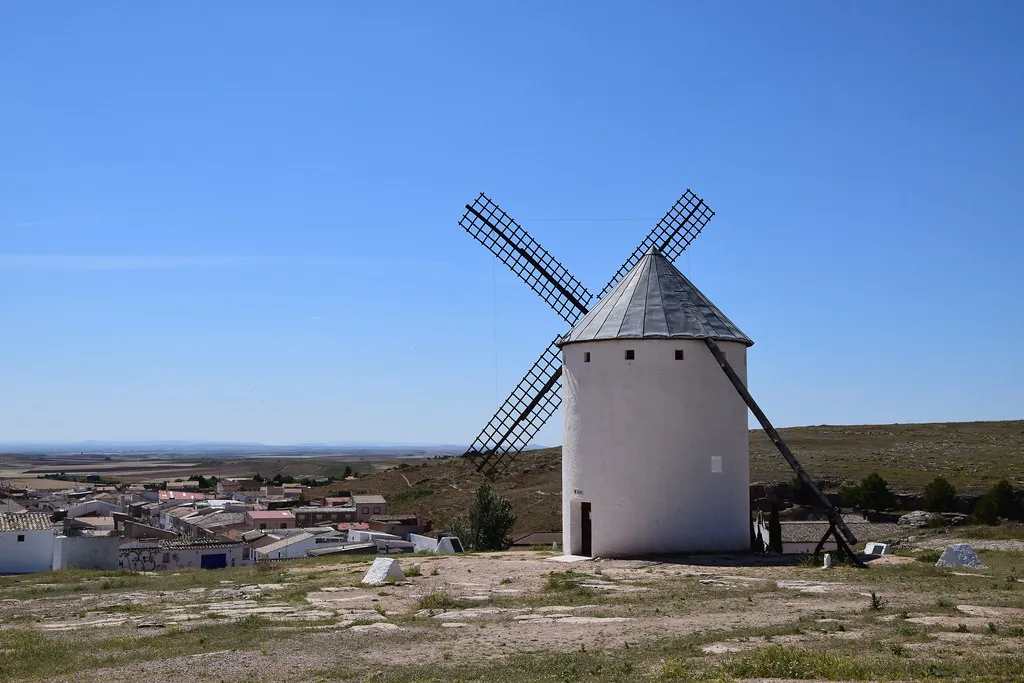
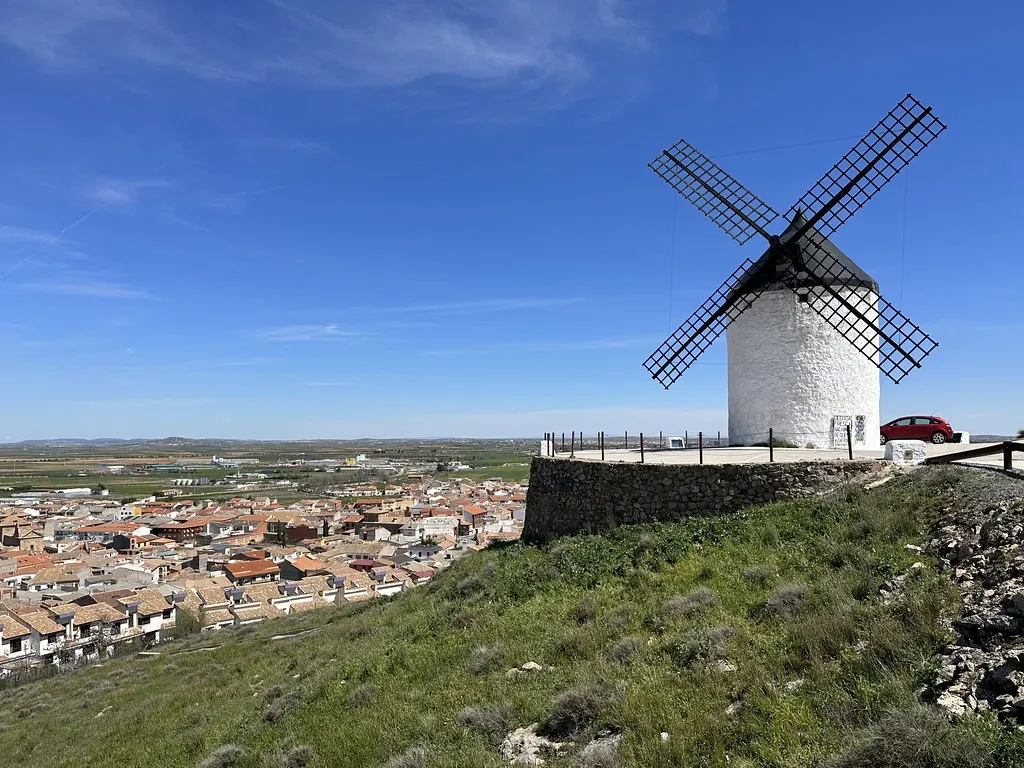
The church bell strikes noon and the only other sound is grain drying in the afternoon breeze. At 840 metres, Villar de la Encina sits high enough for the air to feel thinner, cleaner, almost sharp in the lungs. Stand on the low rise behind the village and La Mancha spreads out like a fawn-coloured ocean: wheat, barley, more wheat, then the sudden dark punctuation of an holm oak. Britain has nothing this open. You could walk for an hour and the horizon would simply walk with you.
A Plateau that Remembers Mountains
Most maps mark the place with a microscopic dot 127 km south-east of Madrid-Barajas. Leave the motorway at Tarancón, climb the CM-312, and the land begins to tilt in gentle waves. Villar de la Encina appears suddenly: 161 inhabitants, one bread van, two bars, three streets of stone-and-whitewash houses that look older than their repairs. The altitude means winter can arrive overnight; locals talk of years when snow drifted against front doors and the grocer skied down to open up. In July the same height brings relief: temperatures still top 34 °C, but after sunset the mercury slips to 16 °C—pack a fleece even in midsummer.
The village name owes everything to the encinas, the evergreen oaks that survive here on rainfall that wouldn’t fill a Sheffield watering can. Their shade keeps the soil cool enough for mushrooms in autumn; in spring the acorns feed free-range pigs that end up as lacón, a shoulder ham sweeter than the more famous jamón ibérico. Ask in Bar El Parque and Antonio will carve a plate for €4.50, wiped across the board so the oil draws a translucent map of La Mancha.
What Passes for Sights
There is no ticket office, no audio guide, no coach park. The fifteenth-century parish church of San Andrés presides over a plaza barely larger than a tennis court; its bell tower doubles as the village mobile-phone mast, which explains why WhatsApp works in the porch but not the square. Inside, the air smells of candle wax and damp stone; look up and you’ll see ceiling beams recycled from old cart axles, the wood scarred by decades of grain dust. The altarpiece is gilded, almost flashy, but the real curiosity hangs to the left: a tiny Roman tablet repurposed as a holy-water stoup—proof that reuse is not a modern invention.
Opposite the church, Casa Grande squats behind an iron gate. It isn’t a palace, just the biggest house villagers could manage in 1780: twelve rooms around a cobbled courtyard where the well still works. Knock and Doña Lola may show you the wine press, the bread oven, the attic where grain was stored within reach of rats and priests. She asks for nothing, accepts anything, and will tell you—if you understand rapid Castilian—that every family here once kept a pig upstairs until December. The smell, she says, was “character-building”.
Walking Without Waymarks
Official hiking routes stop 30 km west in the Segura highlands, but Villar de la Encina sits on its own lattice of agricultural tracks. A four-kilometre loop heads south past the cemetery, dips into a dry riverbed, then climbs onto the cereal plateau. There are no signs; download the track beforehand or simply keep the village water tank on your left shoulder and you’ll circle back by sunset. In April the fields glow emerald; by late June they have bleached to biscuit gold. Kestrels hang overhead, and if you sit still long enough a hoopoe may flap down to probe the verge for beetles.
Serious walkers can string together a 14 km figure-of-eight that links the hamlets of Fuertescusa and Valdecabras. The gradients are gentle but the altitude makes the route feel higher than any Peak District stroll; carry more water than you think necessary—there is no pub, no tap, no shade except the encinas. The reward is silence so complete you can hear your own pulse.
Night Comes Quickly
Street lighting amounts to seven lamps on a timer that gives up at 01:00. Walk uphill past the last house and the plateau drops into black. On clear nights the Milky Way looks smeared on with chalk; shooting stars arrive every few minutes, and satellites pass like obedient trains. The village guesthouse leaves blankets on the terrace for exactly this purpose. Midnight temperatures can dip below 10 °C even in August—astronomy is more comfortable with socks and a thermos of calimocho, the local students’ mix of red wine and cola that tastes better than it deserves to.
Eating (and the Day Not to Do It)
Monday is dead. Both bars close, the bakery shutter stays down, and even the dogs seem to fast. Arrive Tuesday to Saturday and options open, though not widely. Breakfast is tostada—rubbed tomato, olive oil, perhaps a slice of the local morcilla if you ask nicely. Lunch, served sharply at 14:00, might be caldereta de cordero: lamb shoulder simmered with bay and paprika until it collapses, then bulked out with chips for the tractor drivers who drift in still dusty. Vegetarians get pisto manchego, a chunky ratatouille crowned with a fried egg. A three-course menú del día costs €11 and includes a glass of rosado from Campo de La Guardia, light enough for anyone weaned on Provence.
Supper is more elusive. Bar El Parque will stay open if you phone before 19:00; otherwise drive 15 km to Villalgordo where Casa Juan has roast suckling kid at weekends (reserve, €22). Buy Manchego to take home at Quesos La Solana in neighbouring Carboneras de Guadazaón—ask for semicurado if the fully cured wheels make your tongue tingle.
Getting There, Getting Out
Ryanair, EasyJet and Iberia all shuttle daily from the UK to Madrid. Hire cars live in Terminal 1; allow ninety minutes on the A-3 and AP-36, then twelve final kilometres on the CM-312 where goats have right of way. Public transport exists but feels like punishment: train to Tarancón, bus to Villalgordo, lift or taxi for the last stretch—journey time hovers around four hours each way. Fill the tank before leaving the motorway; the village petrol pump opens “whenever Miguel feels like it”, seldom before 10:00.
Phone reception wobbles on Vodafone and disappears on EE; offline maps are essential. The nearest cash machine is back down the hill in Villalgordo—neither bar accepts cards and the guesthouse prefers bank transfer on booking.
The Honest Verdict
Villar de la Encina will not change your life. It offers no souvenir shops, no zip-wires, no flamenco nights. What it does, stubbornly, is slow the pulse. You will read two chapters of a book before realising you haven’t checked your phone. You will taste lamb that spent its life within sight of your table. And you will drive away wondering why British villages stopped trusting silence to entertain. Come for one night, two at most; stay longer and you may find yourself measuring rainfall and discussing fertilizer brands like everyone else.