Full Article
about Villarejo de Fuentes
Village with a rich religious heritage and artisan cheeses; history tied to its springs.
Hide article Read full article
A Small Town on a Wide Horizon
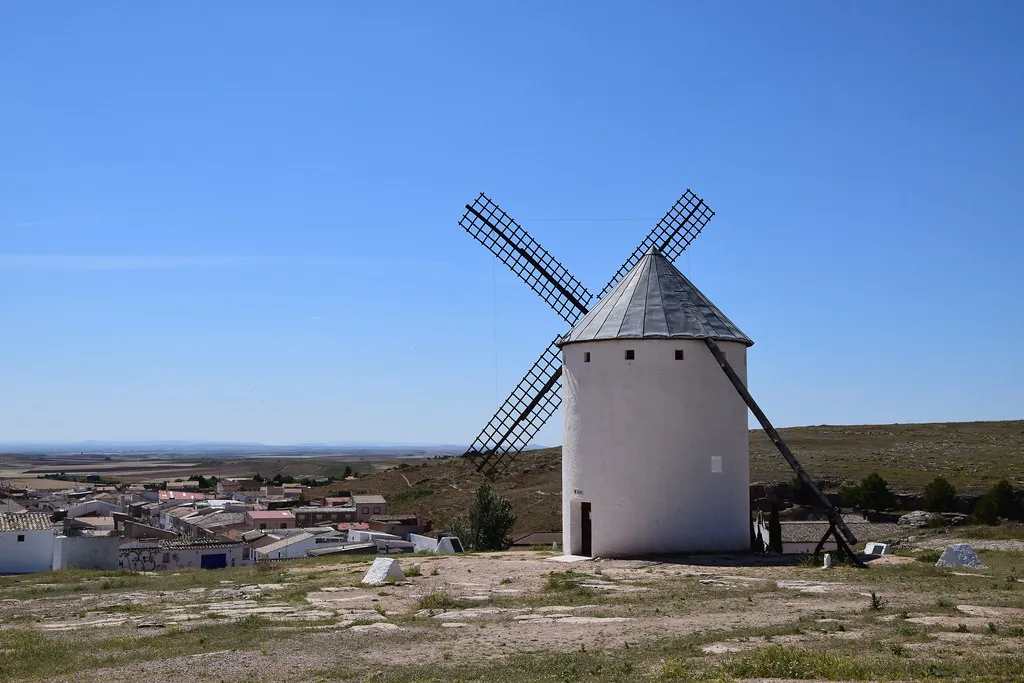
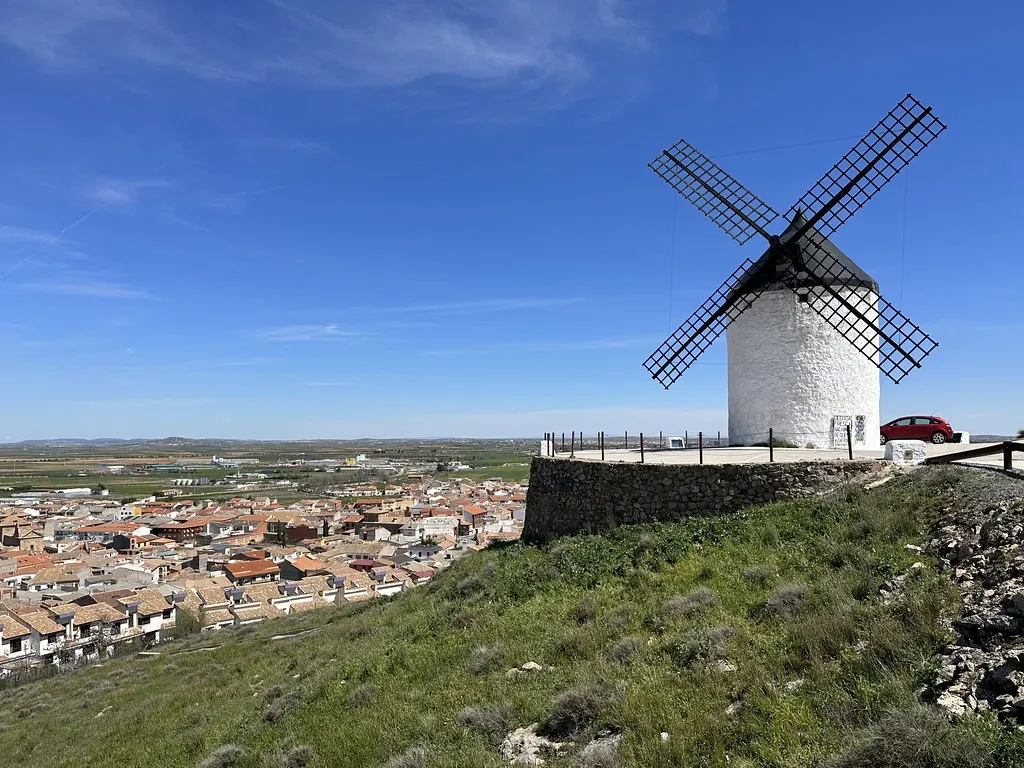
Villarejo de Fuentes lies around 15 kilometres west of Cuenca, set in the middle of a vast cereal-growing plain. With a population of about 390 people, it does not try to disguise its size. The land around it is flat and open, and the town’s structure follows traditional rural patterns: simple houses, solid wooden gateways and whitewashed fences.
The most practical way to arrive is by car, leaving it in the Plaza Mayor. From there, Calle Mayor runs straight towards the church. The streets around the centre are few and narrow, lined with adobe and whitewashed homes. Parking can be tight in summer if you do not arrive early or look further out. Leaving the car at the top of the village and walking down is often the easiest option, and the return uphill can be a worthwhile bit of exercise.
Life here still revolves around the land. Villarejo de Fuentes is part of an agricultural Castilla-La Mancha, where extensive crop farming shapes both the landscape and daily routine.
The Church and the Streets
The Iglesia de la Asunción, built in the 16th century, dominates the main square. Its tower can be seen from miles away across the plain, a vertical marker in a horizontal world. The façade combines stone and brick, with a doorway that is simple yet well preserved.
The old centre is small, but it rewards a slow walk. Details matter: ironwork on old gates, coats of arms set into walls, traces of a farming past still visible in the architecture. Several houses retain underground cellars built using rammed earth techniques. These caves were used for centuries to store wine at a steady temperature. Today, few are regularly visited, but they remain part of the town’s fabric.
The layout is compact, with only a handful of streets branching off from the centre. There is little in the way of tourist infrastructure or interpretative panels. Instead, the sense of place comes from what is still in use, from doors that open directly onto the street and buildings that continue to serve practical purposes.
Beyond the village, the fields stretch in every direction. Wheat, barley and sunflower dominate depending on the season. In summer the land turns gold; in spring it is an intense green; in winter the palette shifts to ochres and greys. There are no dramatic bends in the road or steep inclines. The terrain is broad and level, and the light is often clear and low for much of the day.
Walking the Agricultural Landscape
Rural tracks lead out of Villarejo de Fuentes towards longer paths connecting with other villages such as Polán or Pinarejo, places similarly shaped by arable farming and livestock. These routes are wide and primarily designed for agricultural machinery rather than experienced hikers. Signage for long-distance walking is limited.
If planning to leave the main nucleus and explore further, it is advisable to be prepared with offline maps or GPS. There are few information boards and little waymarking. The appeal lies in following the lines of the land itself: straight tracks cutting through crops, distant farm buildings, and the constant presence of sky.
Birdlife is part of this rural setting. Huboardas and sisones, both males and females, can be seen flying over the open fields or perched in nearby birch trees when the strong inland wind of La Mancha blows. They are usually at a distance, so binoculars are useful. With patience, their silhouettes and movements become distinguishable against the plain.
The experience of walking here is defined by scale and exposure. There is little shade and few landmarks beyond the church tower and occasional farm structures. The rhythm is steady, following tractor paths that connect one stretch of cultivation to another.
Food, Wine and Family Traditions
Local gastronomy reflects what the land provides. Dishes are straightforward and rooted in tradition: roast lamb cooked in traditional ovens, stewed meats, and Manchego cheeses. Both fresh and cured varieties are produced nearby by small family-run cheesemakers. Each producer follows their own recipe, passed down through generations, and there is no such thing here as bland, generic cheese.
A short distance from the village are small wine-producing operations that continue to work with artisanal methods. They make red and rosé wines using old native grape varieties such as Malvar and Airén. Many of these bodegas can be visited if contacted in advance. It is through these visits that the meaning of making wine without modern machinery becomes clear, from vine to bottle.
Professional activity in Villarejo de Fuentes still revolves largely around traditional extensive cultivation. In recent years, some small family wineries have complemented this agricultural base, selling directly to the public during certain times of the year, especially in autumn and winter. Production remains limited and seasonal.
The presence of underground wine cellars in private homes connects with this broader winemaking culture. Even if not all are open or actively used, they point to a continuity between past and present methods of storing and producing wine.
Festivities and Local Memory
Villarejo maintains traditions that are as straightforward as the town itself. The patron saint festivities take place in August, dedicated to Nuestra Señora de la Asunción. During these days, old loudspeakers are set up for local popular music, and short processions pass through the streets. There are no large sculptural floats or elaborate displays. Instead, the celebrations include small evening dances in front of the town hall or in nearby squares.
The calendar also includes Semana Santa, observed here for decades. Several brotherhoods process through the simple streets. There are no complex pasos or imported figures, yet ancestral customs are respected, linked to those who lived and worked in this agricultural part of Castilla-La Mancha.
Historical references in the town include chronicles connected to Doña Isabel Garcés and Don Juan López, both associated with agricultural matters. The emphasis is on recorded local history rather than invented visitor circuits designed to attract passing tourism.
Villarejo de Fuentes offers an encounter with a working rural environment. The focus is direct: hard soil, open land, and generations shaped by cultivation. For those interested in understanding how traditional farming communities in Castilla-La Mancha continue to function, the village presents its reality without embellishment.