Full Article
about Villarejo-Periesteban
Farming town with a notable church; Manchegan traditions still alive.
Hide article Read full article
A Village Shaped by Time and Work
Villarejo-Periesteban sits in the province of Cuenca, a small place where time feels unhurried without trying to prove a point. There are no headline monuments or dramatic viewpoints competing for attention. What defines it instead is a sense of continuity: land that has been worked for generations and a rhythm that follows that effort.
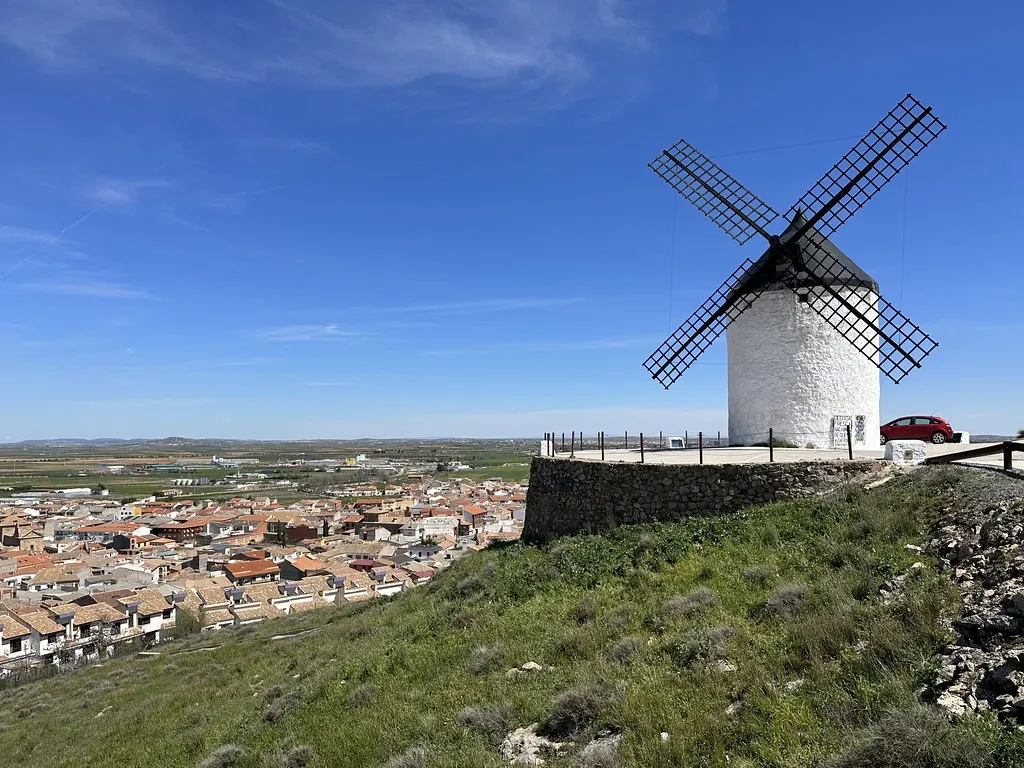
The village brings together two historic nuclei, linked for centuries. Its layout keeps the straightforward character typical of La Mancha settlements. Streets are narrow, in places paved with cobbles, and lined with houses built for function rather than display. Thick walls help regulate the temperature, while red roof tiles add a familiar tone across the skyline.
The most visible landmark is the parish church of San Pedro, built in the 16th century. Its tower, finished in red brick with simple detailing, acts as a clear reference point when approaching from outside. It is not imposing, but it anchors the village visually and historically.
Streets, Houses and Everyday Spaces
A walk through Villarejo-Periesteban rarely takes long, yet it reveals how daily life is organised. Main routes such as Calle Mayor and Calle La Fuente lead towards small squares. These spaces gather a few public fountains and scattered trees, offering moments of pause rather than spectacle.
The houses reflect practical needs. Wooden gates stand without decoration, iron grilles protect windows, and interior courtyards often contain earthen planters. These patios become especially important in summer. Many are opened up to provide shade or to host informal family gatherings, turning private spaces into shared environments for a while.
Nothing here feels arranged for visitors. The layout, the materials and the way spaces are used all respond to routine rather than presentation. That is part of what gives the village its particular atmosphere.
Fields That Shift With the Seasons
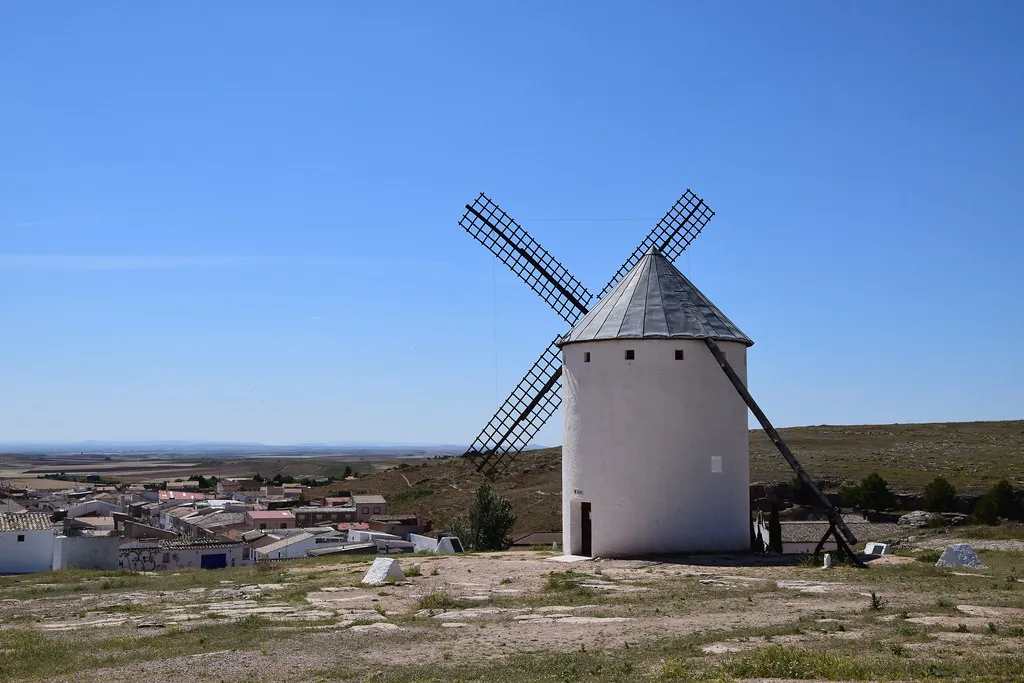
Beyond the centre, the landscape opens out quickly. Fields stretch far in every direction, forming a changing patchwork of almond trees, olive groves and cereal crops. The colours shift throughout the year, from fresh greens in spring to dry, muted tones in the height of summer.
From slightly elevated points near the village, it is possible to see how cultivated land blends into areas of low scrub and scattered bushes. There are no extensive marked routes or long-distance trails. Instead, a network of clear rural paths allows for simple exploration, whether that means walking between fields or heading towards small hills to look out over the plain.
These paths suit those who prefer wandering without a strict plan. Tracks begin within the village and lead outward into quieter areas. In spring, cereal fields bring a bright green backdrop; in summer, the ground hardens and the colours fade, but walking remains easy. Silence often dominates, broken occasionally by the sight of a bird of prey circling high above or small steppe birds moving across the dry terrain.
Nearby Roads and Short Detours
Secondary roads connect Villarejo-Periesteban with nearby villages such as Villar del Humo and Las Valeras, both around 10 kilometres away. These short distances make it easy to broaden the view of the surrounding landscape and see how similar patterns of life extend across the region.
Cycling along these roads offers a particular kind of experience. Traffic tends to be light, and the routes stretch out in long, straight lines. The terrain shifts gently, interrupted now and then by shallow dips or small climbs. It is a landscape that reveals itself gradually rather than through dramatic changes.
Food Rooted in the Land
Local food follows the same practical logic as everything else in Villarejo-Periesteban. Dishes rely on ingredients that come directly from the surrounding land and traditions that have been passed down over time.
Migas, made from day-old bread, remain a staple. Roasted dishes appear as well, including lamb such as cordero lechal. Other familiar preparations include gachas and morteruelo, both closely linked to local celebrations and gatherings. These are not elaborate recipes, but they reflect a way of eating shaped by availability and necessity.
Viticulture has also played a role in the area. The grape harvest, or vendimia, was once a central moment in the yearly cycle. Some farmers still maintain older vineyards, and memories of more productive periods remain part of local conversation.
Festivities and Shared Traditions
Festivals in Villarejo-Periesteban follow a calendar tied to agricultural cycles and religious observances. In August, the village celebrates its patron saint, San Pedro Apóstol. The festivities are modest in scale. Verbenas, or open-air dances, take place in simple settings within the village. Processions move through the main streets, carrying religious images such as the Virgen del Rosario. Alongside these events, informal gatherings bring neighbours together to talk and share time in the shade.
Holy Week also leaves its mark. Palm Sunday still includes a procession that, while simple, holds meaning for those who take part. In May, romerías lead to a nearby hill dedicated to Nuestra Señora de las Angustias, combining movement through the landscape with devotion.
These occasions are not designed to draw large crowds. Their purpose is more inward-facing, reinforcing a sense of belonging that continues to shape life in small communities like this one.
Winter brings its own customs. Around Christmas, traditional songs are still heard in the days leading up to the celebrations, and families gather around the fire. The atmosphere remains far removed from any organised tourism, rooted instead in habit and continuity.
Getting There and What to Expect
Villarejo-Periesteban lies roughly 110 kilometres from the city of Cuenca. Reaching it requires little more than the intention to go, but expectations matter. This is not a destination for museums or refined dining.
The experience is quieter and more direct. A stop along the way, even for a few minutes, can be enough to notice the air after a summer storm or the scent of damp earth rising from the fields. Those small details capture what the village offers.
Villarejo-Periesteban presents a clear picture of life connected to the land, without added layers or attempts to frame it as something else.