Full Article
about Villares del Saz
Well connected by the A-3; monumental church and farmland setting
Hide article Read full article
By mid-morning on a dirt street that runs through the centre of Villares del Saz, the sound of a tractor pulling a trailer of hay blends with voices drifting out of an open doorway. Light falls hard on the whitewashed façades and bounces off windows with a glare typical of the high plains. The stillness here is not complete silence. It is the feeling that everything moves to a different rhythm, set by the fields and the hours of daylight.
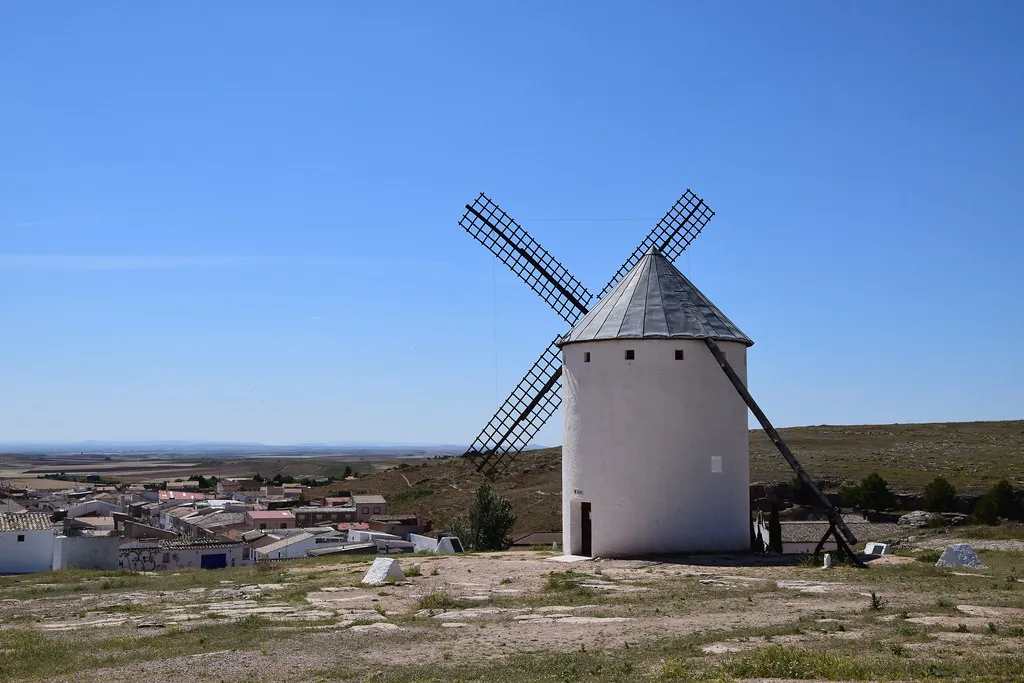
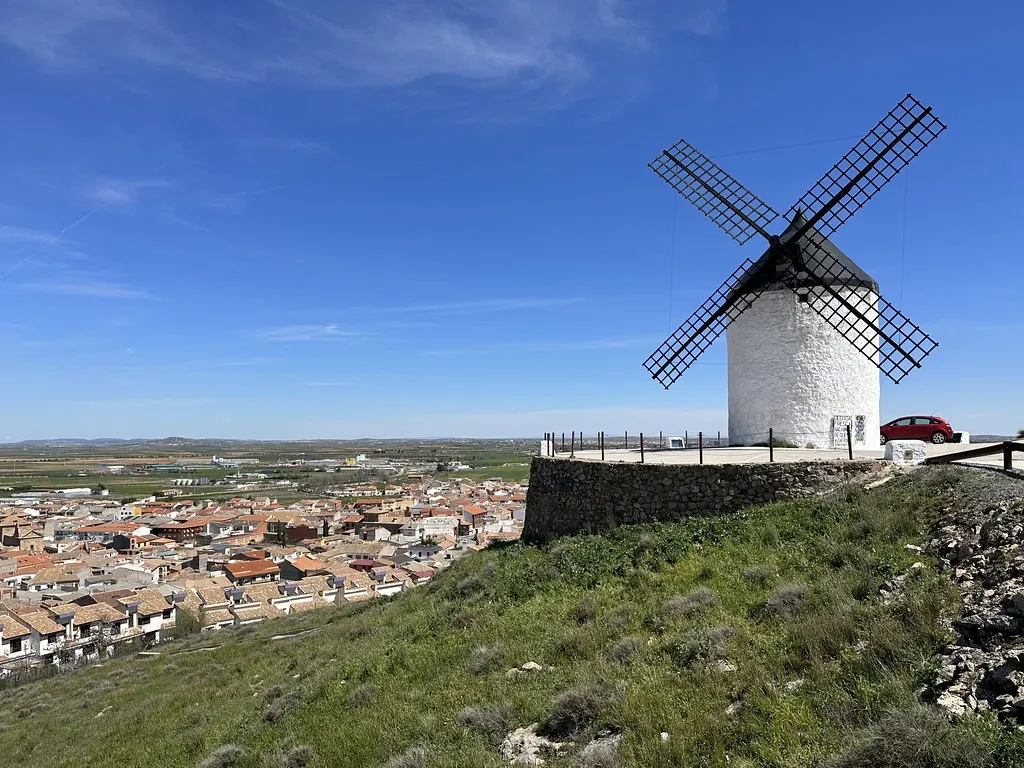
The village sits in the province of Cuenca, at around 850 metres above sea level. Agriculture remains central to daily life. All around stretches the plain of La Mancha, fields of cereal that shift in colour with the seasons: fresh green in spring, dry gold when summer arrives. Scattered holm oaks and grassy embankments break up the landscape, quiet signs of land shaped and worked over generations.
The church and the centre
Architecture in Villares del Saz is simple and practical. Low houses, many lime-washed, line the streets. Metal grilles guard the windows, and wide gates sometimes open onto courtyards of compacted earth.
The parish church of Santa Eulalia stands in the main square. Its origins date back to the 16th century, although later alterations are visible in the mix of materials. The bells still mark the hours. When they ring, the sound carries along the short streets of the old centre.
It does not take long to walk across the village. In ten or fifteen minutes the main streets are covered. A closer look at some doorways reveals coats of arms or inscriptions carved in stone, remnants of older houses that have changed over time. On side streets, where the sun falls directly in summer, patios appear behind gates with vines trained overhead for shade. At the start of the season, bunches of grapes still hang green.
Tracks through the cereal fields
The landscape around Villares del Saz explains much about this part of inland Castilla‑La Mancha. Agricultural tracks begin at the edge of the village and connect with neighbouring municipalities such as Villar de Domingo García and El Pedernoso. These are wide dirt paths, used by tractors and by anyone heading out for a walk.
Winter mornings can bring frost that coats new shoots, the ground crunching underfoot. In summer the pattern reverses. By mid-afternoon the air grows heavy and little stirs until the sun drops.
Walking these tracks, there is often movement along the margins. Partridges dart between furrows, a harrier may glide low over the fields and, with luck, a great bustard can be spotted in the open expanses nearby. The setting is broad and exposed. There are no dramatic viewpoints or sudden shifts in scenery, only the steady sense of being in working farmland.
Dusk and a dark sky
Evening changes quickly here. As the sun sinks, façades take on ochre and pink tones for a few minutes before giving way to a deep, clear blue.
Night tends to be very dark. There are no large towns close by, and when the sky is clear the stars are easy to see. On summer nights, standing quietly on the outskirts, the most likely sounds are crickets, a distant door closing or the engine of a car passing along the road.
The absence of heavy traffic and major infrastructure shapes the atmosphere. Once daylight fades, activity contracts. The village settles into a calm that feels tied to its rural surroundings.
Home cooking and Mancha traditions
Food in Villares del Saz follows the broader culinary line of the province of Cuenca: solid dishes designed for long working days. Morteruelo appears on many tables. This thick, spiced pâté-like preparation is spread on bread and served warm. Lamb stews are common, as are dishes made with ajo arriero, a traditional mixture that typically combines salt cod, garlic and oil.
Home-made cured meats and Manchego cheese form part of the regular pantry. The emphasis is on food prepared within families rather than on facilities aimed at visitors. When large celebrations or gatherings take place, cooking and sharing tend to move between houses. It is a pattern rooted in custom rather than commerce.
Throughout the year, religious dates mark the calendar. Processions during Holy Week and gatherings at Christmas are held in the church, simple occasions without elaborate staging. The focus remains on neighbours rather than spectators.
Quiet roads and summer festivities
The secondary roads around Villares del Saz are flat and carry little traffic, something many cyclists appreciate. Even so, two factors shape any ride. In summer the heat builds early in the day, and the wind across the plateau can rise without warning.
Routes run between open fields and agricultural holdings. There are no major lookout points and no abrupt changes in terrain, but there is a direct sensation of pedalling through an active farming landscape. The horizon often feels wide and uninterrupted.
August brings the village’s main celebrations, dedicated to Santa Eulalia. During these days Villares del Saz changes noticeably. Families who live elsewhere return, houses fill up and the streets carry more movement than at other times of the year.
Short processions and religious acts are organised, alongside traditional games. Participation is close and familiar, shaped more by residents and returning families than by outside visitors. The scale remains modest.
Getting there and planning a visit
The usual way to reach Villares del Saz is by car from the city of Cuenca, following provincial roads or linking up with other secondary routes in the area. Access is straightforward. Public transport, however, is not frequent, so planning ahead is advisable.
There is no extensive visitor infrastructure. A stay here revolves around walking the streets, heading out along farm tracks, observing the shifts of light and season, and understanding how agriculture continues to define daily life.
Villares del Saz does not present itself with grand monuments or headline attractions. Its character lies in the cadence of tractors on dirt roads, in bells marking the hour from Santa Eulalia, and in fields that change colour as the year advances. For those interested in the interior of Castilla‑La Mancha, it offers a direct view of life on the high plains.