Full Article
about Villarrubio
Historic crossroads; Renaissance church and quiet atmosphere
Hide article Read full article
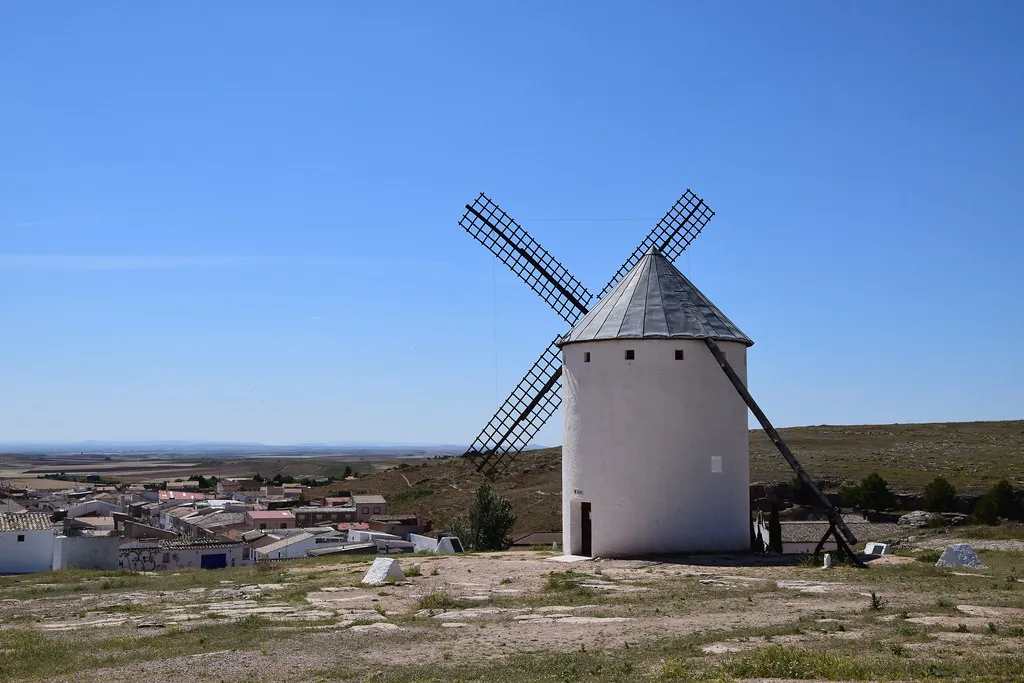
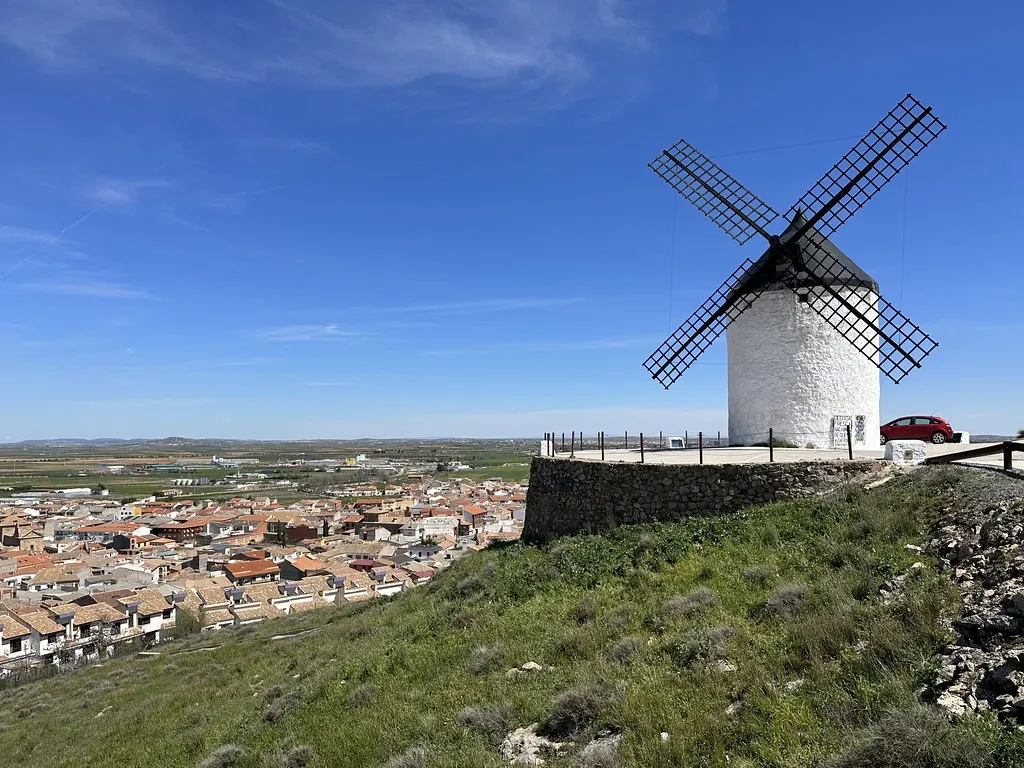
Late in the afternoon, when the sun drops low over the fields of La Mancha, the streets of Villarrubio fall almost silent. A door stands open somewhere, the faint echo of a television drifts from inside a house, and the dry smell of earth carries in from the tracks that circle the village. Villarrubio has just over two hundred inhabitants and sits surrounded by farmland that shifts in colour several times a year: a brief green in spring, gold through the summer, pale brown when the soil lies bare again.
The countryside sets the pace here. Tractors are parked beside animal pens, trailers stand loaded with tools, and low brick or stone buildings store grain, equipment or livestock. Daily life follows the rhythm of the agricultural calendar, and the landscape is never far from view.
Quiet Streets and Simple Architecture
Villarrubio has no grand buildings or squares designed to impress. The village is a sequence of short streets, whitewashed houses and inner courtyards that can only just be glimpsed from outside. Wooden doors show layers of paint worn down over the years. On some of the outer edges of the settlement, old underground cellars can still be seen, dug into the earth and used for generations to preserve wine or food.
The parish church, dedicated to the Asunción, holds a discreet place within the cluster of houses. Built in stone with curved roof tiles, its outline is visible from almost anywhere in the village. It does not dominate the skyline, yet it forms part of the everyday setting.
There is little sense of ornament or display. The appeal lies in the continuity of these modest forms and in the way the village blends into the surrounding plain.
Open Plain: Cereal Fields and Steppe Birds
Beyond the last houses, the municipality opens quickly into flat land. Cereal fields stretch outwards, broken by a few scattered olive groves and small patches of natural vegetation. When the wind blows, which is fairly common in this part of La Mancha, the sound of the grain moving across the fields resembles the sea. Here, though, the only thing visible in every direction is the horizon.
Anyone who walks slowly along the agricultural tracks may come across wildlife typical of the Manchegan steppe. Flocks of birds often lift into the air in the distance. With patience and binoculars, it is sometimes possible to spot great bustards or harriers gliding low over the crops.
There are no marked walking routes or prepared viewpoints. These are working tracks, wide and unpaved, cutting between plots of land. Shade is scarce, so water and protection from the sun are essential. The experience is simple and direct: earth underfoot, sky overhead, fields on all sides.
Walking the Rural Tracks
Several rural paths leave from the final row of houses and disappear into the surrounding farmland. Many residents use them for an evening stroll, once the heat begins to ease and the light softens over the fields.
Spring and autumn are usually the most pleasant times to walk in the area. Summer heat becomes intense from midday onwards, and the land lies fully exposed to the sun. In winter, night frosts are frequent and the countryside sometimes wakes beneath a thin white layer.
The attraction is not a specific landmark but the act of walking itself. The scale of the landscape becomes clear step by step. A wide sky, a steady breeze and the muted colours of cultivated land define the experience.
Home Cooking and Village Festivities
The cooking that continues in Villarrubio follows the traditions of many homes across La Mancha. Dishes are hearty, designed for long working days in the fields. Gachas, a thick savoury dish based on flour; pisto, a vegetable stew; morteruelo, a rich meat pâté typical of the region; and lamb appear mainly at family gatherings or celebrations.
Social life does not revolve around restaurants or terraces. Important meals still take place at home, shared with relatives or neighbours. Food remains closely tied to domestic life and to the agricultural cycle that shapes the year.
In August, the patron saint festivities bring a noticeable change of pace. During those days, people who have roots in the village return even if they now live elsewhere. The atmosphere becomes livelier than at any other time of year, and the quiet streets fill with conversation and movement. For a few days, Villarrubio feels larger than its population suggests.
Villarrubio Within a Journey Through La Mancha
Villarrubio lies in a very open area of the province of Cuenca, within the Manchegan comarca. It is usually reached by road from larger nearby towns, after several kilometres of agricultural plain.
This is not a place defined by a concentration of activities or monuments. It works better as a quiet stop on a wider route through this part of La Mancha, or as a base from which to explore neighbouring villages. Expectations need to match the setting: there are no major attractions competing for attention.
What Villarrubio offers is something else entirely. Silence, an immense sky and an agricultural landscape that still dictates daily life. Stepping out onto one of the tracks at dusk can be enough to understand how closely the territory and the community remain connected.