Full Article
about Jorquera
Spectacular medieval village ringed by a Júcar River meander; it keeps its Almohad walls and a one-of-a-kind setting.
Ocultar artículo Leer artículo completo
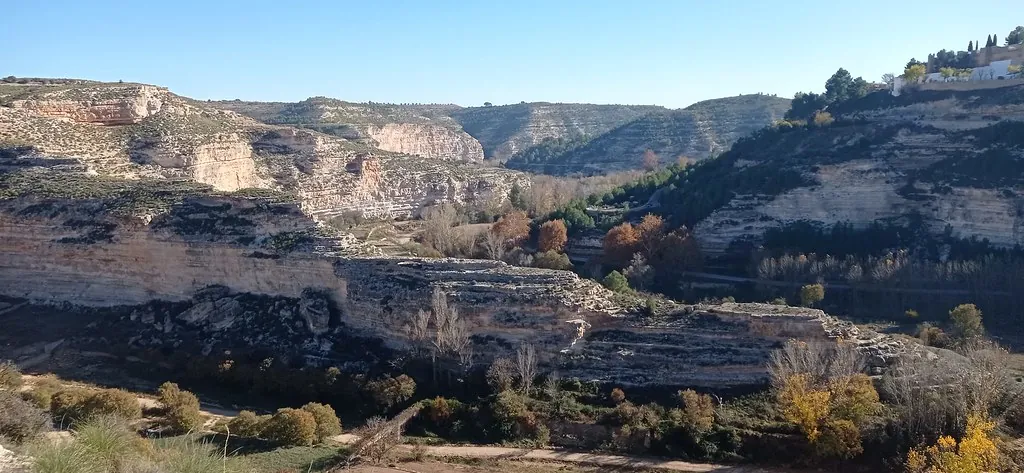
The morning bell tolls eleven times, echoing off limestone walls that have heard centuries of similar chimes. Below, the Júcar River completes another slow bend, having carved a perfect horseshoe around the village perch. From the opposite bank, Jorquera appears suspended—whitewashed houses clinging to ochre rock like swallows' nests, their terracotta roofs catching the early light.
This is La Manchuela's most recognisable silhouette, though you'd be forgiven for never having heard of it. At 682 metres above sea level, with barely 342 residents, Jorquera sits removed from Spain's tourist arteries. The village rewards those who abandon the A-31's rush between Albacete and Cuenca, trading motorway monotony for switchback roads that climb through almond groves and sudden vistas.
The Geography of Defence
The Moors understood this place immediately. Their 12th-century fortress, now weathered to foundations and partial walls, commands the highest point for good reason. From here, visibility extends across the meander's full 270-degree sweep—any approaching threat would have been spotted hours before arrival. What remains of the Castillo de Jorquera won't impress castle enthusiasts seeking turreted grandeur. Instead, it offers something better: perspective. The stone footprint outlines where kitchens once smoked, where archers stood watch, where the business of medieval border control happened daily.
Medieval walls snake downhill from these remnants, incorporating houses into their fabric. Some residents still use original arrow-slit windows for ventilation. The defensive circuit squeezes narrow, forcing visitors into medieval footstep patterns—uphill, always uphill, on cobbles polished smooth by centuries of similar climbs.
Following the Bells
The 16th-century Iglesia de la Asunción anchors the main plaza, its Renaissance facade surprisingly grand for such modest surrounds. Inside, the altarpiece displays the usual gilt excess, but look closer at the side chapels—local craftsmen carved the choir stalls from walnut trees that once grew in these valleys. The bell tower serves as the village's lighthouse, visible from every approach path, its bronze voice marking time that otherwise seems negotiable here.
Behind the church, Calle de la Muralla drops steeply toward the gorge edge. House walls become cliff walls; garden boundaries end in sixty-metre drops. Several miradores (viewpoints) punctuate this edge, though none feel overly safe—parapets are waist-high at best, and local teenagers treat them with casual disregard that makes British health-and-safety officers wake in cold sweats.
The classic photograph requires leaving the village proper. Drive the AL-736 toward Alcalá del Júcar, pull off at the signposted Mirador de Jorquera. From here, the entire village compresses into one frame: castle ruins silhouetted against sky, houses stacked like irregular steps, the river glinting below. Sunrise paints the limestone gold; sunset turns everything terracotta. Either way, arrive early—by mid-morning, coach parties from Valencia claim the terrace, ordering cañas and tortilla while their selfie sticks multiply.
Walking the Loop
Jorquera offers proper walking, not gentle strolls. The PR-CU-71 footpath descends from the castle, dropping 250 metres to river level via stone steps cut directly into rock. The route isn't technically difficult, but it demands respect—sections are narrow, unfenced, and lethal when wet. Proper footwear isn't negotiable; the local pharmacist does brisk business selling plasters to flip-flop wearers who discover this too late.
At river level, the path follows ancient irrigation channels through vegetable plots and small vineyards. Farmers here still grow tomatoes, peppers and aubergines using Moorish water-management techniques—stone channels, floodgates operated by simple levers, timing dictated by community consensus rather than written rules. The return climb follows a different track, emerging near the village cemetery where marble headstones face outward toward the same view the living enjoy.
Total circuit time: two hours for the fit, three for those who pause to photograph lizards or catch breath. Carry water—village fountains dry up during summer droughts, and July-August temperatures regularly exceed 35°C.
What Passes for Gastronomy
Jorquera's culinary offerings reflect its size limitations. One proper restaurant operates year-round, another opens weekends only, and two bars serve food when owners feel inclined. Specialities won't surprise anyone who's travelled rural Spain—morteruelo (game pâté served warm), gazpacho manchego (the stew, not cold soup), migas ruleras (fried breadcrumbs with grapes providing sweet counterpoint to pork fat).
The surprise comes via wine. La Manchuela denominación remains obscure outside Spain, yet local cooperatives produce robust reds from Tempranillo and Bobal grapes that handle the altitude's temperature swings beautifully. A bottle of crianza costs €8-12 in village bars, roughly half restaurant prices back home. The Mirador's terrace offers the full list, though service slows when tour groups arrive—Spanish kitchen timing collides with British expectations of prompt lunch.
Those seeking variety drive to neighbouring Alcalá del Júcar, ten minutes along the river. Here, cave restaurants carved into limestone cliffs serve similar food with theatrical presentation—grilled meats on hot stones, wine poured from height, bills that reflect the spectacle.
When the Village Wakes
August transforms Jorquera completely. The fiesta patronal honouring Virgen de Cubas swells the population tenfold—emigrants return, grandchildren discover ancestral roots, and the main plaza hosts dancing until dawn. Accommodation books solid twelve months ahead; those without family connections struggle to find beds. The atmosphere mixes family reunion with street party, though outsiders remain welcome if they respect the local rhythm—dinner happens after 22:00, fireworks are non-negotiable, and sleeping before 03:00 proves impossible.
September's romería provides gentler insight into village identity. The procession accompanies the Virgin's statue to her hillside ermita, a walk of three kilometres through almond groves. Participants carry picnic hampers—cold meats, hard-boiled eggs, local cheese, wine in leather bota bags. The religious element feels secondary to community cohesion; even agnostics participate, understanding that belonging here means showing up.
Practical Realities
Getting to Jorquera requires wheels. Albacete's high-speed rail station connects Madrid in 75 minutes and Valencia in 90, but the 50-minute drive from there winds through country roads that feel longer. Car hire runs €35-45 daily from Albacete airport—book ahead, availability proves limited. No public transport operates on Sundays; weekday buses connect Albacete to nearby Villapalacios, leaving a 7km taxi ride or hitchhiking prospect.
Accommodation comprises three rental houses and a four-room guesthouse—total. Booking platforms list them all; none offer pools, spas or yoga retreats. What you get instead are stone walls 1.5 metres thick (cool in summer, warm in winter), windows facing the gorge, and absolute silence broken only by church bells and the occasional goat herd passing below.
Winter brings different challenges. The altitude means frost in December-January; the castle walk becomes treacherous with ice. Spring and late autumn provide optimal conditions—clear skies, temperatures in the low twenties, green valleys contrasting with ochre rock. These shoulder seasons also guarantee parking spaces and restaurant tables without reservation.
Jorquera won't suit everyone. Those requiring nightlife, shopping, or organised entertainment should continue to Cuenca or Valencia. The village offers instead a masterclass in geological time—river versus rock, human settlement versus natural defence, the slow realisation that some places remain content with their own company. The meander that created Jorquera continues its patient carving; visitors come and go, leaving lighter footprints than they probably intended.


