Full Article
about Alameda de la Sagra
Town in the La Sagra region, known for its gypsum industry and recent population growth.
Ocultar artículo Leer artículo completo
The 08:15 to Madrid pulls out of Alameda de la Sagra station with barely a dozen passengers. By half past nine, those same commuters will be swiping through turnstiles at Atocha, having travelled 47 minutes through an ocean of wheat. It's this daily migration that keeps this Castilian village alive – and explains why its bars serve decent coffee at prices that would make a Londoner weep.
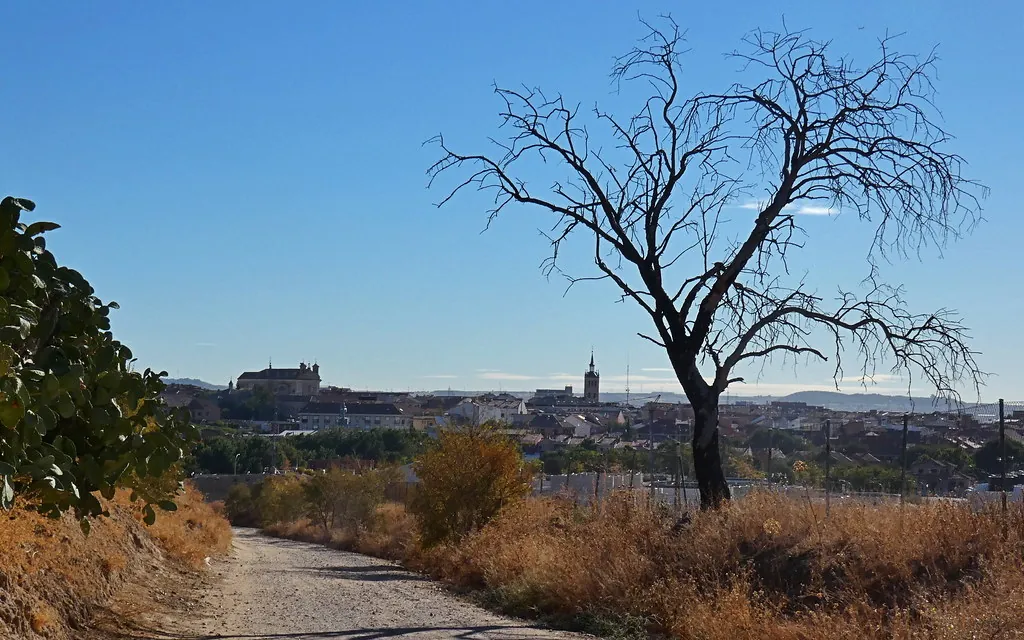
At 632 metres above sea level, Alameda sits on the flatlands of La Sagra, a region where the earth stretches so wide that clouds cast shadows you can watch for miles. The village proper houses 5,000 souls, though that number swells each evening when the trains return. Unlike the hill towns that tourists usually target, there's no dramatic ravine or cliff-hanging monastery here. Instead, you'll find a working village where agricultural machinery dealerships outnumber souvenir shops and the local WhatsApp group probably discusses rainfall more than restaurants.
The Church That Grew Like Topsy
The Iglesia Parroquial de Nuestra Señora de la Asunción dominates the main square, though "dominates" might be too strong a word for a building that's more interesting than imposing. Constructed in fits and starts between the 16th and 18th centuries, it's a architectural palimpsest where Gothic foundations support Renaissance arches beneath a Baroque tower. The local council has recently installed explanatory plaques in Spanish only – bring Google Translate or, better yet, ask the elderly gentlemen who gather on the bench opposite. They'll happily explain (in rapid Castilian) how the tower was rebuilt after lightning struck in 1892.
Inside, the church smells of incense and floor polish, the scent of centuries mixing with modern maintenance. The altarpiece features a Virgin whose robes were repainted in the 1960s, giving her an unfortunate shade of municipal blue. Don't miss the side chapel's 17th-century crucifix, its Christ figure so gaunt that locals claim it was modelled on a famine victim. Whether that's true or not, the priest will tell you, depends on who's buying the wine.
What to Do When There's Nothing to Do
The pleasure of Alameda lies precisely in its lack of organised entertainment. The village follows an ancient rhythm: the 07:00 opening of Bar Central for workers' breakfast, the 14:00 lunch rush, the 17:00 paseo when grandparents walk grandchildren around the square. Join them. Buy a €1.20 cortado from the café opposite the town hall and claim one of the metal chairs that face outward, theatre-style. Within minutes, someone will ask where you're from. Say "Inglaterra" and prepare for a conversation about either Manchester United or the weather in London.
For movement, follow the wheat. A network of farm tracks radiates from the village like spokes, each leading through a different crop rotation. The path southeast toward Recas passes through vineyards where the soil is so alkaline it crunches underfoot. In May, these fields turn purple with blooming vetch; in July, they're golden and rustling. The walk to the next village takes ninety minutes across completely flat terrain – no Ordnance Survey map required, just follow the pylons.
Cyclists find these tracks perfect for steady training. The professional cycling teams that base themselves in nearby Toledo use La Sagra's roads for winter miles, drawn by empty tarmac and the knowledge that every route eventually leads to a bar serving tortilla. Bring water – the landscape offers no natural shade, and summer temperatures regularly hit 40°C.
Eating What the Land Provides
The village's three restaurants all serve essentially the same menu, which is exactly what you want. At La Maruxina, on Calle Constitución, the gazpacho manchego arrives in individual clay pots, its gamey broth thick with rabbit and flatbread. This isn't the cold tomato soup Brits expect – it's a hearty stew that shepherds ate in these fields for centuries. A portion feeds two; locals order it with a side of fried eggs.
The daily menu del día costs €12 Monday to Friday, €15 at weekends. Expect migas (fried breadcrumbs with garlic and chorizo) to start, followed by either cordero asado (roast lamb) or perdiz estofada (partridge stew). Vegetarian? The waitress will look concerned and suggest tortilla española, which she'll clarify contains "mucho huevo" – lots of egg – as if quantity might be the issue.
Wine comes from neighbouring Recas, whose co-operative produces respectable tempranillo at €2.50 a glass. The house white is verdejo from Rueda, served so cold it could chill a sprained ankle. Both arrive at table with a small dish of olives that taste faintly of the diesel used to transport them – a reminder that this is farming country first, foodie destination second.
When to Come and How to Leave
Visit in late April for the agricultural fair, when farmers display tractors worth more than most houses and discuss seed varieties with the intensity of City traders. Or come mid-September during the fiestas patronales, when the village square hosts nightly concerts that finish at 04:00. The music ranges from traditional pasodobles to covers of Bruce Springsteen sung with Spanish accents thick enough to spread on toast.
Getting here requires commitment. The train from Madrid's Atocha station runs every two hours; the last return service departs at 21:15, meaning dinner in the village requires an overnight stay. Driving takes forty minutes from Madrid via the A-42, though the speed cameras are so frequent that locals treat the motorway like an expensive video game. Parking is free everywhere – another concept that baffles Madrileños.
Stay at Casa Rural La Sagra, three converted farmworkers' cottages on the village edge. At €60 per night including breakfast, it's cheaper than a Travelodge and considerably quieter. The owner, Pepa, speaks school-English learned from watching subtitled films and will insist you try her homemade membrillo (quince paste) with Manchego cheese. Accept. Politeness demands you eat three portions while she watches.
The village won't change your life. It has no Instagram moments, no boutique hotels, no chef with a Michelin complex. What it offers instead is the rare chance to see Spain as Spaniards live it – the daily compromise between tradition and the 08:15 to Madrid, between wheat fields and Wi-Fi, between what was and what comes next. Take the train back at dusk and watch the village shrink into the landscape until only the church tower remains visible, a stone exclamation mark in an ocean of grain.