Full Article
about Añover de Tajo
A town set above the Tajo floodplain, known for its bullfighting tradition and market gardens.
Hide article Read full article
Añover de Tajo sits in Castilla La Mancha, within the flatlands of La Sagra, not far from Madrid and Toledo. Arriving here after either city can feel like stepping into a different rhythm altogether.
The first impression is often heat and quiet. In the height of the day, the tarmac seems to throw the warmth back at you and cicadas fill the air with their steady hum. The main square is easy to reach and easy to park in, something that already sets it apart from larger places nearby. Cars come and go without fuss. Life moves, but it does not rush.
That is the tone of Añover. Nothing shouts for attention. The place reveals itself in small details and in the space it gives you to slow down.
The rollo de justicia that barely announces itself
If there is one monument usually mentioned in connection with Añover de Tajo, it is the rollo de justicia. Before seeing it, expectations might lean towards something imposing. In reality, it is a fairly sober stone column standing in the square.
It would be easy to walk past without realising what it represents.
Rollos de justicia were erected when a town was granted its own legal jurisdiction. They symbolised the authority to administer justice locally. Many disappeared over time, removed or destroyed as centuries passed and political systems changed. Añover’s rollo remains where it has long stood, with little ceremony around it. There are no railings, no explanatory panels competing for attention. Just stone that has watched the square evolve around it.
Its appeal lies in that understatement. The column does not try to impress, yet it carries centuries in its surface. It feels like a permanent neighbour in a place where much else has shifted. People cross the square, run errands, exchange greetings, and the rollo stays put, part of the everyday scene rather than a staged attraction.
Visitors looking for grand architecture may find it modest. Those willing to pause may find it quietly compelling.
Fields without end: La Sagra’s open horizon
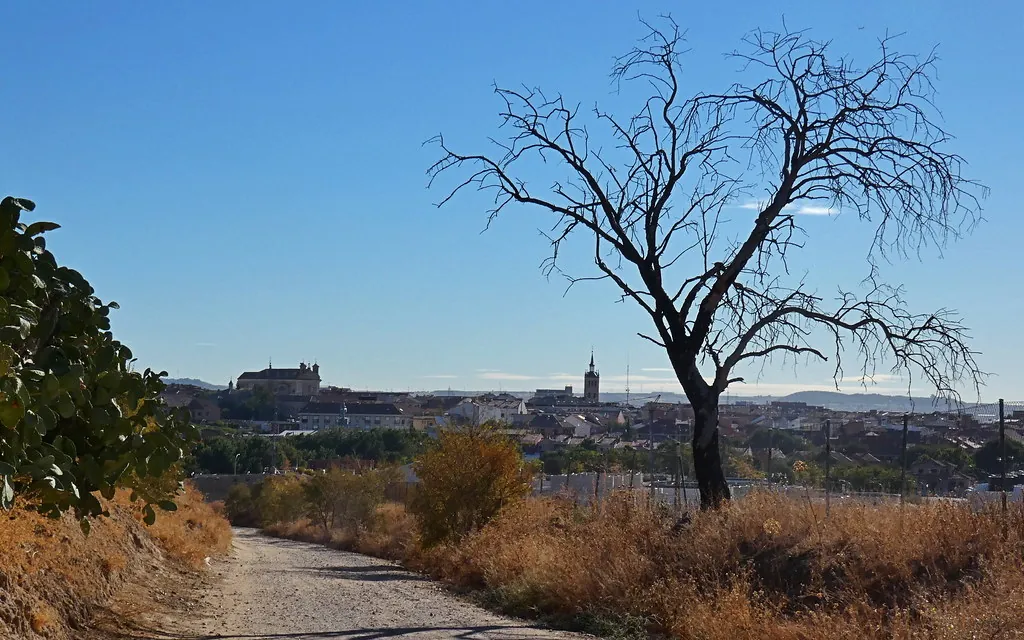
Añover de Tajo is defined as much by its surroundings as by its streets. This is countryside, but countryside in the style of La Sagra. Expect wide cereal plains rather than lush green meadows. Long straight tracks cut across the land. The horizon stretches uninterrupted.
The seasons alter the palette. In spring, wheat brings a wash of colour. By summer, the landscape turns to the dry tones often associated with Castilla La Mancha. When the wind picks up, which it sometimes does with force, the fields move in unison and the whole view seems to ripple.
Silence here is not absolute. It carries small sounds: a lark high above, the brush of wind through scattered olive trees, a tractor passing in the distance. These details stand out because there is so little else competing with them.
Spending time in this setting can have an unexpected effect. A field of sunflowers, for example, can hold attention longer than planned. With no distractions and no particular task at hand, the mind settles. It resembles the brief pause when an old computer restarted and the screen went black for a few seconds. A reset of sorts, created simply by space and stillness.
La Sagra’s roads link villages that appear with little warning, each one shaped by the same broad plains. Añover fits into that pattern: part of a larger agricultural landscape that determines its rhythm and its view.
The matter of caña de lomo
Añover de Tajo is also known locally for its caña de lomo, a cured pork loin typical in many parts of Spain but here spoken of with particular pride. A guidebook mention is enough to spark curiosity.
In a small grocery shop, the response to an enquiry about it sums up the pace of the place. The product might not be available that day, but it usually arrives later in the week. The key word is “usually”. That gentle uncertainty explains much about how things function in many Spanish villages. There is no urgency. Each day has its own tempo.
The search for caña de lomo does not always end in immediate success. Hunger, however, rarely remains unresolved. A simple sandwich in one of the square’s bars does the job, accompanied by strong coffee. Around you, everyday scenes unfold. A Guardia Civil patrol on motorbikes passes through. A greyhound crosses the street with apparent purpose. Someone sweeps the pavement while quietly singing to himself.
None of this is designed as spectacle. It is simply village life, unfiltered and unpolished. That ordinariness is precisely what gives Añover its character.
When summer brings people back
Añover de Tajo changes subtly in summer. The shift is not driven by mass tourism. This is not a place that draws crowds deliberately. The transformation comes from return.
Many residents work outside the village during the year, particularly in Madrid or Toledo. When summer arrives, they come back. Windows open. Chairs appear on pavements in the evening. Conversations stretch out in the cooler air after sunset.
On some nights there is music in the square or during local fiestas, complete with an orchestra and the atmosphere that villages create so effortlessly on such occasions. It is not a performance aimed at social media. It feels more like daily life concentrated into a handful of lively evenings.
One geographical detail may surprise visitors. The River Tajo flows relatively close to Añover, yet from the urban centre you hardly notice it. This is not a town that organises itself around river views or waterside promenades. The Tajo is present in the wider landscape, but not visually dominant in the streets.
A pause rather than a highlight reel
Añover de Tajo does not overwhelm with monuments or headline attractions. The rollo de justicia stands quietly in its square. The fields stretch outward in every direction. The Tajo passes nearby without demanding attention.
Approach the village without expecting dramatic sights. Park in the square and take an unhurried walk. Let the place set the pace. If travelling by car, continue through the comarca afterwards. La Sagra is threaded with secondary roads and small towns that appear almost without warning, each shaped by the same open land.
Añover may not leave anyone open-mouthed. Yet time spent here can feel unexpectedly restorative. A short stop, taken without a clear reason, sometimes turns out to be exactly what was needed in the middle of a longer journey.