Full Article
about Bargas
Important town near Toledo; known for its Cristo de la Sala procession and artisan bread.
Ocultar artículo Leer artículo completo
The church bell strikes eleven and the only other sound is a tractor reversing into the co-op yard. From the café terrace, you can watch the waiter carry four cortados across the square without spilling a drop—he’s had thirty years to perfect the route. This is Bargas at mid-morning: a place that refuses to hurry simply because Toledo is fifteen minutes down the road.
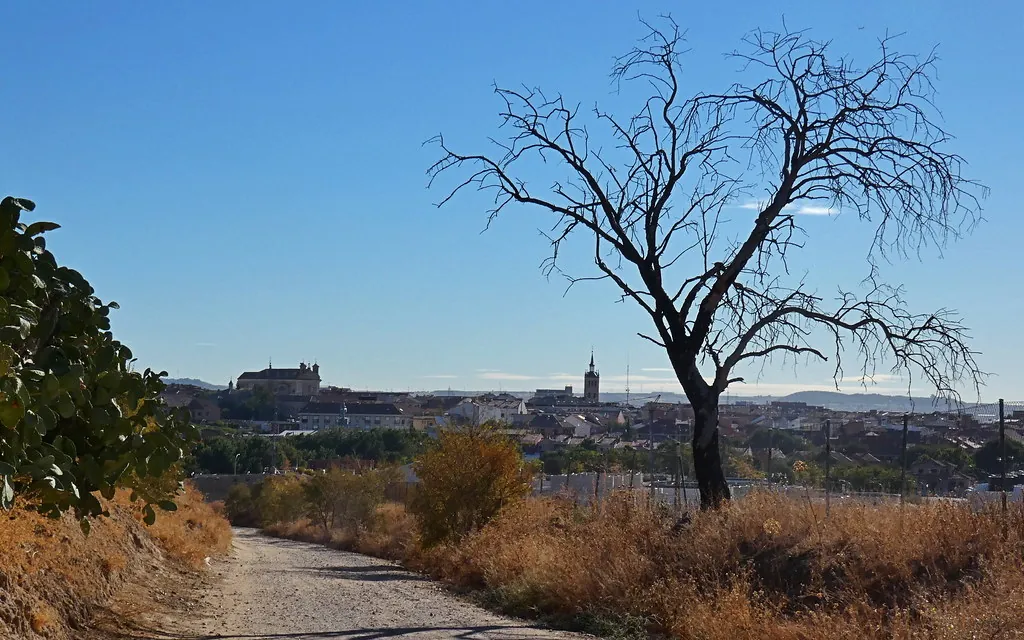
At 500 m above sea level, the village sits squarely on the cereal ocean of La Sagra, a plateau so flat that the 40 m tower of San Esteban Protomártir doubles as a nautical beacon for drivers on the CM-4000. The view from the bell deck is less postcard, more geography lesson: wheat rectangles rotate with barley, olive groves punctuate the yellow, and on very clear winter days the Alcázar of Toledo appears as a grey tooth on the southern horizon. Bargas has no castle of its own, no hanging balconies or Renaissance gates; what it offers is a chance to see how a Castilian commuter town negotiates the 21st century without quite abandoning the 20th.
A Parish Church That Grew Like Topsy
San Esteban looks medieval from a distance, close-up it is a palimpsest in stone. The apse is 14th-century mudéjar brick, the nave was widened in the 1530s after a fire, and the neo-classical portal arrived in 1790 once the town could afford stone from Olihuelas quarry. Inside, the gold-leaf altarpiece is surprisingly restrained; locals claim the bishops of Toledo siphoned off the surplus to fund the cathedral down the road. The sacristy keeps a 16th-century processional cross that is brought out only on 26 December, the feast of the patron when temperatures regularly dip below zero and the faithful warm their hands on braziers of burning vine prunings. If you want music rather than monuments, visit at 19:00 on a Saturday: the parish choir still sings the old Mozarabic Salve in a side chapel whose acoustics make eight voices sound like twenty.
Streets That Remember When Wheat Was Cash
Behind the church the old quarter follows a sock-shaped loop barely 400 m long. House fronts are whitewashed in calcium wash mixed with ox-blood, a trick that gives the walls their faint peach tone and repels the Sagra’s abrasive winds. Knockers are shaped like rope knots; wooden doors swell so dramatically in April showers that some residents leave them ajar all spring rather than fight the frame. Number 7 on Calle del Pozo hides one of the few preserved patios manchegos: a square of beaten earth planted with geraniums and a single quince tree whose fruit ends up in the October jelly festival—an event so low-key that visitors are usually handed a jar and expected to donate coins to the football team.
Modern growth has stapled housing estates to the north and east, yet the centre retains the evening rhythm of chairs dragged onto pavements and grandmothers sharing supermarket gossip. British buyers sometimes arrive expecting rustic bargains; they discover that village houses sell for around €1,100 per square metre, cheaper than Oxfordshire but hardly giveaway Spain. The upside is fibre-optic broadband and a health-centre queue that rarely exceeds twenty minutes.
Food Meant for Harvesters and Civil Servants
Lunch starts at 14:30 and is built for people who have either ploughed 20 ha or stared at a computer in Toledo all morning. At Mesón El Labrador on Avenida de Castilla la Mancha, a menú del día costs €14 and begins with pisto manchego—a tomato-pepper ratatouille topped with a fried egg—followed by perdiz estofada, partridge braised in bay and pimentón until the meat slides from the breastbone. Vegetarians get atascaburras, a garlicky potato-purée originally thickened with salt cod but here made with smoked aubergine; it is heavy enough to see you through to supper, which locals take at 22:00 with exactly the same dishes if they feel like it. House wine comes from Villacañas cooperative 20 km north; ask for the crianza and you’ll pay €2 extra for the privilege of a 2020 label.
On Friday mornings a white van parks beside the post office selling torta del Casar cheese at €22 a kilo—still cheaper than Borough Market and perfectly ripe for Saturday picnic. The bakery opposite fires its wood oven at 05:30; by 07:00 the mantecados (lard shortbread) are stacked in pyramids that collapse under their own weight by noon. If you need caffeine to face the drive back to Madrid, Café Bar Plaza does a café con leche for €1.40 and will refill the churros basket until you say stop.
Cycling Roads That Ignore Hills
Bargas’ greatest luxury is absence: no hills, almost no traffic before 08:00, and GPS signals uninterrupted by gorges. A 28 km loop west to Mocejón and back follows the Vía Verde de la Sagra, a former railway whose tarmac has been lifted and replaced with fine gravel ideal for hybrid tyres. You share the path with the occasional dog-walker and, in October, tractors ferrying grapes to the almazara in Villasequilla. Wind is the main obstacle; set off eastbound so the return leg enjoys the usual 10 km/h Atlantic breeze that arrives every afternoon. Bike hire is not yet a thing—ask at the municipal sports centre and they’ll lend you a Town Hall Giant for €15 a day plus passport photocopy.
Walkers should target the Camino de la Vega, a 6 km signed trail that leaves from the cemetery gate and threads between irrigation ditches originally dug by the Knights Templar. You finish at the 16th-century Humilladero shrine where travellers once knelt and asked forgiveness for approaching Toledo with un-Christian thoughts. These days the stone cross is surrounded by picnic tables and a litter bin emptied, according to a faded notice, every Tuesday and “when necessary”.
When to Come, When to Stay Away
March and late October give you 22 °C afternoons and skies rinsed clean by spring storms or autumn gota fría. In July the mercury can touch 42 °C at 15:00; the streets empty, even the bar dogs migrate to the tiled interior, and the wheat stubble glows like burnt toast. Winter is crisp—daytime 10 °C, night-time -3 °C—and the council strings Christmas lights along balconies that look suspiciously identical to the ones used for the August fair, just with different colour filters.
Accommodation is limited. Hostal La Estación has twelve refurbished rooms opposite the railway halt (trains to Madrid take 33 minutes, €8.45 each way) and charges €55 for a double including garage space. The only alternative is an Airbnb loft on the edge of the industrial estate—quiet at weekends, scented with tortas from the adjacent biscuit factory. Book ahead if your visit coincides with the San Esteban fiestas: half of expat Bargas returns for the patronal bingo and the population briefly swells to 12,000, meaning dinner reservations and parking both disappear.
Getting Here Without the A-42 Car Park
From Madrid-Barajas, the direct route is the A-42 southbound; leave at junction 68, follow the CM-4000 for 7 km. The problem is everyone else has the same idea on Friday afternoon—expect tailbacks from 15:30 to 19:30. A quieter approach is the C-401 from Aranjuez, turning north at Ciruelos; you add 15 minutes but gain olive groves instead of brake lights. If you’re already in Toledo, catch bus line 12 from Plaza de Zocodover; the timetable lists 22 departures on weekdays, fewer on Sundays, and the driver will happily tell you where to alight for the bakery.
Leave before the church bell strikes eleven again and you’ll miss the tractor, the cortados, the slow-motion conversations. Bargas will not change your life, but for a day or two it lets you sample the Spanish interior as lived by people who commute to World Heritage glamour yet still vote on the colour of the local fiesta bunting. That is probably enough.