Full Article
about Cedillo del Condado
Expanding town in La Sagra; blends farming tradition with new housing areas
Ocultar artículo Leer artículo completo
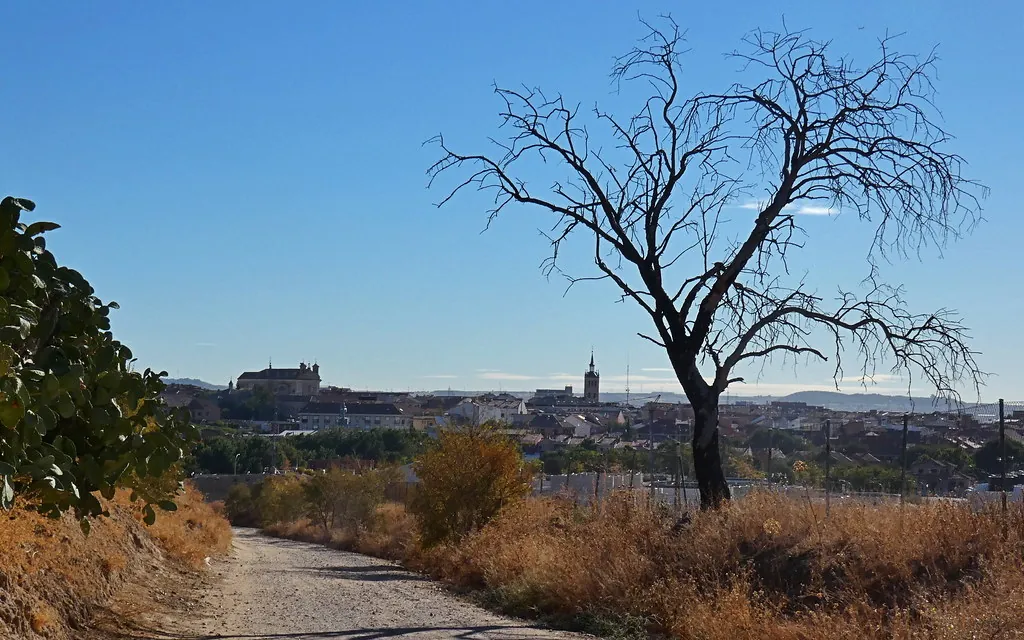
The wheat fields start just beyond Madrid's southern suburbs. Thirty kilometres from the capital's edge, where the motorway service stations thin out and the horizon widens, Cedillo del Condado sits at 646 metres above sea level. This isn't the dramatic Spain of postcards—no cliff-top villages or Moorish palaces here. Instead, it's something more honest: a working Castilian town where the church tower of San Cipriano still marks time for 5,000 residents who live by the harvest calendar rather than the tourist season.
The View from the Plain
La Sagra region stretches flat in every direction, broken only by the occasional olive grove and the distant silhouettes of other white-washed towns. The altitude means winter mornings bite sharper than you'd expect this close to Madrid—frost patterns the barley fields from December through February, and the wind carries a prairie-like quality that can catch day-trippers unprepared. Summer brings the opposite challenge: temperatures regularly top 35°C, and shade becomes currency in the narrow streets around Plaza de España.
The town's name—literally "Cedillo of the County"—hints at its medieval past when these lands belonged to the Counts of Castile. You won't find grand castles or stately homes now, but the title stuck, a reminder that this was once frontier territory between Christian Castile and Moorish Toledo. The evidence lies in the stone: the parish church of San Cipriano mixes Romanesque bones with Renaissance dressings, its tower rebuilt so many times over the centuries that architectural historians still argue about what came first.
Walking Through Working Spain
Cedillo's appeal isn't immediately obvious. There's no single Instagram moment, no panoramic viewpoint that stops traffic. What exists instead is rhythm—the slow pulse of agricultural life that continues regardless of visitor numbers. Morning brings tractors coughing to life, their drivers heading to fields that surround the town in a patchwork of cereal crops and garlic plots. The latter have earned local fame; Sagra garlic appears on Madrid restaurant menus throughout late spring, and the town's agricultural cooperative ships bulbs across Spain.
The town centre covers barely a square kilometre, easily walked in twenty minutes. Houses huddle close, their ground floors once stables for donkeys now converted to garages for Seat Ibizas. Iron balconies hold geraniums in summer, firewood in winter. Elderly men occupy benches beneath the plane trees in Plaza de la Constitución, arguing about football while keeping half an eye on passing traffic. They'll nod at strangers—not the effusive welcome of tourist Spain, but the quiet acknowledgement that yes, you've found their town, and no, they're not going to make a fuss about it.
Eating Like a Local
Food here follows the agricultural calendar religiously. Winter means game stews heavy with wild boar shot in the nearby Montes de Toledo, served with rough red wine that stains teeth and tablecloths alike. Spring brings migas—fried breadcrumbs with garlic and chorizo—traditionally cooked outdoors in vast pans during village fiestas. The local restaurants aren't destination dining; they're functional feeding stations where farmers break from work. Menu del día runs €12-15, featuring cordero asado (roast lamb) that falls from the bone and portions sized for people who've spent daylight hours driving tractors.
The bakery on Calle Real opens at 6am, selling still-warm baguettes to workers grabbing breakfast before heading to the fields. By 9am the day's bread is often gone, replaced by pastries for mid-morning coffee. There's no speciality coffee here—café con leche comes in glasses, strong enough to stand a spoon, and asking for oat milk marks you immediately as outsider.
When the Fields Become Paths
Walking tracks radiate from the town like spokes, following farm roads between fields. The Ruta de las Amapolas (Poppy Route) lives up to its name in April and May, when scarlet flowers punctuate the wheat like nature's punctuation marks. It's an easy 8km circuit, flat enough for families, though summer heat makes early starts essential. The GR-113 long-distance path also passes through, part of a 600km network connecting La Mancha's agricultural towns—useful for creating longer day walks or cycling circuits.
Cyclists find quiet secondary roads linking Cedillo with neighbouring villages: Villaluenga de la Sagra (12km), Ugena (8km), Illescas (15km). The terrain's pancake-flat, but the wind provides resistance enough—afternoon gusts can drop your speed by 10km/h without warning. Bike hire requires advance arrangement through the regional tourist office in Illescas; Cedillo itself has no rental facilities, reflecting its position as somewhere people live rather than visit.
Fiestas Without Filter
September's fiestas patronales transform the town completely. For five days, San Cipriano becomes more than a church dedication—it's an excuse for the entire population to take to the streets. Processions wind through narrow lanes barely wide enough for the Virgin's platform, while brass bands compete with pop music from fairground rides erected in the main square. The bull-running isn't Pamplona—local youths release two young bulls into a makeshift ring, chasing them until someone inevitably ends up in the medical tent. It's messy, traditional, and entirely unpolished by tourism boards.
January's San Antón fires serve a practical purpose beyond celebration. Wood cleared from fields becomes massive pyramids burned through the night, marking the agricultural new year. Families gather around, grilling sausages and sharing wine from plastic cups. The smoke drifts across town for days, permeating clothes and hair—a reminder that some traditions continue because they always have, not because they photograph well.
Getting There, Getting By
Cedillo sits 35 minutes south of Madrid by car, taking the A-4 motorway then the CM-410 local road through increasingly agricultural landscape. Public transport exists but requires planning: buses run twice daily from Madrid's Estación Sur to Illescas (€4.50, 45 minutes), from where local services connect to Cedillo hourly except Sundays. The last bus back leaves at 7pm—miss it and you're looking at a €40 taxi ride.
Accommodation options remain limited. One hostal above the Bar Central offers six basic rooms (€35-45 nightly), decorated in the Spanish style of twenty years ago—dark wood furniture, lace curtains, bathrooms where the shower shares space with the toilet. Booking ahead isn't usually necessary outside fiesta periods, though calling ahead ensures someone's there to meet you. Most visitors base themselves in Toledo (40 minutes drive) or Madrid, treating Cedillo as a day trip into authentic Spain.
The town lacks the infrastructure of more celebrated destinations. English isn't widely spoken, cash remains king, and afternoon closures (2pm-5pm) are strictly observed. What you get instead is proximity—close enough to Madrid for a spontaneous visit, far enough to feel you've left the capital's gravitational pull. In spring, when the wheat ripples like water in the wind, or autumn, when harvest dust hangs golden in the afternoon light, Cedillo del Condado offers something increasingly rare: a Spanish town that hasn't remodelled itself for visitors, where the bakery sells bread not souvenirs, and where tomorrow's schedule depends more on weather forecasts than TripAdvisor reviews.