Full Article
about Cobeja
Industrial and farming town in La Sagra, known for its ceramics industry and fiestas.
Ocultar artículo Leer artículo completo
The church bells chime at 504 metres above sea level, their bronze voices carrying across La Sagra's wheat plains with a clarity that sea-level towns never achieve. In Cobeja, altitude matters. The air thins slightly, the sky stretches wider, and the sun takes longer to disappear behind the horizon—a full three minutes longer than in Toledo, thirty kilometres away.
This difference shapes everything. Farmers rise earlier here, timing their work to the light that arrives sooner and stays later. The town's 2,556 residents have learned to read the weather from clouds that form differently at this height, where winter frosts arrive suddenly and summer storms build quickly over the flat expanse of Castile.
The Architecture of Function
Cobeja's streets run straight and true, following the pragmatic grid laid down by agricultural planners rather than medieval wanderers. Houses stand shoulder-to-shoulder, their whitewashed walls reflecting the harsh plateau sun, their wooden doors painted deep blues and greens that speak of Moorish influence filtered through centuries of Castilian practicality.
The Iglesia Parroquial de Santa María Magdalena dominates the central plaza, its weathered stone tower visible from every approach road. Inside, the air carries traces of incense and candle wax, mixing with the scent of old wood and the faint mustiness of centuries. The retablos—elaborate altarpieces—show craftsmen's work from the 16th and 17th centuries, when this agricultural town's wealth came from wheat and sheep rather than tourism.
Walk the residential streets and you'll notice details missed by casual visitors: the height of the chimneys, built tall to carry smoke away from neighbouring houses; the interior courtyards, hidden behind modest facades but offering private outdoor space during the intense summer heat; the thickness of the walls, designed to keep interiors cool in July and warm in January.
Working the Land, Walking the Land
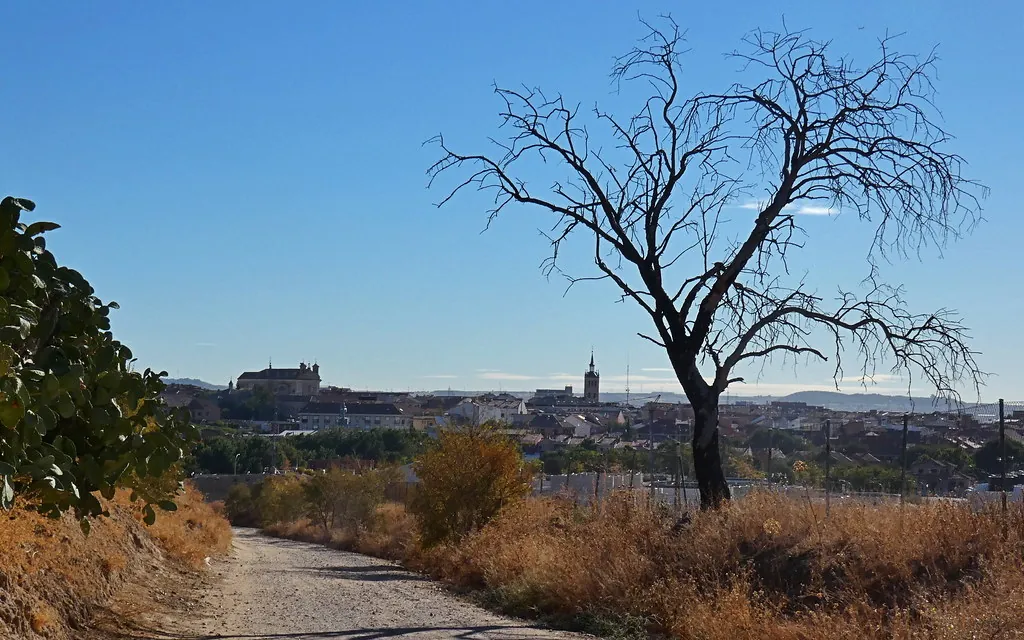
The immediate countryside offers flat walking that's deceptively demanding. At this altitude, the sun burns stronger—even in April, fair-skinned visitors need protection. The agricultural tracks that radiate from the town serve practical purposes first, recreational ones second. You'll share paths with tractors hauling equipment, farmers checking crops, and the occasional shepherd moving sheep between pastures.
Spring brings green wheat that ripples like water in the breeze. By late June, the colour shifts to gold, then bronze, as harvest approaches. The landscape lacks drama—no mountains, no valleys—but rewards those who pay attention: hoopoes with their distinctive call, little owls perched on fence posts, the sudden appearance of a red kite circling overhead.
Cycling works better than walking for covering ground. The CM-4000 and CM-4001 roads carry agricultural traffic but offer wide verges and minimal gradients. Secondary tracks between villages like Alameda de la Sagra (8km) or Villaseca de la Sagra (12km) provide half-day routes with cafe stops. Bring your own bike—there's no rental facility in town.
Food Without Fanfare
Local gastronomy reflects agricultural reality rather than tourist expectation. The weekday menu del día at Bar Central offers three courses for €12: migas (fried breadcrumbs with garlic and chorizo) followed by cordero asado (roast lamb) and flan. No foam, no fusion, just generations of farmers needing substantial food.
Gachas—thick porridge made with flour, water, and whatever's available—appear on winter menus. During hunting season (October to February), estofado de jabalí (wild boar stew) features on weekends. The local Manchego cheese comes from Villacañas, twenty minutes away, where sheep graze on the same plateau herbs that flavour the milk.
Wine arrives from neighbouring Quero or Villacañas, small producers working with Tempranillo grapes that struggle in thin soils but concentrate flavour. A bottle of decent red costs €8-12 in the supermarket, less than a single glass would set you back in London.
Timing Your Visit
Altitude makes Cobeja's climate harsher than coastal Spain suggests. July and August temperatures regularly exceed 35°C, with the plateau sun reflecting off pale stone and concrete. The town empties as residents head to family houses in the Montes de Toledo, where altitude provides relief rather than intensity.
April through mid-June offers the best balance: warm days, cool nights, and the plains alive with agricultural activity. September works too, though harvest dust can irritate allergies. October brings mushroom season and the first frost warnings—overnight temperatures can drop to -2°C while Toledo remains five degrees warmer.
Winter access rarely presents problems. The CM-4000 gets gritted promptly, though morning ice can linger in shadows until midday. The town sits above the fog line that often traps Toledo in grey December weather—Cobeja might be sunny and clear when the provincial capital disappears under cloud.
Beyond the Village
Cobeja works as a base for exploring La Sagra's lesser-known corners rather than as a destination itself. Toledo lies thirty minutes south-west via the CM-4000 and A-42. Leave early to beat tour bus queues at the cathedral, return for lunch when day-trippers crowd the old town's restaurants.
The ruins of Santa María de Melque, Spain's oldest church, sit forty minutes away in San Martín de Montalbán. Built in the 7th century when Visigoths ruled the peninsula, its stone walls predate most European churches. Entry costs €3, closed Mondays.
Closer to home, the pottery workshops of El Puente del Arzobispo continue traditions brought by Moorish craftsmen. Watch artisans throw clay sourced from the Tagus riverbanks, then fire pieces in kilns that have operated for centuries. Purchase direct from workshops—prices run 30-40% cheaper than Toledo souvenir shops.
The Reality Check
Cobeja offers authenticity without amenities. No boutique hotels, no gourmet restaurants, no guided tours in English. The single cash machine works sporadically; fill your wallet in Toledo. Evening entertainment means bars showing football or locals playing cards—fine if you speak Spanish, isolating if you don't.
Saturday nights get noisy. Young residents return from Madrid or Toledo, filling the plaza with conversation and music until 3am. Light sleepers should book accommodation away from the centre or accept that Spanish social life runs late.
Yet these same qualities—the lack of polish, the agricultural focus, the altitude that shapes everything—make Cobeja worth visiting. You won't find Instagram moments or bucket-list experiences. Instead, you'll discover how Castilians live when tourists aren't watching, how altitude affects daily life in ways both subtle and profound, and how Spain's agricultural heart continues beating strongly despite decades of rural depopulation.
The church bells will mark time regardless. They've been doing so since 1614, when the tower received its current clock mechanism. At 504 metres, their chimes carry further, last longer, and mean more than anywhere else in La Mancha.