Full Article
about Ventas de Retamosa (Las)
Growing municipality; originated from old inns on the royal road
Ocultar artículo Leer artículo completo
The wheat starts at the edge of town and rolls outward until it meets the sky. At 618 m above sea level, Las Ventas de Retamosa sits just high enough for the wind to carry the smell of straw and diesel from the A-42, the Madrid–Toledo motorway that hums three kilometres away. Most traffic barrels straight past the turning, which is exactly why a handful of British families now rent villas here: a fenced pool, a shaded terrace and two cities within 35 minutes sounds reasonable once you’ve priced city-centre hotels.
What the village actually looks like
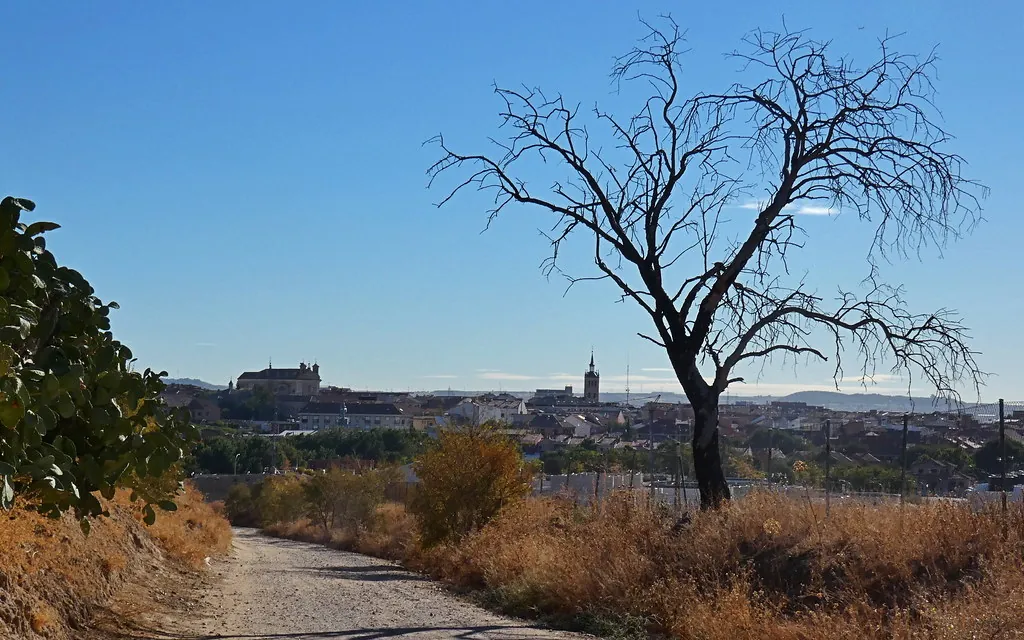
Forget the honey-coloured postcard. The centre is a 1970s grid of whitewashed cubes, wide enough for tractors and shaded by a single row of plane trees. The brick bell-tower of San Ildefonso rises above the roofs; its clock strikes the quarters with a mechanical whirr you can hear from the bakery queue. There is no medieval quarter, no wrought-iron rejas worthy of Instagram. Instead you get a working place: metal shutters painted ox-blood red, elderly men in overalls sharing foil-wrapped sandwiches on the church steps, and a Friday market that spreads tarpaulins of cheap socks and melons across the car park.
Walk ten minutes south-east and the streets give way to dirt tracks that divide the cereal plots into giant chequerboards. In April the wheat is ankle-high and emerald; by late June it turns gold and crackles like dry newspaper. Retama broom bushes – the plant that gave the village its name – spill yellow flowers onto the verges for two weeks only. After that, colour reverts to brown soil, blue sky, and the occasional white dot of a farmhouse.
Why people break the journey here
The original ventas – roadside inns – disappeared centuries ago, yet the settlement still functions as a pit-stop. Drivers pull off the motorway for diesel and a sandwich de lomo at the petrol station bar, then decide they might as well see the village. What they find is ordinary life moving slowly: women chatting outside the Farmacia, children kicking a plastic ball against the cultural centre wall, the Día supermarket trolley rank half full because everyone else walked.
Stay longer and the advantages emerge. A three-bedroom villa with pool rents for €110 a night in May; a comparable place in Toledo’s old town asks €250 and you will fight for parking. From Las Ventas you can be parked beneath Toledo’s Alcázar by 09:30 if you leave after breakfast, and back in time for a siesta by the pool. Madrid works the same way: catch the 08:03 airport bus from Toledo and you are through security before 10:00.
Eating (and what not to eat)
Culinary ambition is modest. The local menu revolves around what the land produces: wheat, sheep, pork, saffron. Order migas – fried breadcrumbs with garlic and scraps of chorizo – and you get a plate the size of a satellite dish for €8. Caldo de galiano, a thick noodle soup, arrives with a separate bowl of raw garlic so you can season to your own breath’s detriment. Vegetarians survive on tortilla and the house salad; vegans should fill up beforehand.
El Rincón del Quijote, the only restaurant that reliably accepts cards, serves half portions on request – useful when the standard lamb chops come four to a plate. Locals eat after 21:00; if you turn up at 19:30 you will have the dining room to yourself and a waiter who keeps one eye on the football. Tapas options are limited to torreznos (crispy pork belly strips) and manchego cheese on toasted baguette, both decent with a caña of Mahou beer. Pudding is usually bought elsewhere; the pastelería opposite the town hall does a respectable almond tart for €2.20 a slice.
Moving around (you will need wheels)
There is no railway. Buses from Toledo run four times a day, timed for school and hospital appointments rather than tourists, and stop at 20:00. A taxi from Toledo costs €35–40 if you can persuade one to make the trip. Car hire therefore becomes essential, and with it the minor headaches of Spanish petrol pumps: fill up in Casarrubios del Monte, 8 km west, because the village itself has no fuel.
Once mobile you gain access to the Sagra plain’s grid of caminos rurales – dead-straight, dead-flat tracks perfect for dawn cycling. Bring your own bike; the nearest hire shop is in Toledo and collection is a logistical faff. A 20-km loop north to Cebolla and back passes stork nests on telegraph poles and, in May, fields vibrating with skylarks. Walkers can follow the signed PR-CU 74 footpath south to the abandoned railway station at Alcaudete de la Jara, though shade is non-existent and summer temperatures touch 38 °C by 11:00.
When to come, when to leave
April–mid-June is the sweet spot: daytime 24 °C, nights cool enough for sleep, wheat green enough to photograph. July and August are scorchers; villas without pools feel like fan-assisted ovens and the village bars close early when trade evaporates. September brings the harvest dust and combines that clog the lanes. Winter is quiet, occasionally frosty, but never pretty – brown stubble replaces golden stubble. If you must come then, time the visit for 23 January when the fiestas of San Ildefonso pack the streets with brass bands and free stew. Accommodation is still available; half the expat owners flee to the coast.
The honest verdict
Las Ventas de Retamosa will not change your life. It offers no cathedral, no viewpoint, no artisan gin distillery. What it does provide is an unfiltered slice of Castilla-La Mancha living at a price that leaves money for the motorway tolls. Use it as a cheap base, a place to rinse the dust off your boots before tackling Toledo’s hills, or simply as somewhere to sit by a pool while Spain carries on around you. Book the villa, bring the car, lower the expectations, and the wheat horizon might just feel like enough.