Full Article
about Lominchar
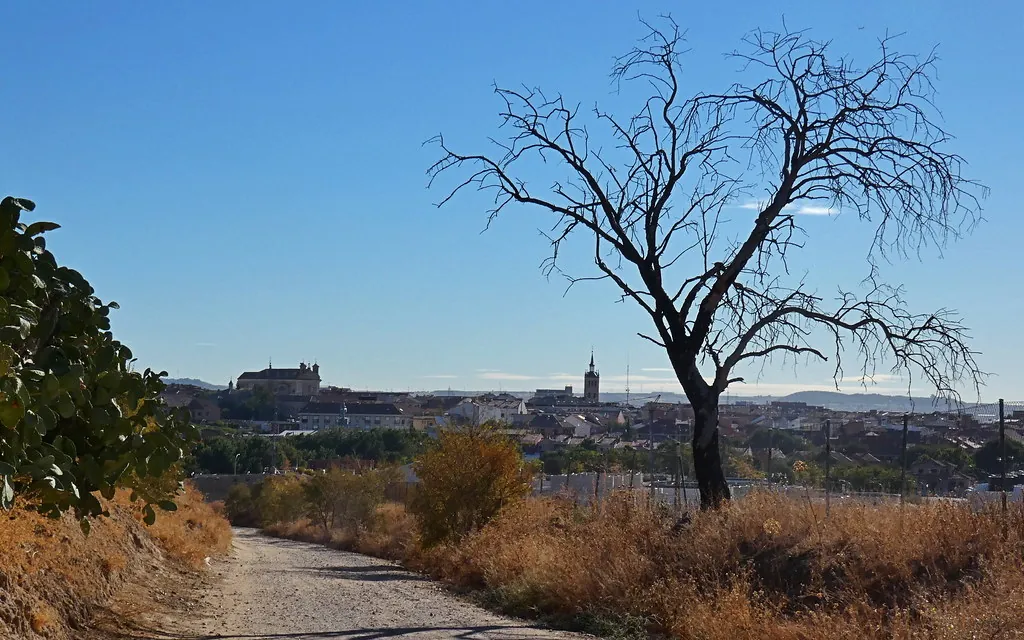
Growing La Sagra town; retains remnants of old industrial architecture
Ocultar artículo Leer artículo completo
The church bells strike noon, yet the plaza remains quiet. A woman emerges from the bakery carrying a paper-wrapped loaf, her footsteps echoing off ochre walls. This is Lominchar at midday, when even the swallows seem to observe siesta. Forty-five minutes south-west of Madrid, the village offers something increasingly rare in central Spain: the sense that time operates differently here.
At 645 metres above sea level, Lominchar sits where the Tagus valley flattens into La Mancha's cereal belt. The altitude brings sharp temperature swings—frost patterns the windscreens in January, while August afternoons push 38°C. These extremes shape everything from the local architecture (thick walls, small windows) to the social calendar (evening strolls begin at 9 pm for good reason).
The Architecture of Daily Life
The Church of Nuestra Señora de la Asunción dominates the skyline, its square tower visible from any approach road. Built piecemeal between the 16th and 18th centuries, the structure shows its improvisations: a Gothic base topped by Baroque additions, interior columns painted to resemble marble. The real treasure lies inside—a 17th-century altarpiece whose gold leaf still catches the morning light at certain angles. The church stays locked outside service times; ask at the town hall opposite for access.
Radiating from the church, narrow streets follow medieval property lines rather than any grid system. Traditional houses share walls, their ground floors once housing livestock. Peer through the iron grilles of older properties and you'll spot the original feeding troughs, now filled with geraniums. Many façades retain their pisa (tamped earth) construction, walls built from local clay mixed with straw—cheap insulation that keeps interiors cool during the brutal summers.
The plaza mayor functions as outdoor living room. Elderly men occupy the benches in strict rotation—morning sun seekers on the eastern side, afternoon warmth on the west. The bar occupying the plaza's northern edge opens at 7 am for coffee and churros, switches to beer and tapas by 11, then serves as informal tourist information centre for anyone trying to find the olive oil cooperative.
Working the Land
Lominchar's economy still depends on what grows in the surrounding huerta. Drive out on the CM-4001 in late October and you'll encounter tractors pulling trailers heaped with purple-bronze olives. The local cooperative, housed in a functional 1960s building, produces extra virgin oil sold under various labels—some ends up in British supermarkets, though you'd never know it. Visitors can buy five-litre containers for €25 if they ask politely; bring your own bottle.
The agricultural calendar dictates more than harvests. During pig-slaughtering season (November through February), the smell of morcilla and chorizo drifts from garage workshops where families cure their annual supply. Easter week brings the aroma of hornazo—meat-filled pastries that women still carry door-to-door in wicker baskets, an edible calling card.
Cyclists appreciate the terrain's gentle rolls—no brutal climbs, just enough variation to keep things interesting. The road to Pantoja de la Sagra offers 12 kilometres of practically traffic-free riding through olive groves and wheat fields. Mountain bikers can follow the GR-134 footpath south towards the Guarrizas river, though the track degenerates into a rocky stream bed after rain.
Eating Like a Local
British expectations of Spanish village dining require adjustment here. There's no restaurant per se—meals happen in private houses or at the bar. The daily menu (€12 Monday-Friday) might feature perdiz estofada (partridge stew) in season, or migas—fried breadcrumbs with garlic and grapes—when the weather turns cold. Vegetarians face limited options beyond tortilla and salads.
The Saturday market occupies a corner of the plaza from 9 am until stocks run out. A woman from Villacañas brings Manchego cheese aged six months (€14 per kilo), while another vendor sells locally produced honey whose flavour shifts with the seasons—wildflower in spring, thyme-heavy in summer. The bread stall leaves by 11 am; arrive early or go without.
For proper shopping, most locals drive to Illescas (15 minutes north) on Fridays when the hypermarket stocks British products—Teabags and Marmite hide between the olives and tinned tomatoes. This matters more than you'd think; Lominchar's single grocery closes for three hours at lunch and stocks nothing resembling decent coffee.
When the Village Celebrates
Fiestas patronales transform the village during the second fortnight of August. The plaza fills with plastic tables where families eat cocido manchego from disposable bowls. A travelling funfair sets up on the football pitch, its neon lights visible for miles across the flat farmland. The religious procession happens at 7 pm sharp—latecomers miss everything as the Virgin tours the streets at surprising speed.
September's feria features bull-running through the main street at 6 am. Spectators gather on balconies; the brave (or foolish) join the youths in white shirts and red scarves. Unlike Pamplona's famous version, these bulls are smaller and the run shorter—300 metres to the plaza where capeas (informal bullfights) continue until lunch.
Semana Santa passes quietly. The five processions attract mainly locals; visitors expecting Seville-style pageantry will be disappointed. Instead, observe the logistics—how the bearers manoeuvre the heavy pasos through doorways barely wider than the floats themselves, why the brass bands pause at certain intersections (acoustics matter when every building reflects sound).
Practical Realities
Getting here without a car requires determination. Buses run four times daily from Madrid's Estación Sur to Illescas; from there, a local service connects to Lominchar twice daily except Sundays. Total journey time: two hours minimum. Hiring a car at Madrid airport proves easier—the A-42 to Illescas then CM-4000 south, though Friday afternoons see heavy traffic returning to the capital.
Accommodation options remain limited. Hostal Los Madrigales offers eight rooms above the bar on the plaza—€45 for a double with bathroom, €35 without. The owner speaks basic English but prefers Spanish; breakfast (coffee and toasted baguette) costs €3 extra. Air conditioning exists but costs €5 nightly supplement—worth every centimo in July.
Weather catches visitors out. Spring brings the famous calima—dust from the Sahara that turns skies orange and covers cars in fine sand. Pack a light jacket for April evenings when temperatures drop 15 degrees after sunset. Winter days can reach 18°C but feel colder in the wind that sweeps unchecked across the plains.
Lominchar won't suit everyone. Those seeking nightlife, shopping or organised activities should stay in Toledo. But for travellers wanting to observe rural Spain functioning on its own terms—the rhythm of church bells, harvests and family obligations—this village provides an authentic glimpse of a way of life that tourism hasn't yet sanitised. Just remember to adjust your watch to Spanish village time. The bakery might open at 8 am, or whenever the owner finishes her coffee.