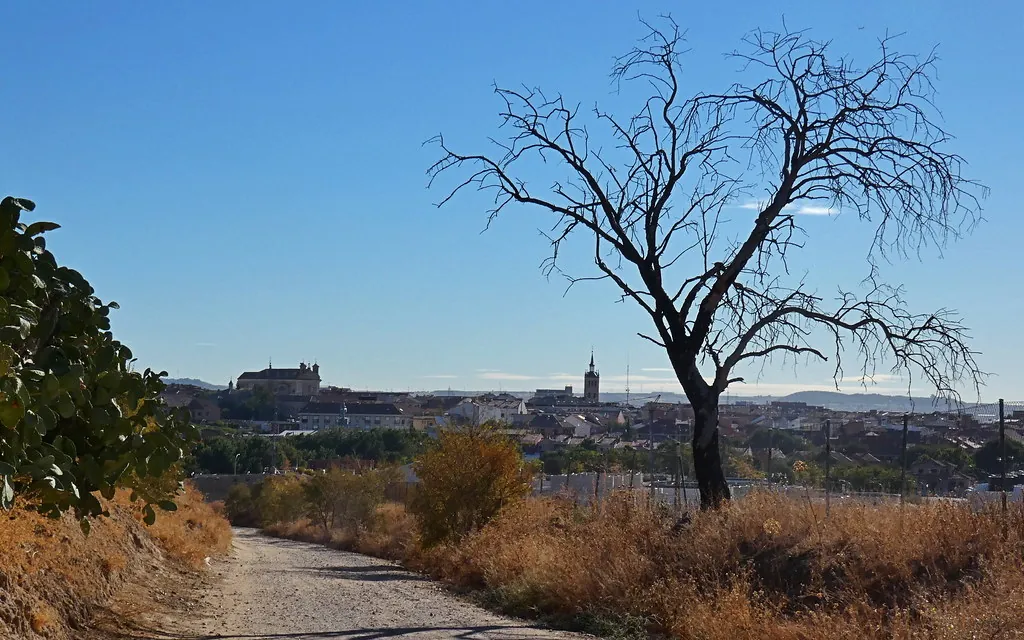
Magán - Flickr
Emiliano García-Page Sánchez · Flickr 5
Castilla-La Mancha · Land of Don Quixote

Magán

The wheat fields surrounding Magan stretch so flat and far that the horizon seems to bend. At 697 metres above sea level, this Castilian village si...

4,384 inhabitants · INE 2025
697m Altitude

Why Visit

Castle ruins Hiking to the castle

Best Time to Visit

summer

Fiestas de la Virgen del Rosario (October) octubre

Things to See & Do
in Magán

Heritage

  • Castle ruins
  • Church of Santa Marina

Activities

  • Hiking to the castle
  • Cycling

Festivals
& & Traditions

Fecha octubre

Fiestas de la Virgen del Rosario (octubre)

Las fiestas locales son el momento perfecto para vivir la autenticidad de Magán.

Full Article
about Magán

Town near Toledo with a ruined castle; mix of farmland and residential area

Ocultar artículo Leer artículo completo

The wheat fields surrounding Magan stretch so flat and far that the horizon seems to bend. At 697 metres above sea level, this Castilian village sits higher than Sheffield yet feels closer to the sky than any Peak District moor. The altitude sharpens the light, turning the cereal fields from green to gold with an intensity that makes photographers reach for their cameras, then pause to absorb the silence.

Magan's relationship with its landscape is straightforward: the land feeds people, and people work the land. Four thousand residents tend fields that produce Spain's bread, their combine harvesters visible from kilometres away during the July harvest. There's no romance in this view for locals—just the annual rhythm of sowing and reaping that has shaped life here since medieval times. Visitors, however, find something compelling in such honest agricultural vastness.

The Church That Anchors a Plain

San Andrés Apóstol rises above single-storey houses like a ship's mast on a calm sea. The 16th-century tower, rebuilt after lightning strikes and the wear of centuries, serves as Magan's compass point. Inside, the church holds the usual collection of gilded baroque altarpieces and devotional paintings, but it's the building itself that tells the story: Moorish brickwork at the base, Gothic arches above, Renaissance additions later. Each layer represents a period when Magan grew wealthy enough from wheat and olives to rebuild their house of worship.

The church's interior stays cool even during August's 35-degree heat, making afternoon visits sensible rather than pious. Sunday mass at 11:30 draws the faithful, but tourists are welcome to slip in quietly. The priest, accustomed to photographers, usually nods permission before continuing with his sermon about daily life—appropriate in a place where religion and agriculture have always intertwined.

Around the church, narrow streets follow medieval livestock paths rather than any urban planner's grid. Stone doorways, some dating to the 1700s, open onto interior courtyards where families still keep chickens. Modern concrete houses squeeze between older structures, creating a architectural conversation spanning four centuries. Nothing's preserved behind ropes; this remains a working village where laundry hangs from balconies and elderly residents shuffle to the bakery at dawn.

What Grows Beneath the Wind

The agricultural calendar dictates Magan's rhythm more than any tourism board. April brings green wheat rippling like ocean waves. By June, the fields bleach to pale gold. July's harvest fills the air with dust that settles on everything, explaining why village houses are painted in earth tones that hide the inevitable coating. October's planting starts the cycle again, tractors working under floodlights that transform the plain into a lunar landscape.

Walking paths follow the caminos that connect Magan to neighbouring villages—simple dirt tracks wide enough for a tractor. The 8-kilometre circuit to Argés takes two hours at a leisurely pace, passing through three distinct microclimates: the dry plateau, a sudden hollow where figs grow, and finally the riverside vegetation along the Tagus. Spring walkers might spot bee-eaters, colourful migrants that nest in the riverbanks, while autumn brings hen harriers hunting over the stubble fields.

Local farmers regard walkers with mild curiosity rather than hostility, though they expect gates to be closed and crops respected. The golden rule: if you can see a farmhouse, you're probably on private land. Stick to the marked paths, all of which start from the petrol station on the village's eastern edge where Juan, the owner, hands out photocopied maps and sells cold water for eighty cents.

Food Without the Fanfare

Magan's two restaurants serve food that would make London food writers weep—not from delicacy, but from straightforward excellence. At Bodega del Campo, María starts her gazpacho at 6 am, using tomatoes that were still on the vine yesterday. The menu changes weekly depending on what game her husband shoots and what vegetables their son grows. Partridge stew appears from October through February, rich with wine from neighbouring Quero. A three-course lunch with wine costs €14, served between 2 and 4 pm precisely. Arrive at 1:45 and you'll wait outside with the locals; Spaniards respect mealtimes even in villages.

Bar Central, despite its generic name, crafts migas—fried breadcrumbs with pork belly—that convert sceptics. The dish originated as field workers' breakfast, designed to use stale bread and provide calories for heavy labour. Order it on Saturday mornings when it's fresh, not reheated from Friday's batch. The accompanying grapes aren't garnish but essential—their sweetness cuts through the rendered fat in a combination that explains why Spanish farm workers lived on this for centuries.

Shopping options are limited: one bakery, one butcher, two small grocers. The bakery opens at 7 am and often sells out of bread by 11, so early visits essential. Try the pan de pueblo, a round loaf with thick crust that keeps for days—necessary when the nearest supermarket lies 15 kilometres away in Toledo.

Toledo Proximity and Village Reality

Magan's location—15 kilometres southwest of Toledo—proves both blessing and curse. The regional capital's attractions lie close enough for day trips, but Magan remains fundamentally separate. Buses run five times daily to Toledo (€2.40, 25 minutes), allowing visitors to combine cathedral tourism with village accommodation. However, the last bus back departs Toledo at 7:30 pm, forcing early returns that miss Spain's late-evening dining culture.

Accommodation options reflect this reality. Three houses offer rural tourism rooms through Airbnb, charging €45-60 nightly for clean, simple accommodation in family homes. Hosts typically speak basic English but appreciate attempts at Spanish. One purpose-built apartment complex sits on the village outskirts, its swimming pool filled only during July and August when Spanish families visit grandparents. The pool's €5 day-pass includes umbrella rental—essential during midday sun that feels closer due to altitude.

Winter visits reveal a different village. January temperatures drop to -5°C at night, and the famous Spanish sun provides little warmth. Many restaurants close as owners head to coastal second homes. The wheat fields lie bare, revealing archaeological remains—Roman pottery fragments, medieval boundary stones—that summer vegetation hides. Photography improves dramatically: low light creates long shadows across the furrows, and morning mist transforms familiar landscapes into something mysterious.

Summer brings the opposite extreme. August temperatures reach 40°C by 3 pm, sending everyone indoors until 6. The village's fiestas—week-long celebrations around August 15th—feature bull runs through streets barely wider than the animals themselves. Visitors either love or hate this tradition; there's no middle ground. Accommodation books up a year ahead as expat Maganeros return, filling houses with three generations and making the village feel genuinely crowded for once.

The honest assessment? Magan suits travellers seeking agricultural authenticity over tourist amenities. Come for the light, the food, the silence of infinite horizons. Don't expect boutique hotels or curated experiences. This remains what it has always been: a place where people grow food, raise families, and maintain traditions not for visitors but because this is simply how they live. The wheat fields don't care if you find them beautiful—they'll be here long after you've gone, feeding Spain as they have for a thousand years.

Key Facts

Region
Castilla-La Mancha
District
La Sagra
INE Code
45088
Coast
No
Mountain
No
Season
summer

Livability & Services

Key data for living or remote work

2024
ConnectivityFiber + 5G
TransportTrain 13 km away
HealthcareHospital 12 km away
EducationElementary school
Housing~5€/m² rent · Affordable
CoastBeach nearby
Sources: INE, CNMC, Ministry of Health, AEMET

Planning Your Visit?

Discover more villages in the La Sagra.

View full region →

More villages in La Sagra

Traveler Reviews