Full Article
about Olías del Rey
Residential and commercial municipality next to Toledo; it keeps a traditional old quarter.
Ocultar artículo Leer artículo completo
The church bell strikes midday and the baker is already pulling down his shutters. In Olias del Rey, lunch starts early and tourism finishes before it begins. This is a town where the bar owner remembers your order from yesterday, even if yesterday was your first visit.
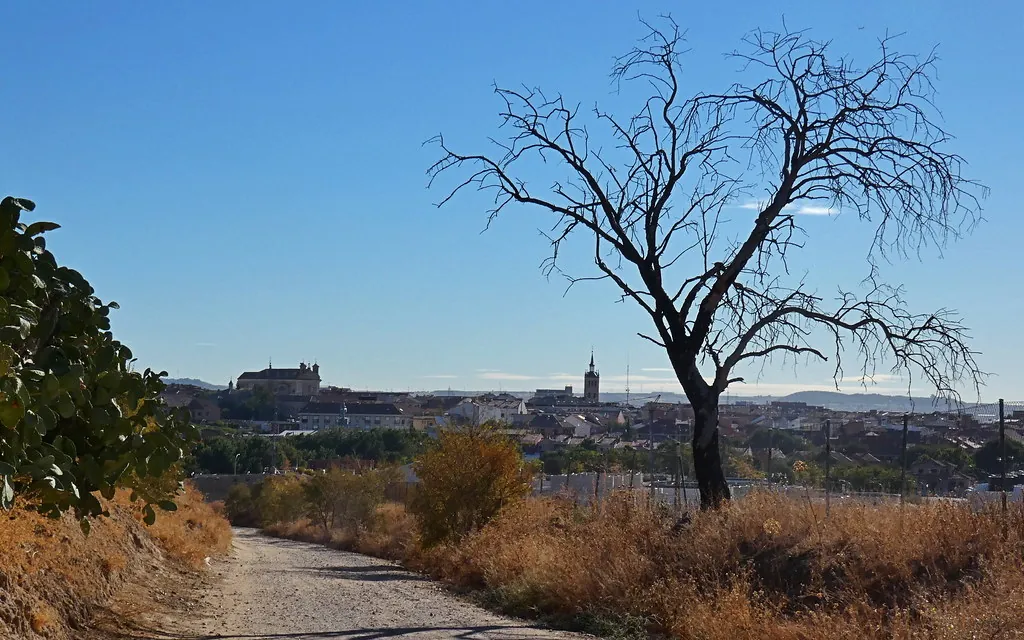
Fifteen kilometres southwest of Toledo, the municipality sits on the flat, wheat-coloured plain of La Sagra at 588 metres. The altitude is just high enough to shave a few degrees off the capital's summer furnace, yet low enough to keep winter winds polite. Locals call it "el pueblo de la esquina" – the corner town – because the A-40 motorway bends here, funnelling Madrid-Toledo commuters past the petrol station and the branch of Dia supermarket.
A Crown Without Jewels
The "del Rey" suffix dates from the fifteenth century, when the Catholic Monarchs parked the place under direct royal administration. The crown has long since lost interest, but the name stuck, and today's monarchy has yet to claim the keys. What remains is a grid of cream-coloured houses, neat enough, interrupted by the odd block of 1970s flats built when brick was cheap and taste cheaper. The skyline is ruled by the tower of Santa María Magdalena, a parish church assembled in geological layers: Gothic bones, Renaissance skin, Baroque wig. Inside, the smell of beeswax and old stone competes with plug-in air fresheners in "ocean breeze" scent. Admission is free; silence is compulsory.
Wander two streets east and you hit the old threshing floors, circular concrete platforms where villagers once winnowed wheat by hand. They now serve as open-air gyms for teenagers on bicycles and, on Fridays, as an improvised market for the man from Bargas who sells cheap socks. There is no interpretation board, no gift shop, just the wind chasing plastic bags across the brickwork.
Bread, Wine and Engine Oil
Calle Real is the commercial spine: a butcher, two hairdressers, a shop that repairs mobile phones and sells Holy Week candles, plus Bar California where the coffee costs €1.20 if you stand and €1.50 if you sit. The daily menu del día – three courses, wine, bread – runs to €11 at La Casa del Carmen on Plaza de España. Expect grilled pork, lettuce-and-tuna salad, and a pudding that arrives still wrapped in plastic. Vegetarians can negotiate; vegans should pack sandwiches.
Gastronomic pride centres on products that travel badly: gachas manchegas (a thick porridge of flour, water and paprika), gazpacho pastor (game stew, not the cold soup Britons know), and migas stretched with chorizo crumbs. October brings a weekend devoted to these dishes, served from communal pans in the sports centre. Tickets cost €3 and sell out the day they go on sale.
There is no vineyard, no craft brewery, no Michelin flirtation. Instead, the supermarket stocks local olive oil pressed in Mora and wine from Quero at €2.85 a bottle. It is honest, cheap and tastes exactly like the price.
Flat Land, Big Sky
The surrounding landscape is a chessboard of cereal fields and irrigated maize. Public footpaths are marked by faded green-and-white stripes painted on concrete posts; maps are available from the town hall, though staff prefer Spanish and puzzled smiles. The classic circuit heads three kilometres south to the abandoned railway halt of Olias Norte, where black kites nest in signal masts. The return passes an artificial pond built for migrating ducks; bring binoculars between February and April when northern species stop to refuel.
Cyclists appreciate the lack of hills and the courtesy of lorry drivers who slow when overtaking. Mountain bikers will be bored; road riders can stitch together 40-kilometre loops linking Bargas, Mocejon and Aranjuez, pausing for beer in each plaza.
Summer temperatures touch 38 °C; start early or risk melting. Winter mornings drop to 2 °C but rarely freeze all day – ideal for brisk walking, less so for lingering over coffee outside.
When the Town Lets Its Hair Down
Fiestas patronales begin on the first weekend of October. The programme mixes religious procession with inflatable castles: brass bands at midnight, paella for 800 cooked in a pan two metres wide, and a foam party in the municipal pool even though the water has been drained. Visitors are welcome, parking is free, and nobody checks hotel receipts.
The August feria is smaller, louder, hotter. Bars set up plastic tables in the street; teenage DJs compete for decibel supremacy; the village bull – actually a docile heifer with padded horns – chases whoever has drunk enough to think participation wise. Accommodation within Olias sells out months ahead; sensible travellers base themselves in Toledo and drive over after dark.
Semana Santa is subdued. Two processions leave the church after dusk: women in black veils carry an image of the Virgin; men in purple robes balance a crucifix. No tickets, no seats, no commentary in English. Spectators stand where they can see; applause is considered poor taste.
Beds, Buses and Bottom Lines
Hostal 82, opposite the health centre, offers fourteen rooms with ensuite bathrooms, thin pillows and Wi-Fi that remembers the 1990s fondly. Doubles run €45 mid-week, €55 at weekends; pay in cash for a ten per cent discount. Reception closes at 22:00 – ring ahead if your flight lands late. The nearest alternative is a roadside motel beside the A-40, convenient for the car, hopeless for the soul.
Public transport exists, but timetables appear to be state secrets. A bus leaves Toledo's Plaza de Zocodover at 07:15 on weekdays, returning at 14:00. Saturday service is rumoured; nobody the author met had seen it. Car hire from Madrid-Barajas costs €30 a day plus diesel; the journey takes 45 minutes on the A-42, toll-free and usually clear except on Sunday evenings when half of Madrid returns from the pueblos.
There is no cash machine. The nearest branch is a five-minute drive to the motorway services, or ten minutes to Bargas. Most bars accept cards, but the minimum spend is €10 and the machine will be "broken" exactly when you need it.
Worth the Detour?
Olias del Rey will never feature on a postcard carousel. It has no alcázar, no hanging houses, no river gorge. What it offers instead is the unvarnished rhythm of provincial Spain: bread delivered before dawn, grandmothers sweeping pavements, teenagers practising trumpet in the bandstand. Come if you need a cheap bed near Toledo, if you like your Spain lightly seasoned rather than deep-fried in tourism, or if you simply want to watch the sun drop behind the castle walls of the imperial city, fifteen kilometres away but far enough to leave this place to its own quiet business.