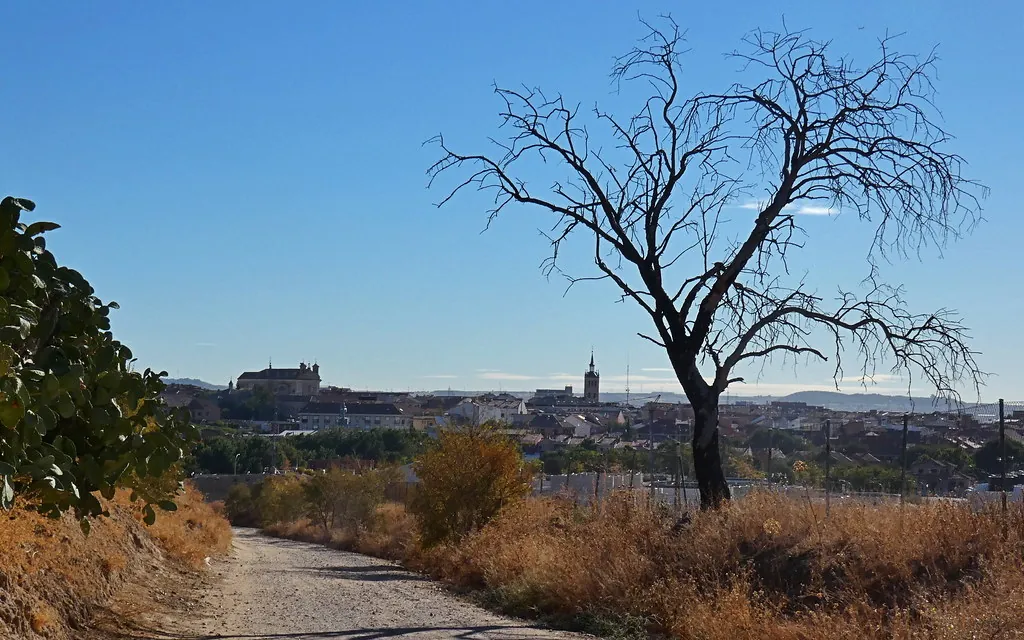
Vista aérea de Pantoja
Instituto Geográfico Nacional · CC-BY 4.0 scne.es
Castilla-La Mancha · Land of Don Quixote

Pantoja

The 7:15 morning train to Madrid carries half of Pantoja's working population past wheat fields that shimmer like the North Sea in miniature. By ei...

3,536 inhabitants · INE 2025
524m Altitude

Why Visit

Church of the Assumption Bull runs

Best Time to Visit

summer

Santa Bárbara Festival (September) septiembre

Things to See & Do
in Pantoja

Heritage

  • Church of the Assumption

Activities

  • Bull runs
  • Walks in the countryside

Festivals
& & Traditions

Fecha septiembre

Fiestas de Santa Bárbara (septiembre)

Las fiestas locales son el momento perfecto para vivir la autenticidad de Pantoja.

Full Article
about Pantoja

Town known for its ceramics industry and bullfighting tradition; brick architecture

Ocultar artículo Leer artículo completo

The 7:15 morning train to Madrid carries half of Pantoja's working population past wheat fields that shimmer like the North Sea in miniature. By eight o'clock, the village returns to its natural rhythm: elderly men nursing cortados in Bar Central, the bakery's ancient mixer kneading dough for the day's bizcochos, and somewhere beyond the last row of houses, a combine harvester starts its diesel cough.

This is La Sagra's guilty secret. Twenty-five kilometres north of Toledo, 524 metres above sea level, Pantoja functions as a dormitory for Spain's capital while pretending nothing has changed since the 1950s. The deception works better than you'd expect. Yes, there are satellite dishes sprouting from terracotta roofs, and the supermarket stocks oat milk beside the gazpacho manchego. But the underlying mathematics remains medieval: 3,551 souls versus an infinite horizon of cereal crops.

The Geometry of Flatness

Standing at the village's highest point – the Mudéjar tower of the Asunción church – you understand why painters came here to learn perspective. Three roads radiate from the centre like spokes on a wheel, each one dead-ending into agricultural tracks within ten minutes. The land drops away so gently that walking feels like treading water. In July, heat mirages turn tarmac into liquid mercury. By December, the same roads become channels for run-off when sudden downpours turn clay soil to grease.

Altitude matters here. Those 524 metres place Pantoja in a meteorological no-man's-land. Too high for the lemon trees that flourish in neighbouring valleys, too low for the pine forests carpeting the Gredos mountains. Instead, you get extremes: forty-degree summers when the air smells of hot thyme, and winters sharp enough to freeze the acequias solid. Spring and autumn last precisely three weeks each. Miss them, and you've missed the point entirely.

The church itself embodies this climatic compromise. Sixteenth-century builders used local limestone that expands and contracts like a lung, accounting for 30-degree temperature swings. Their solution? Walls thick enough to house swallows, plus narrow windows positioned to catch winter sun while deflecting summer heat. It works. Step inside during August and the temperature drops ten degrees. In February, the same thermal mass radiates stored warmth.

What Grows Between the Cracks

Pantoja's agricultural calendar dictates everything, including conversation. February means discussing rainfall measurements over churros. May brings anxious debates about golondrinos – migrant birds whose arrival supposedly predicts harvest quality. October is for matanza, the annual pig slaughter that fills freezers with chorizo and village squares with gossip.

The fields themselves operate on a three-year rotation: wheat, barley, fallow. Nothing exotic, nothing for Instagram. Yet look closer and you'll find agricultural anachronisms that would make a British allotment holder weep with envy. Olivares of gnarled olive trees, some pre-dating Waterloo, still harvested by hand. Vines trained low to the ground, the grapes destined for peleón – a rough red that locals cut with lemonade at lunch, calling it tinto de verano with no irony whatsoever.

Between crops, caminos create a secondary network for walkers and cyclists. These aren't pretty bridleways groomed for weekenders. They're working tracks, tyre-rutted and dust-choked, where encountering a jornalero on a tractor counts as traffic. Walk them anyway. The loop south towards Illescas passes an abandoned cortijo where storks nest in the rafters. North, the path to Yuncos skirts a quarry lake so still it reflects clouds like a barium meal.

The Commute That Saved a Village

Every weekday at 06:30, the first AVE whooshes past without stopping. Madrid in 25 minutes, no intermediate stations. Pantoja's residents watch it from their terraces like farmers observing a thoroughbred they'll never afford. Their own connection is more prosaic: a cercanías service that terminates at Toledo, plus buses that run when drivers feel like it.

This transport poverty proved accidental salvation. While other villages mortgaged their souls for motorway access, Pantoja remained just difficult enough to discourage mass tourism. The result? Property prices that stayed within reach of locals, plus bars where a coffee still costs €1.20 and comes with a free pincho if the owner's in a good mood.

The commute works both ways. Madrid's madrileños arrive weekends seeking "auténtico" Spain, then complain about the silence. They buy holiday homes on Calle Real, install smart thermostats, leave after two years when they realise auténtico includes mice in the bodega and neighbours who prune vines at 7am. Their abandoned houses get absorbed back into the local ecosystem: first as rentals for agricultural workers, eventually as family homes when prices drop enough.

Eating According to Thermometers

Pantoja's restaurants don't do tasting menus. They do menú del día – three courses, wine included, €12 if you know where to look. The system adapts to temperature rather than trends. Above 35°C, gazpacho manchego appears, its gamey rabbit stock fortified with tortas de pastor. Below 10°C, gachas manchegas – a porridge of flour and chorizo that resembles savoury Ready Brek – lines stomachs against the cierzo wind.

The best food happens in private houses, invited rather than ordered. Accept if offered migas fried in manteca de chicharrón. Decline if someone suggests callos unless you possess a constitution hardened by British boarding school stews. The local wine, bottled in garrafones recycled from water coolers, tastes like alcoholic velvet initially. By the third glass, it tastes like truth serum. Pace yourself. The last bus back to Toledo leaves at 21:00 whether you're ready or not.

When to Catch It Right

Visit during the fiestas de la Virgen in mid-August and you'll witness Pantoja's annual personality transplant. The population triples as pantojeros return from Madrid, Barcelona, even Birmingham. Suddenly the plaza hosts concerts at 2am, paella cooked in pans the size of satellite dishes, and teenagers snogging against the church walls with a dedication their British counterparts lost somewhere around 2003.

Alternatively, come in late September when the wheat stubble burns gold against purple saffron crocus. The village empties after harvest, leaving just enough people to keep the petrol station open. You'll have the caminos to yourself, plus weather that British walkers would mortgage kidneys for: 22°C days, 12°C nights, and a quality of light that makes even the most mundane farm buildings look like they've been Instagram-filtered by God.

Winter has its own brutal charm. January fog reduces visibility to fifty metres, creating a population of ghosts who navigate by sound rather than sight. The cold is dry, penetrative, the kind that makes your bones ache for Yorkshire. But on clear days, when the Sierra de Gredos appears white and sharp as a broken tooth against the horizon, you understand why people stay.

Getting here requires surrendering to Spanish notions of public transport. The A42 from Madrid takes 35 minutes if you're lucky, an hour if the semana santa traffic hits. Buses exist but operate on a timetable written in invisible ink. Better to hire a car, stock up in Toledo's Mercadona, and accept that you're entering a place where Google Maps still shows fields that were ploughed up last year.

Pantoja won't change your life. It has no Michelin stars, no yoga retreats, no artisan gin distilleries. What it offers instead is continuity: the knowledge that somewhere between Madrid's airport and Toledo's cathedrals, people still measure distance in walking time and judge weather by how far they can see across the wheat. Come for that, and the horizonte limpio will do the rest.

Key Facts

Region
Castilla-La Mancha
District
La Sagra
INE Code
45128
Coast
No
Mountain
No
Season
summer

Livability & Services

Key data for living or remote work

2024
ConnectivityFiber + 5G
TransportTrain nearby
HealthcareHealth center
EducationHigh school & elementary
Housing~5€/m² rent · Affordable
CoastBeach 17 km away
Sources: INE, CNMC, Ministry of Health, AEMET

Planning Your Visit?

Discover more villages in the La Sagra.

View full region →

More villages in La Sagra

Traveler Reviews