Full Article
about Seseña
Large residential municipality on the edge of Madrid; known for its castle and urban sprawl
Hide article Read full article
If you are heading to Seseña, start with the practicalities. Parking is usually easiest near the bullring or along the streets of Seseña Viejo, where there is often space. From Madrid it takes about 35 minutes via the A‑42. There is no train service, so you reach the town by car or bus. This is not a place that demands a long itinerary. A brief circuit is enough.
On Fridays there is a market in Plaza de la Constitución. It is modest: a few clothing stalls, fruit and a van selling churros, the fried dough that is a staple of Spanish mornings. It is less about shopping and more about gauging the rhythm of local life. Tourism in Seseña does not drive the economy. The town functions largely as a commuter municipality in the La Sagra area, with neighbourhoods that have grown at different speeds alongside the motorway.
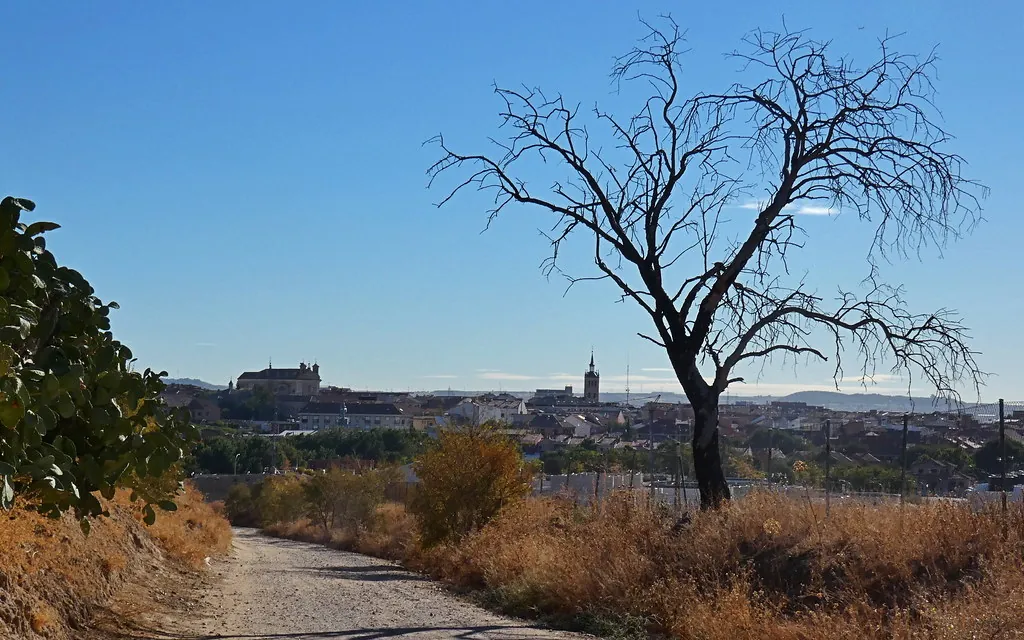
Seseña sits in Castilla La Mancha, south of Madrid, and its recent expansion reflects its proximity to the capital. The atmosphere is practical rather than touristic. That shapes the experience of a visit.
The Castle That Belonged to No One
Castillo de Puñoenrostro rises on a hill among olive groves on the outskirts of Seseña Viejo. Construction began in the 14th century. Today you will see it from the outside.
For decades the building had uses far removed from its original defensive purpose. It served as a barn, later as a hunting lodge, and then fell into neglect. In recent years restoration work has begun, so it is common to find the gate closed and warning signs about the state of the structure. Visitors approach, look at the walls and the keep, and that is usually as far as it goes.
The castle’s history follows a familiar pattern for many fortresses in Castile: changes of ownership, legal disputes and periods of abandonment. In the 15th century it passed into the hands of Diego Arias de Ávila through a royal grant. After that came decline.
Its setting, slightly apart from the main streets, reinforces the sense that this is a place to observe rather than enter. There are no organised tours mentioned, and no visitor centre. The appeal lies in its outline against the landscape and in the traces of a long, uneven history.
Iglesia de la Asunción in Seseña Viejo
Back in the old quarter, the Iglesia de la Asunción anchors the historic centre. The building is neoclassical and whitewashed, with a tower that was never fully completed after damage caused by the Lisbon earthquake. That earthquake, which struck in 1755, affected large parts of the Iberian Peninsula, and its impact is still visible here.
Inside, there is no expectation of a curated display. You will find an old baptismal font and the usual features of a parish church that remains in active use. It often stays closed outside service times. This is a functioning parish church for the community, not a monument with scheduled visiting hours or guided routes.
The church reflects the character of Seseña Viejo itself. Streets are short, houses are low-rise, and some stretches still retain the feel of an agricultural village. The scale is compact, easy to cover on foot in a short time.
The Trenches of Cerro de San Cristóbal
On Cerro de San Cristóbal there are remains of trenches from the Spanish Civil War. In 1936 this area formed part of the front line defending access routes to Madrid. The landscape of La Sagra was drawn into the conflict as the capital came under threat.
Some years ago a guided route was organised through these positions, though there does not appear to have been continuity. The trenches remain among olive trees and scrub, without clear signposting. There are no panels or marked paths to follow. Those who want to locate them often find it most effective to ask a local resident.
The site is understated. There is no formal interpretation on the ground, and no structured visitor experience described. What exists are the physical traces, cut into the terrain, recalling a period when this quiet area was part of a defensive line.
A Quick Circuit Through Town
The most logical walk begins in Seseña Viejo. From there you can head towards the castle for an external view, then continue for another ten minutes or so to see what is known as Puente Largo. This is an old arch bridge that once crossed the local stream. Nowadays the watercourse is often dry.
The route is straightforward and brief. Streets are close together, distances are short, and there is little need for planning. Afterwards, you return to the centre, stop for a drink, and that is that. The bars are typical of many small Spanish towns: television on, tortilla on the counter, cold beer available.
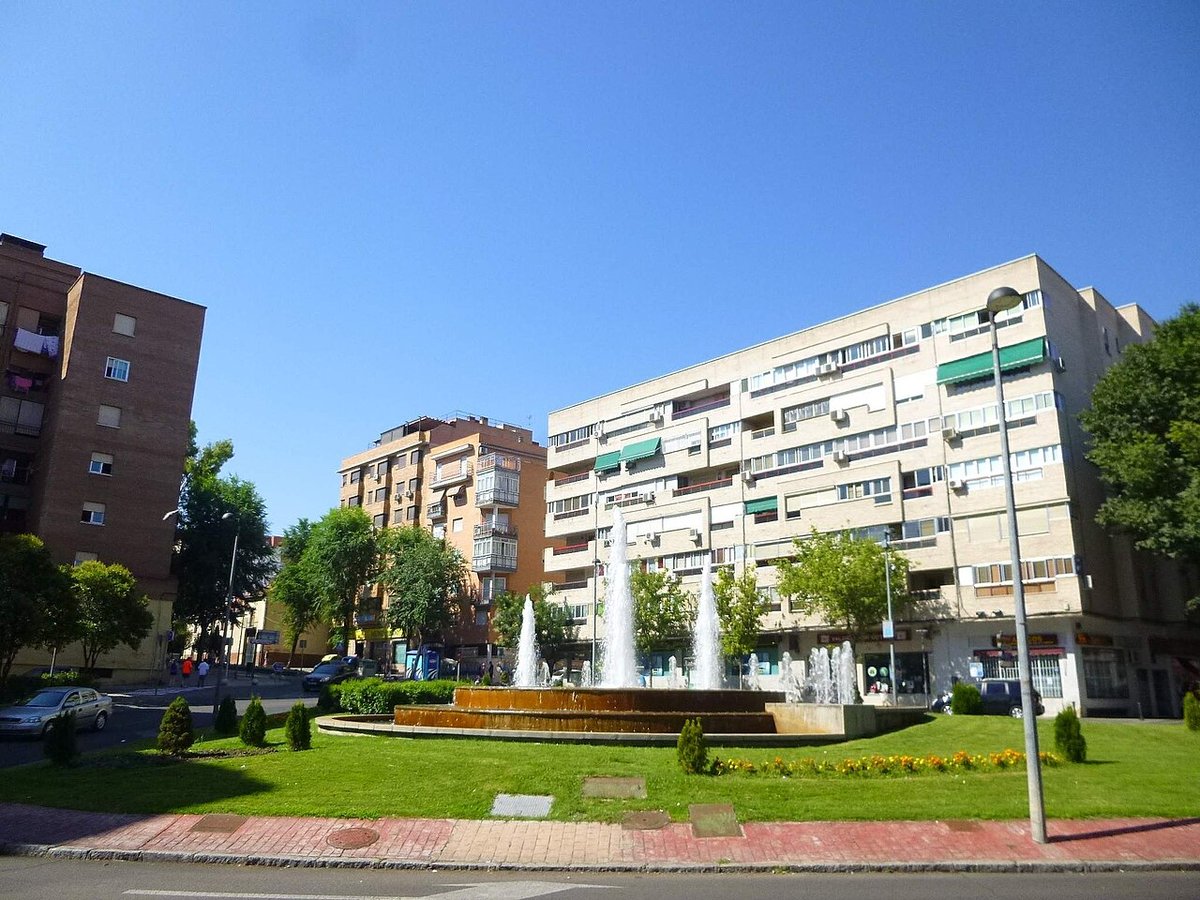
There is no sense of a polished visitor circuit. Instead, there is the everyday life of a municipality shaped by commuting patterns and steady expansion. Residential developments sit alongside older streets, reflecting different phases of growth near the motorway.
Is It Worth Stopping?
Seseña does not depend on tourism, and it does not attempt to present itself as a major destination. Its identity is closely tied to its proximity to Madrid, to industrial estates, and to housing estates that expanded quickly.
If you are travelling along the A‑42 and feel curious, it is easy enough to leave the road, see the castle from outside and take a short walk through Seseña Viejo. Half an hour to an hour is generally sufficient. After that, you continue your journey.
Life here moves according to its own priorities. For visitors, Seseña works best as a brief detour rather than a planned trip.