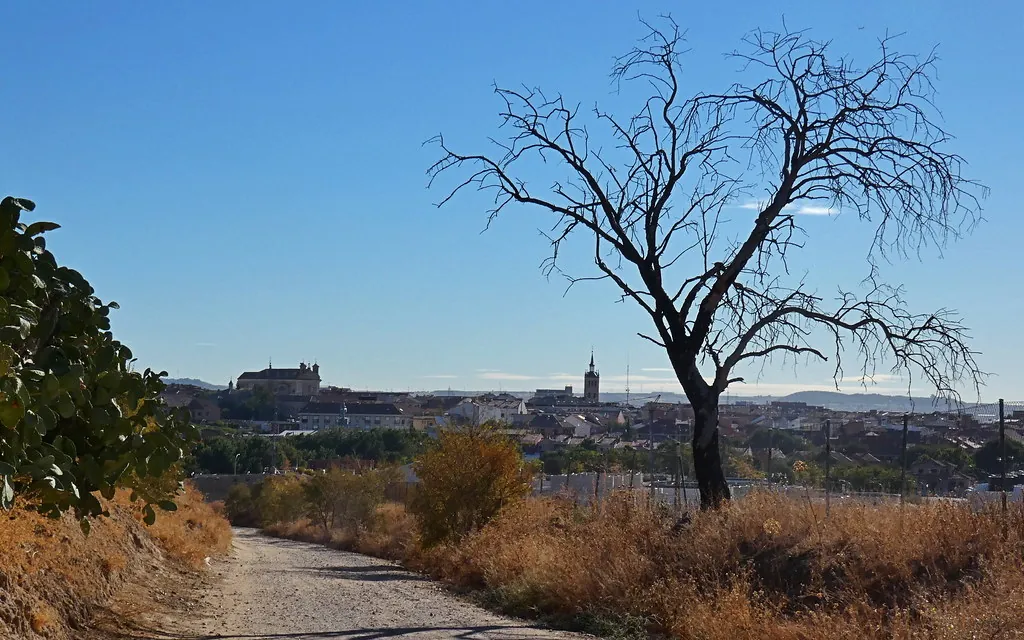
Valmojado - Flickr
-Merce- · Flickr 5
Castilla-La Mancha · Land of Don Quixote

Valmojado

The morning train from Madrid disgorges its cargo of suited workers at 7:23, their briefcases catching the first light as they scatter towards wait...

4,898 inhabitants · INE 2025
661m Altitude

Why Visit

Church of Santo Domingo Wine tourism

Best Time to Visit

autumn

Santo Domingo Festival (August) agosto

Things to See & Do
in Valmojado

Heritage

  • Church of Santo Domingo
  • cave-cellars

Activities

  • Wine tourism
  • Local routes

Festivals
& & Traditions

Fecha agosto

Fiestas de Santo Domingo (agosto)

Las fiestas locales son el momento perfecto para vivir la autenticidad de Valmojado.

Full Article
about Valmojado

Located on the A-5; town with a winemaking tradition and cave-cellars.

Ocultar artículo Leer artículo completo

The morning train from Madrid disgorges its cargo of suited workers at 7:23, their briefcases catching the first light as they scatter towards waiting cars. By half past, the platform at Valmojado's modest station is empty again, save for a pensioner feeding crumbs to sparrows and the stationmaster locking up for another hour. This is commuter country, yes—but stand here at dusk and you'll see why half these weekday warriors still choose to call this place home.

At 661 metres above sea level, Valmojado sits high enough to catch breezes that never reach the capital's sweltering streets forty kilometres north-east. The altitude means winter mornings arrive sharp and clear, frost silvering the olive groves that quilt the surrounding plain. Come summer, when Madrid bakes at 38°C, temperatures here typically run three degrees cooler—enough to make evening strolls bearable, though July and August still demand siestas.

The village spreads across a gentle rise, its grid of wide streets designed for ox-carts rather than Fiats. Houses rise one or two storeys, their whitewashed walls blinding at midday, terracotta roofs absorbing heat for release after sunset. Nothing towers here except the parish church's modest tower, built in phases over three centuries—note the Gothic base, Baroque middle, and nineteenth-century crown patched together like a medieval wedding cake.

The 8:15 to Atocha and Other Daily Rituals

Weekday mornings follow a rhythm established during Spain's property boom. Cars queue at the A-5 junction, indicator lights blinking in pre-dawn darkness. The commute takes fifty minutes on a good day, ninety when rain transforms the motorway into a chrome-skinned snake. Those left behind—retirees, mothers with toddlers, the occasional remote worker—claim the streets for coffee and gossip.

Café-Bar Plaza opens at 6:30, earlier than village logic suggests necessary. By seven, half a dozen regulars occupy the same Formica table they've claimed since 1987. Order a café con leche and you'll get it in a glass, Spanish style, alongside a paper-wrapped bollo that leaves sugar crystals on your fingers. The television mutters news from Madrid; nobody watches. Conversation centres on grain prices and whose grandson has failed his selectividad exams.

This commuter identity shapes everything. Property prices rose 40% between 2000 and 2008 as madrileños sought village tranquillity within striking distance of lucrative jobs. The crash stalled construction but didn't reverse the trend—today roughly 35% of households still depend on Madrid salaries. The upside for visitors: infrastructure that villages half this size can only dream of. The downside: Friday evening traffic that turns the final kilometre into a twenty-minute crawl past industrial estates.

Bread, Cheese, and Other Essentials

The agricultural cooperative on Calle Real still weighs olives on scales older than most employees. During harvest—November through January—tractors queue before dawn, their trailers heavy with fruit bound for oil mills in Torrijos. The resulting liquid gold appears on every restaurant table, peppery and green, nothing like the supermarket stuff.

Food here follows seasonal logic that British supermarkets have rendered exotic. Migas—literally "crumbs"—transform yesterday's bread into today's lunch, fried with garlic, chorizo and grapes when vineyards yield their fruit. Gazpacho manchego bears no relation to Andalucian cousin; this is game stew thickened with flatbread, served in earthenware bowls that retain heat through long conversations. Try it at Restaurante Las Cubas on Avenida de Castilla; their weekend menu costs €14 and includes wine that started life in neighbouring vineyards.

The Saturday market fills Plaza Mayor with precisely seventeen stalls. One sells nothing but Manchego cheese—cured for twelve months, ivory coloured, studded with small holes that indicate proper artisan production. Another offers wild asparagus in spring, cardoons in winter, herbs gathered from riverbanks whose names translate awkwardly: "purslane" sounds better as verdolaga. Arrive before 11:00 for best selection; by noon vendors begin packing away canvas awnings.

When the Commuters Leave

Weekends reveal Valmojado's split personality. Friday evening releases a collective sigh as Madrid number plates disappear towards the motorway. What remains is closer to the village of thirty years ago—though WiFi reaches every corner and teenagers communicate via TikTok rather than plaza benches.

Sunday mornings belong to cyclists. Groups of ten or twenty depart from Café Central, following secondary roads that trace la Sagra's rolling plain. Routes measure 40-80 kilometres, difficulty determined more by wind than gradient. The landscape offers little shade—ancient olives provide intermittent cover, their trunks twisted into shapes that suggest medieval torture devices. Carry water; the next fountain might be twenty kilometres distant.

Hiking options prove more limited. The village sits surrounded by agricultural land, footpaths following farm tracks between cereal fields. A pleasant circuit leads south towards the Guararrama river—three hours round trip, nothing dramatic except sky and the occasional imperial eagle riding thermals. Spring brings wildflowers amongst wheat stalks; summer reduces everything to gold and brown; autumn sees stubble burning that sends smoke signals towards distant Toledo.

Fiestas, Fireworks and Other Disruptions

August's patronal festivities transform orderly streets into temporary chaos. The programme hasn't changed substantially since 1972: morning encierros (bull runs that seem increasingly anachronistic to foreign eyes), afternoon verbenas (open-air dances where teenagers learn courtship rituals their grandparents would recognise), evening processions carrying the Virgin beneath a canopy of fireworks. Book accommodation early if you must visit during fiestas; otherwise avoid the second half of August entirely.

San Antón in January offers more authentic charm. The village priest blesses animals outside the church—dogs wearing ribbons, horses groomed to mirror shine, even the occasional pet rabbit clutched by small children. Bread distributed afterwards supposedly protects against disease; locals hoard it in freezers like medicinal insurance. Temperatures hover around 8°C—bring layers and accept that the mulled wine will be excessively sweet.

Getting Here, Staying Put

No trains reach Valmojado from Madrid anymore—the line closed in the 1990s despite local protests. Buses depart from Estación Sur hourly, journey time 55 minutes, single fare €5.20. Having wheels helps; car hire from Madrid airport runs €25-40 daily depending on season. Parking presents no issues except during fiestas, when every pavement becomes potential space.

Accommodation remains limited. Hostal La Cañada Segoviana offers fifteen rooms above a restaurant on Calle del Prado—clean, modern, doubles from €45 including breakfast that features proper coffee and tostada with tomato. Alternative options lie in neighbouring Torrijos or Illescas, both ten minutes distant by car.

The village makes little effort to court tourists, which constitutes much of its appeal. Information panels don't exist; the tiny tourist office opens Tuesday and Thursday afternoons, staffed by someone who knows everyone but speaks limited English. Come armed with basic Spanish or Google Translate, patience for afternoon closures, and acceptance that lunch happens at 15:00 whether your stomach agrees or not.

Valmojado rewards those seeking Spain beyond postcard perfection. The place won't change your life; it might restore your faith in villages that function as living communities rather than museums. Watch sunset paint the church walls gold, listen to swallows nesting beneath terracotta eaves, remember that real places rarely photograph as well as they feel. Then catch the morning train back to Madrid before rush hour begins.

Key Facts

Region
Castilla-La Mancha
District
La Sagra
INE Code
45180
Coast
No
Mountain
No
Season
autumn

Livability & Services

Key data for living or remote work

2024
ConnectivityFiber + 5G
HealthcareHealth center
EducationElementary school
Housing~5€/m² rent · Affordable
Sources: INE, CNMC, Ministry of Health, AEMET

Planning Your Visit?

Discover more villages in the La Sagra.

View full region →

More villages in La Sagra

Traveler Reviews