Full Article
about Villaluenga de la Sagra
Industrial and farming town; noted for the remains of its Águila castle.
Hide article Read full article
Cuando el horizonte se aplana
Hay un punto en la A-5, pasado Illescas, donde el paisaje de repente se abre como una mesa. La carretera recta, los campos a los lados y, de pronto, un pequeño montículo en la llanura. Ahí está Villaluenga de la Sagra. No es que esté escondido; es que en esta llanura toledana, cualquier cosa que se levante un par de metros sobre el trigo ya se ve venir desde lejos.
La primera sensación es de espacio. Mucho espacio. El pueblo funciona como una atalaya natural sobre la planicie. Llegas y notas el movimiento de un sitio donde la gente vive, pero muchos trabajan fuera. Coches con matrícula de Toledo o Madrid aparcados en las puertas a las siete de la tarde. Tiene ese ritmo.
Un centro que se recorre en un café
Aparcas en la plaza –nunca hay problema– y en diez minutos has visto lo esencial. Villaluenga no es de esos pueblos laberínticos donde te pierdes voluntariamente. Aquí las calles van a lo práctico: de la plaza al ayuntamiento, de ahí a la iglesia.
El ayuntamiento llama la atención. Tiene pinta de palacete pequeño, con más historia que la mayoría de los edificios municipales. No es casualidad: durante siglos fue residencia vinculada al arzobispado de Toledo. Hoy dentro hay funcionarios y papeles, pero la fachada sigue contando ese pasado.
A dos minutos está la iglesia de San Bartolomé. Su torre cuadrada es sobria, sin florituras. La puerta suele estar abierta. Entras y huele a cera y piedra antigua. Ves a alguien cambiando el agua de unos claveles en un jarrón. Es ese tipo de iglesia que forma parte del barrio, no solo del patrimonio.
No hay mucho más monumento que eso. Y está bien. El interés aquí está en lo cotidiano: las conversaciones en los bancos de la plaza, el ir y venir a comprar el pan.
Queso y cordero, sin etiquetas
En La Sagra, las ovejas son paisaje y economía. Eso se nota en lo que se come, sin aspavientos.
El queso manchego aquí no es un producto gourmet; es el queso de siempre. Lo pides en la tienda tradicional por kilos, te lo cortan de una cuña grande y punto. Se toma con pan en casa o te lo ponen en una taberna sin hacer una ceremonia especial.
Con el cordero pasa igual. Un domingo al mediodía, si paseas por algunas calles, huele a humo de leña y carne asándose en más de una casa. No hace falta cartel: es lo que se come cuando se junta la familia. Sencillo, directo, como siempre.
Caminar donde el cielo es ancho
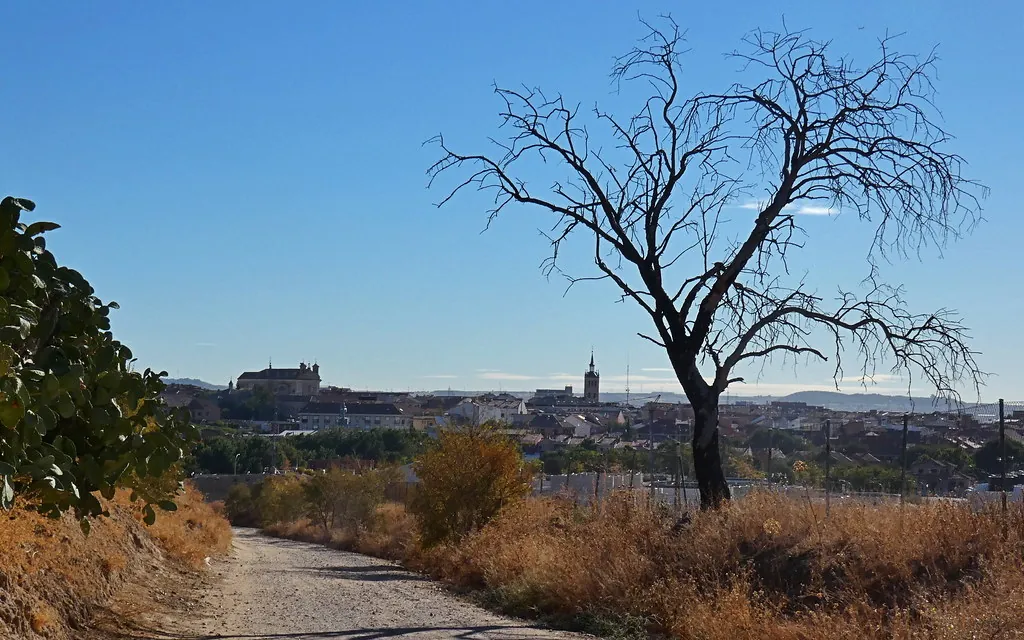
Si buscas senderos señalizados entre montañas, esto no es tu sitio. El paisaje aquí es horizontal: campos de cereal, algún olivar disperso y caminos de tierra que se pierden en el horizonte.
Son las mismas pistas por donde pasan los tractores y por donde va la gente del pueblo a caminar o en bici al atardecer. No hay miradores espectaculares, pero si hay un día claro, desde algunos puntos se ven las torres de Toledo hacia el sur y la silueta difusa de Madrid hacia el norte. Eso define bastante bien su posición: entre dos polos, pero anclado en su propia llanura.
Caminar aquí es una cuestión de ritmo lento y perspectiva amplia. En primavera todo es verde; en verano, dorado; en invierno, una paleta de marrones y grises austera. La recompensa no es una foto para Instagram, sino esa sensación rara hoy en día: quietud.
Fiestas para quien vive aquí
Las fiestas grandes son alrededor del 24 enero (Virgen dela Paz), con frío segurísimo,y luego ya entrado agosto.Es todo muy callejero:procesión por las pocas calles céntricas,bailesenlaplaza,todaafamilia sacando sillas afuera...
Para un forastero,laprimerasensaciónpuede serdeestarviendo algoajeno.Está todo tan basadoenlas relacionesdevecindadquealprincipio te sientes como espectador.Pero si te sientasenun banco o tomasalgoenlasterrazayno tieneprisa,lafronterase difumina.Terminasformandopartedelruidode fondo:música,bromasentrevecinos,ninoscorriendoentre las sillas.
Parada técnica en La Sagra
Villaluenga no es undestinoparaquedarseuna semana.Funcionamejorcomoun altodeunas horas siestaspore lacomarca,vienesdeToledoyquieresun paseosimple o necesitas desconectar dela autovíaA-5sin irte lejos.
La fórmula que suele funcionar: llegar a media mañana,pasearpor el centro tranquilo,sentarseacomer algo sinceremonia(queso,cordero,lohabitualluegocaminarunratopor uncamino dehastaquelapoblacióndesesvanezcaatrásy soloquedenelcampoylalineadelhorizonte.
Es unpuebloquesedefineporlonoforzosamente llamativo:suvidaordinaria,sus camposabiertos,suhorizontelejano.Unas horasaquíte danla fotografía clara ded qué va LaSagra