Full Article
about Cabañas de Yepes
Small town on the Mesa de Ocaña; quiet setting in the La Mancha plain.
Ocultar artículo Leer artículo completo
The church bell strikes noon, and the only other sound is wheat rustling in the breeze. At 700 metres above sea level, Cabanas de Yepes doesn't so much sit on Spain's central plateau as dissolve into it—300 souls scattered across a grid of whitewashed houses that seem to have emerged from the earth itself rather than being built upon it.
This is Castilla-La Mancha stripped of windmills and Don Quixote clichés. Fifty kilometres southeast of Toledo, the village occupies a broad sweep of cereal fields where the horizon behaves like a stubborn neighbour, refusing to shift no matter how long you stare. The landscape doesn't dramatic—it accumulates. Hour upon hour of wheat, barley and the occasional olive grove, stitched together by dirt tracks that crater into potholes after winter rains.
The Architecture of Absence
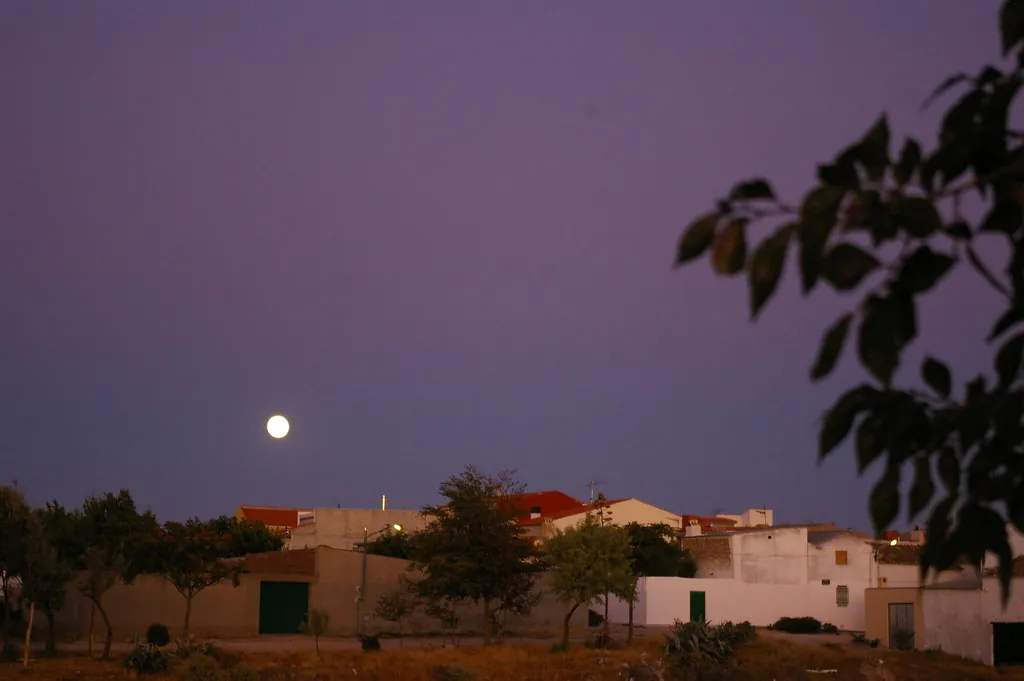
What passes for a centre reveals itself slowly. There's no plaza mayor ringed with cafés, no medieval fortress repurposed as a Parador. Instead, narrow lanes radiate from the parish church like spokes on a wheel that's stopped turning. The church—17th century, limestone, unmistakably Castilian—anchors everything. Its tower serves as compass point for anyone who's wandered too far into the surrounding maze of low houses with terracotta roofs and wooden doors bleached silver by decades of sun.
The buildings tell their own story of rural pragmatism. Walls thick enough to blunt summer heat, windows small enough to keep winter wind at bay. Iron grillwork guards ground-floor openings, not for security but because that's how they've always been made. Paint choices tend toward beige, ochre, the occasional brave blue. Nothing's been restored beyond function; nothing's been left to rot either. It's architecture that knows its place, neither fighting the landscape nor apologising for existing.
Walking the circumference takes twenty minutes if you dawdle. Longer if you stop to read the brass plaques beside doorways—family names carved deep, dates that stretch back to the 1800s, occupations that no longer exist. The village blacksmith's house stands shuttered, its forge now someone's garage. A former granary sports a satellite dish where grain once poured through wooden chutes.
Working the Plain
The sea of grain that surrounds Cabanas de Yepes isn't scenery—it's the local economy. From late April through June, the fields shimmer emerald, then shift through gold to bronze as harvest approaches. Combine harvesters work through the night during peak season, their headlights carving white arcs across darkness that smells of dust and ripe wheat. By July the stubble lies close-cropped, revealing soil the colour of burnt umber. August brings sunflowers in scattered plots, their faces tracking the sun like obedient schoolchildren.
This agricultural rhythm dictates more than weather patterns. It shapes when shops open (early, to beat the heat), when bars serve coffee (strong, with evaporated milk, at 7am sharp), and when the village population temporarily doubles—harvest brings back adult children who've moved to Toledo or Madrid, returning to help family holdings that average 200 hectares apiece.
The surrounding tracks serve walkers and cyclists, though calling them "routes" flatters their ambition. They're farm access roads, unsigned and unmapped beyond local knowledge. A GPS trace helps, but better is asking at the bakery—if it's open—to point toward the path that loops past the abandoned threshing floor. Three kilometres out, the village shrinks to a smudge of white against brown. Five kilometres, and even the church tower vanishes into heat haze.
What Passes for Excitement
Birdwatchers arrive with the dawn, binoculars trained on species that prefer open country. Crested larks perform their hovering song-flights above stubbled fields. Calandra larks, chunkier and more confident, strut between furrows like they own the place. During migration periods, honey buzzards ride thermals overhead, heading south toward Africa on wings that never seem to flap.
The village's single bar opens at 8am and closes when the last customer leaves, timing that might mean 3pm or 3am depending on whose cousin's visiting from Burgos. Coffee costs €1.20, served in glasses that retain heat better than cups. They keep Mahou beer on tap and a single bottle of Johnnie Walker for the one regular who drinks whisky in winter. Food runs to tortilla española cut in doorstop wedges, or migas—fried breadcrumbs with chorizo—when the owner's feeling ambitious.
Shopping options extend to a butcher who opens three mornings weekly, a bakery that sells out of bread by 10am, and a pharmacy staffed by a woman who remembers every prescription she's ever filled. For anything else—newspapers, petrol, fresh fish—drive to Yepes, fifteen minutes north on the CM-401. The petrol station there closes at 10pm and doesn't accept cards after 9.
Seasons of Silence
Spring brings the most dramatic transformation. By mid-April, green shoots push through soil that's been brown since October. Temperatures hover around 18°C—jacket weather in the morning, t-shirt by noon. This is when photographers appear, tripods planted beside poppy fields that erupt in scarlet patches between wheat rows. Local farmers tolerate them provided no one tramples crops. The village's annual fiesta happens in late May, three days of processions and outdoor dancing that triples the population. Book accommodation early—there are precisely two rental houses, both owned by the same family.
Summer demands strategy. July and August temperatures regularly hit 35°C, occasionally pushing past 40°C. The village empties as residents flee to coastal second homes or simply close shutters and sleep through the afternoon heat. Morning walks need finishing by 10am; evening strolls begin after 8pm when shadows stretch long across cooling earth. The compensation comes at night—at this altitude, temperatures drop to 15°C, perfect for sitting outside with a glass of tinto de verano while bats flit between streetlights.
Autumn brings harvest, dust and the smell of diesel from machinery that costs more than most houses. September light turns honey-gold, flattering everything it touches. Olive picking starts in November, families working plots that might contain 200 trees, each yielding perhaps fifteen litres of oil in a good year. The village's second fiesta, smaller and more religious, honours the Virgin in early October. It's mostly for locals, though visitors who arrive by accident get invited to share roasted chestnuts and anisette.
Winter bites harder than latitude suggests. January temperatures can drop to -5°C overnight, and the plain offers no shelter from wind that howls across from the Sierra de Guadarrama. Houses lack central heating—residents rely on butane heaters and wool jumpers. Snow falls rarely but when it does, the village becomes unreachable for hours. The CM-401 gets gritted; local roads don't. Bring chains if visiting between December and February, and don't trust weather forecasts—conditions change fast at this altitude.
The Honest Truth
Cabanas de Yepes won't change your life. It offers no epiphanies, no Instagram moments that haven't been photographed a thousand times already. What it provides is a benchmark for how most of Spain actually lives—slowly, seasonally, with one eye on the weather and the other on crops that might fail if the rain doesn't come by November.
Come if you need reminding that silence still exists, that communities persist where everyone knows the baker's grandfather's nickname, that lunch at 3pm followed by a siesta isn't a tourist activity but daily routine. Stay away if you need entertainment beyond walking, watching and wondering how long you'd last before moving to the city.
The village will still be here next year, and the year after that. The wheat will grow, the church bell will strike, the bar will serve coffee at 8am sharp. Whether you visit or not makes absolutely no difference to Cabanas de Yepes—and that's precisely its point.