Full Article
about Ciruelos
Municipality of La Mesa de Ocaña; flatland setting with dry-farmed crops
Hide article Read full article
By mid-morning, light slants through the windows of the Iglesia de la Asunción, casting pale rectangles across the floor. Outside, barely a car passes. The air carries the scent of dry earth and stubble, that fine dust which lifts from country tracks when summer has settled in for weeks. Tourism in Ciruelos is nothing theatrical. It is about pausing for a while and noticing how a small village on the Mesa de Ocaña goes about its day when there is no rush.
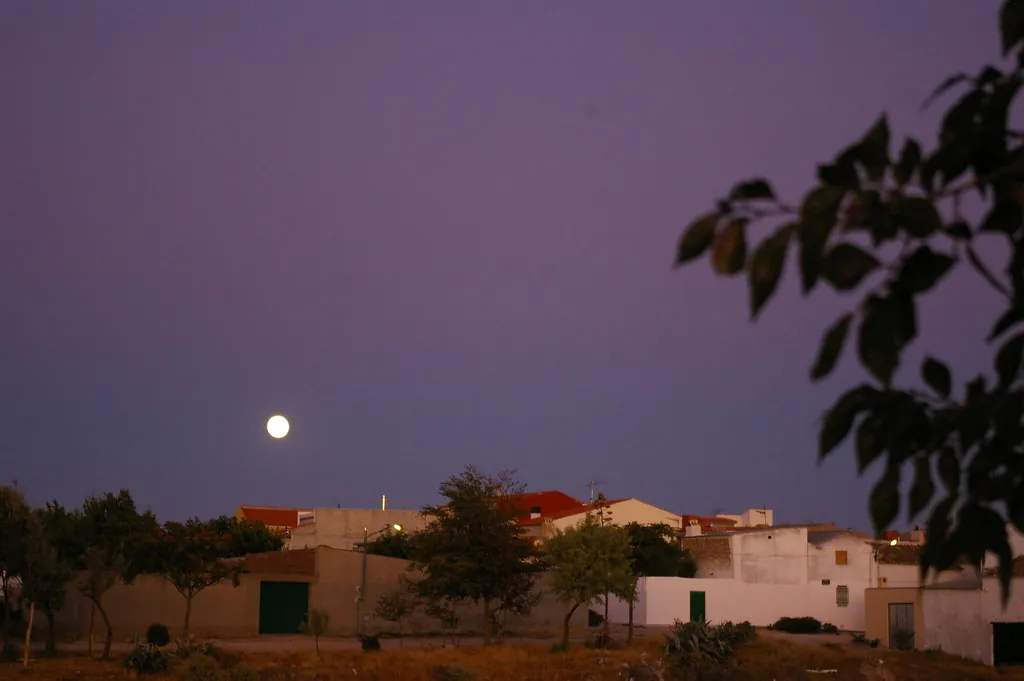
Ciruelos lies on the western side of the comarca, just over half an hour by car from Toledo. A little more than seven hundred people live here, and that shapes the rhythm of the place. Short streets, shutters opening slowly in the morning, the occasional tractor crossing the village on its way to the fields. Houses combine whitewashed walls with wooden gates darkened by years of weather. In the main square, the parish church, built centuries ago and remodelled several times, remains the visual anchor. Several streets seem to lead back towards it.
The open landscape of the Mesa de Ocaña
A short walk is enough for the village to fall away and for the wider setting to take over. Cereal fields stretch as far as the eye can see. In spring the tones lean towards fresh green. By summer everything turns ochre and the air shimmers above the ground. On some days the only sounds are wind brushing through dry stalks or the steady clatter of a stork adjusting its nest.
There are no marked walking routes as such, yet the agricultural tracks serve well for an unhurried stroll. Water is essential when the heat builds. In this part of La Mancha the sun falls directly and there is little shade. July and August are best avoided in the middle of the day. Early morning or late afternoon change the experience completely, as the light softens and the horizons seem to stretch even further.
The landscape here is defined by dry farming, a system that relies on rainfall rather than irrigation. The wide, open views are part of what characterises the Mesa de Ocaña, a high plain within the province of Toledo. From gentle rises in the land, the pattern of fields becomes clear and the scale of the countryside comes into focus.
Quiet streets and everyday life
Back in the village, everything happens on a small scale. A bench in the shade, brief conversations on doorsteps, bicycles passing at an easy pace. Ciruelos is not somewhere designed for ticking off sights in quick succession. It is the kind of place that is covered almost without noticing.
The Iglesia de la Asunción gathers much of the activity within the historic centre. Around it, the square continues to act as a meeting point, a role that many villages in the area still retain. People greet one another, cars stop for a moment, children cross from one side to the other as evening approaches. When the bells mark the hour, their sound carries clearly through the streets.
There is little traffic and few distractions. The pace is set by daily routines rather than by visitors. Watching shutters being raised in the morning or seeing a tractor rumble through can feel like small events. That is part of the appeal. Ciruelos rewards attention rather than urgency.
Food and the rhythm of the year
Home cooking remains closely tied to the surrounding countryside. In many households, dishes that have been repeated for decades still appear on the table. Pisto, a vegetable stew typical of La Mancha, is common. Lamb stews, local embutidos and plenty of bread accompany meals. The ingredients reflect what the land provides and what families have prepared for generations.
When the grape harvest arrives, the atmosphere shifts slightly. The vendimia is an important moment across much of rural Spain, and here it brings the first must and local wine to family meals and gatherings among neighbours. It is not a spectacle laid on for outsiders, but part of the agricultural cycle that continues to shape the village.
Traditions follow that same calendar. In January, San Antón is usually celebrated with the blessing of animals, a custom that underlines how closely village life has long been linked to working the land. During the summer, the patron saint festivals take place. Streets fill more than usual, and many who now live elsewhere return for a few days. The population swells temporarily, and the quiet lanes take on a different tone before settling back again.
A base for exploring the comarca
Ciruelos can serve as a calm base for exploring this part of the province of Toledo. Ocaña is nearby and is known for having one of the largest main squares in the province. Its scale contrasts with the intimacy of Ciruelos and offers a broader sense of the region’s history and architecture.
Along the secondary roads, isolated hermitages appear in the open countryside. Old norias, traditional waterwheels once used to raise water, stand as reminders of earlier agricultural practices. Low hills provide vantage points from which the dry landscape of the Mesa de Ocaña can be properly understood.
For those travelling from Madrid by car, the journey usually takes a little over an hour, combining the A‑4 with regional roads that lead inland. It is wise to arrive with fuel to spare, as services in small villages are limited and not always open at all times.
The value of modest expectations
Ciruelos works best when visited without grand expectations. An evening walk, the sound of church bells marking the hour, the scent of dry fields as night falls. The experience is subtle and rooted in the ordinary.
There are no headline attractions or carefully curated routes. Instead, there is the steady pattern of rural life on the Mesa de Ocaña. Light shifting across the square, conversations at doorways, fields changing colour with the seasons. Travel here is less about seeing and more about observing.
Sometimes that is enough. In Ciruelos, it often is.