Full Article
about Dosbarrios
Set on a hill overlooking the plain; its castle and the musical tradition of its bands stand out.
Ocultar artículo Leer artículo completo
The thermometer reads 38°C at three in the afternoon, yet the air feels thinner somehow. At 711 metres above sea level, Dosbarrios sits high enough that even seasoned walkers notice the difference when climbing from the cereal fields back into town. This isn't the Spain of coastal resorts or medieval hilltowns—it's the elevated heart of La Mancha, where the plateau stretches so flat and wide that locals claim they can watch their dogs run away for three days.
Two thousand souls call this home, though numbers swell each August when families return for the fiestas of San Agustín. The rest of the year, rhythm follows the agricultural calendar. Tractors rumble through narrow streets at dawn, their tyres leaving distinctive tracks that dry into the asphalt like fossilised breadcrumbs. Elderly men occupy the same bar stools they've warmed for decades, discussing rainfall with the seriousness others reserve for football scores.
The parish church dominates the skyline—not through grandeur, but because nothing else rises above two storeys. Its tower serves as navigation beacon across the sea of wheat, visible from kilometres away on the old CM-410 road. Approach from the east and you'll spot it long before the first houses appear, a solitary finger pointing skywards against a horizon so straight it could have been drawn with a ruler.
Walking Through Layers of Time
Historic centres usually mean winding alleys and architectural flourishes. Dosbarrios offers something different: a masterclass in practical rural design. Whitewashed walls reflect summer heat. Wooden doors, thick enough to withstand both winter winds and summer furnace blasts, bear scars from generations of use. Stone doorframes lean slightly, not from structural failure but from the slow subsidence that comes when buildings sit on earth ploughed for centuries.
Down Calle San Antón, an original well sits covered with heavy ironwork. Peer through the bars and you'll see water still glinting below, though no bucket has descended here since the 1970s. The houses opposite retain their original external staircases—stone flights that once led to haylofts, now converted into extra bedrooms for grandchildren who visit reluctantly from Madrid.
Archaeology happens at ground level. Scraped patches reveal original cobblestones beneath tarmac. In the bakery's entrance, medieval pottery shards embedded in the wall show how builders recycled everything, even broken plates, into new structures. Nothing gets wasted here. Everything finds another purpose.
The Calendar Written in Earth
Visit in April and the surrounding landscape resembles an Impressionist painting. Green wheat ripples like ocean waves, punctuated by blood-red poppies that seem almost too vivid for real life. The air carries moisture from recent rains, and temperatures hover around a civilised 20°C. Photographers arrive clutching expensive cameras, then realise their mobile phones capture the colours just as effectively. Light here possesses quality that painters would kill for—clear, sharp, defining every furrow and ridge.
Return in July and the transformation shocks. Same fields, now burned gold under a sky so blue it hurts to look at. Temperatures regularly exceed 40°C, sending sensible creatures underground. Even the swallows fly higher here than elsewhere, riding thermals that rise from sun-baked earth. Walking becomes an early-morning activity; by midday, only mad dogs and English tourists venture out without hats.
Autumn brings its own drama. Ploughing starts in October, turning soil so dark it's almost purple against stubble. The smell—rich, loamy, ancient—carries on winds that sweep unchecked from the Guadiana valley. Local farmers reckon they can judge next year's rainfall by watching which way the first storms track across these open skies. Their predictions, passed down through generations, prove more accurate than meteorological services.
What Grows Between the Rows
The restaurant attached to the petrol station serves food that would earn Michelin stars in London, though here it arrives on chipped plates with minimal ceremony. Pisto—Spain's superior answer to ratatouille—costs €6 and arrives with bread baked that morning in ovens fuelled by olive wood. The chef, Maria Jesús, learned her craft from a mother who considered measuring spoons an affectation. Her gazpacho contains exactly 22 ingredients, though she'll never reveal the final two.
Local olive oil, pressed in Villacañas 15 kilometres north, appears on every table. It's grassy and peppery, nothing like the bland supermarket versions sold back home. Buy it directly from the cooperative—bring your own bottles and they'll fill them for €3.50 per litre, cash only. The cooperative opens Tuesday and Thursday mornings, or whenever someone remembers to turn up.
Wine comes from neighbouring Quero, where vineyards survive at this altitude through techniques developed by monks in the 12th century. The altitude—over 700 metres—creates temperature swings that grapes love: hot days for sugar development, cool nights for acidity retention. A bottle of decent white costs €4 in the village shop, though locals favour the red for winter cooking. Ask for "lo que beben los del pueblo"—what the villagers drink—and you'll receive something that hasn't seen a label but tastes like Spain distilled.
When the Sky Becomes the Landscape
The flatness creates optical illusions. Objects kilometres away appear within walking distance. That farmhouse, seemingly ten minutes off, requires forty minutes across uneven furrows. Tourists regularly underestimate distances, setting off with single water bottles towards horizons that never get closer. Mobile phone signals bounce off this emptiness unpredictably—one step forward and you're connected, one step back and you're in 1995.
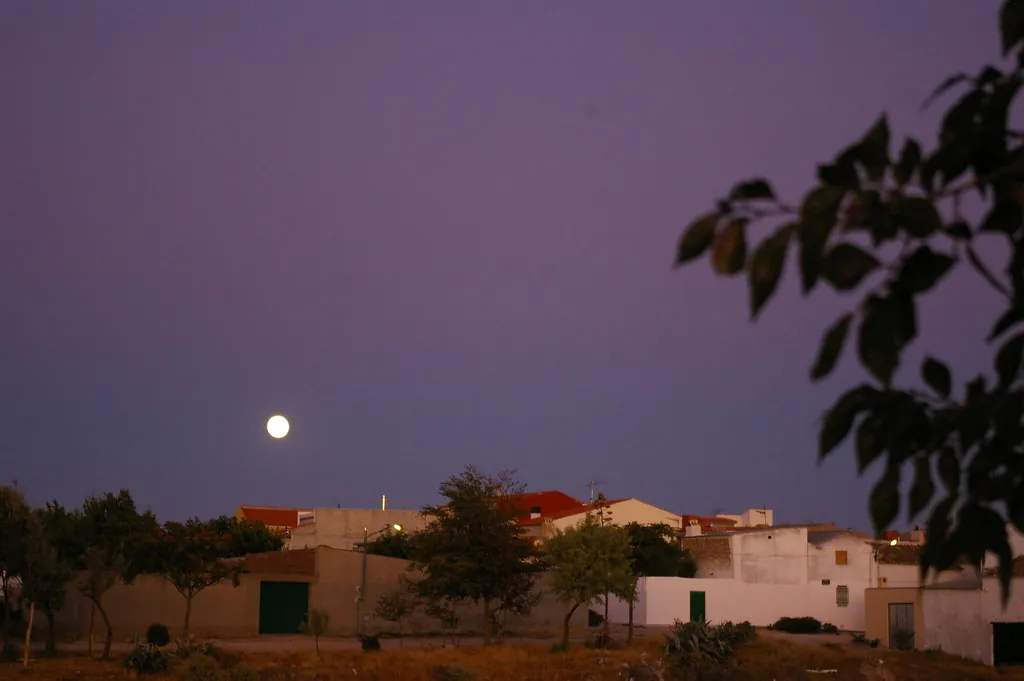
But the same geography delivers compensations. Sunrise spreads like spilled paint across 180 degrees of horizon. Sunset transforms wheat stubble into fields of molten gold. On clear winter nights, stars crowd the sky with intensity that makes city dwellers gasp. The Milky Way appears not as a distant concept but as a river of light flowing overhead. Local teenagers use star positions for navigation, skills their counterparts in London lost centuries ago.
Winter brings its own challenges. At 711 metres, temperatures drop to -8°C regularly. The church bells develop frost patterns that resemble lace. Pipes freeze. The elderly wrap scarves around their faces when collecting bread, looking like bandits in an old Western. Yet skies remain cobalt blue, and the air tastes clean enough to bottle.
The Rhythm That Can't Be Rushed
Dosbarrios won't suit everyone. Shops close for siesta between two and five. Sunday afternoons feel like the village holds its breath—no traffic, no voices, just the sound of wind through television aerials. The nearest cash machine sits twelve kilometres away in Ocaña, and it runs out of money during fiesta weekends. Wi-Fi exists but operates at speeds that remind middle-aged visitors of their first dial-up connections.
Yet for those willing to adjust, something happens. Time stretches. Conversations lengthen. Meals extend over hours because nobody has anywhere urgent to be. The baker remembers how you like your bread sliced. The bar owner sets aside yesterday's newspaper because you mentioned missing home news. Connections form—not quickly, not dramatically, but with the steady certainty of crops growing in fertile soil.
Come for two days and you'll leave frustrated, convinced you've seen nothing. Stay for a week and you'll understand why people spend entire lives here, 711 metres closer to the sky, where the earth meets horizon in a line so perfect it makes you believe the world might actually be flat after all.