Full Article
about Huerta de Valdecarábanos
Known for its striking modernist chapel of the Virgen del Rosario de Pastores.
Ocultar artículo Leer artículo completo
The church bell strikes noon and the only other sound is wheat rustling. Not traffic. Not conversation. Just 1,760 people and several thousand hectares of cereal crops breathing in the thin air of La Mancha's high plateau. At 620 metres above sea level, Huerta de Valdecarábanos is high enough for the light to sharpen and the summer sun to feel surgical, yet low enough to escape the snow-drifts that isolate mountain villages further north. The result is a town that lives by the cereal calendar: sowing in November, praying for rain until March, watching the ears turn gold by late June, then repeating the cycle until the soil—or the market—gives out.
The Geometry of Bread
Stand on the edge of town and the view is a grid drawn by tractors. Parallel lines of wheat and barley run to the horizon, interrupted only by the occasional olive grove or the stone pile of an abandoned cortijo. This is the Mesa de Ocaña, a raised tableland that feels more prairie than Spanish postcard. The name Huerta de Valdecarábanos itself is a linguistic fossil: "huerta" once meant a fertile patch amid dryland, while "Valdecarábanos" points to medieval cattle rights and the powerful Carabanche family who controlled them. Today the cattle are gone, but the imprint remains in the wide farm tracks that double as walking routes and the granaries that still dominate the skyline next to the church tower.
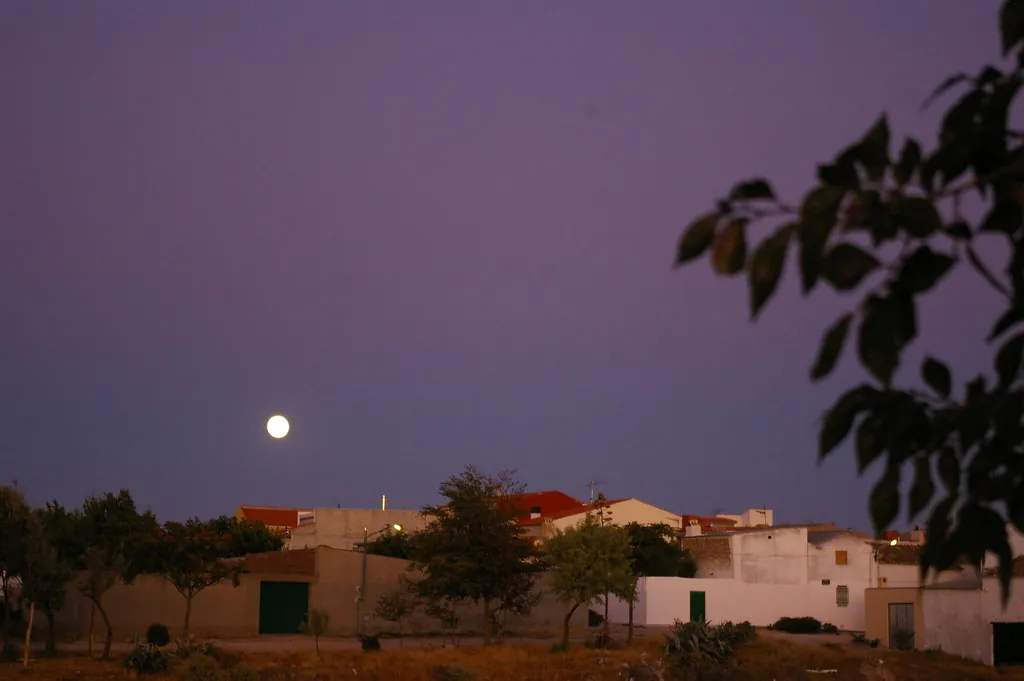
Inside the town, streets follow the same orthogonal logic. Two main roads cross at the Plaza de España; everything else is a rectangle. Houses are built from the same ochre brick as the soil, their lower halves painted white to deflect heat. Wooden doors are studded with iron nails thick enough to survive a battering ram—or decades of farmers shouldering through with sacks of grain. Peek through an open gateway and you'll see the classic Manchego floor plan: a narrow entrance tunnel, a cobbled patio with a cistern, then stables converted into garages. Swallows nest under the eaves, returning each March like clockwork.
What Passes for Sights
The 16th-century parish church of San Nicolás de Bari doesn't bother with frills. A single nave, a modest bell tower, a retablo gilded in the 18th century and left alone ever since. The real attraction is the temperature drop as you step inside: five degrees cooler, scented with wax and old stone. Sunday mass at 11:30 still fills most pews; visitors are noticed but not fussed over. If the sacristan is around he might unlock the side chapel to show the Flemish-style panels rescued from a fire in 1936, their paint bubbled like toasted bread.
Opposite the church, the old primary school has been turned into a reading room with free Wi-Fi—useful because mobile signal vanishes in odd pockets around town. There is no museum, no interpretation centre, no gift shop. Instead, heritage is lived in: the 19th-century olive press now houses the agricultural co-op; the former slaughterhouse is a private garage stacked with harrows and seed drills. Walk Calle de la Constitución at dusk and you will see residents watering geraniums in tin cans once used for engine oil. Recycling here is not ecological fashion; it is habit.
Eating the Plateau
British expectations of Spanish food—seafood, rice, citrus—arrive starved of context this far inland. Huerta's cuisine is what happens when you have wheat, lamb, garlic and very little else. Start with migas: stale bread fried in olive oil with chorizo and grapes. It sounds austere, tastes like savoury Christmas pudding, and costs €6 at Bar La Plaza, the only establishment reliably open outside fiesta week. The gazpacho pastor is not the chilled Andalusian soup but a thick stew of game, peppers and paprika designed to keep shepherds alive overnight. Order it after October; outside hunting season the kitchen substitutes pork and everyone feels slightly cheated.
For self-caterers, the bakery on Avenida de Castilla (open 7–11 am) sells pan de pueblo baked in a wood-fired oven. The crust could stun a badger; ask for it "bien cocido" if you plan to hike. Cheese comes from a refrigerated cabinet in the Co-op supermarket: look for the wheel wrapped in esparto grass labelled "D.O. Manchego curado 12 meses" at €18 a kilo—half airport prices. Pair it with a €3 bottle of local tempranillo and you have a picnic that tastes of iron, thyme and 300 cloudless days a year.
Walking Without Waymarks
There are no signed footpaths, which keeps the landscape honest. Head south-east on the Camino de los Llanos and within 20 minutes housing gives way to esparto grass and the occasional stone cross erected by widows in the 1940s. The track is dead straight, used by combine harvesters wider than a London bus; step aside when you hear them coming. After 5 km you reach a ruined chapel, Ermita de la Virgen de la Vega, where shepherds still leave offerings of bread and oil before lambing. Return via the pine plantation on your left; the trees were planted under Franco's reforestation scheme and now provide the only shade for miles.
Spring brings calendula and poppies between the wheat rows; by July every living thing has either hidden or hardened. Carry two litres of water per person from May to September; the dry air evaporates sweat before you notice dehydration. In autumn the stubble fields turn sepia and stone curlews call at night—an unearthly sound like a file dragged across metal.
Getting There, Staying There
No train line serves Huerta. From Madrid's Estación Sur, Samar buses run twice daily to Ocaña (55 min, €7.20), from where a local taxi covers the final 14 km for €20—book in advance because only two cabs operate in the entire comarca. Driving is simpler: take the A-4 south, exit at junction 76, then follow the CM-412 for 12 minutes. Petrol stations are scarce; fill up in Ocaña or risk pushing the hire car.
Accommodation is limited. Casa Rural La Cerca has three doubles around a patio where swifts dip to drink from the fountain. Rooms are €65 including breakfast (toast, tomato, olive oil, coffee—nothing fancy, everything local). The owners can arrange dinner if you order before noon; expect lamb chops, Manchego stew and a bottle of Valdepeñas that costs less than a London pint. Closed January–February when the owners migrate to the coast like everyone else.
The Quiet Months
Visit in late April and you catch the town half awake: tractors humming at dawn, women in housecoats sweeping doorsteps, the smell of wet earth after a shower. Come August and the population doubles as Madrilenian families return; suddenly the plaza fills with toddlers on scooters and teenagers comparing phone plans. Fiesta week (around 15 August) means late-night concerts, foam parties in the polideportivo, and a procession where the Virgin is carried through streets carpeted with rosemary. It's fun if you like communal karaoke; otherwise book elsewhere.
Winter is brutal. Daytime temperatures hover at 8 °C, night-time drops to –5 °C and the wind whistles across nothingness until March. Many houses lack central heating; guest rooms rely on plug-in radiators that glow like toasters. The upside is clarity: on a clear December afternoon you can see the Sierra de Guadarrama 120 km away, snowcaps flashing pink in the sunset.
Huerta de Valdecarábanos will never tick the glossy-boxes of Spanish tourism. It offers no selfies with flamenco dancers, no infinity pools, no Michelin stars. What it does offer is a calibration service for urban clocks: four days here and the body remembers that time is cyclical, not linear, and that lunch tastes better when you have watched the wheat that will become your bread tremble under the same sky you are standing beneath.