Full Article
about Villarrubia de Santiago
Set on a cliff overlooking the Tajo; known for the Ermita del Castellar.
Hide article Read full article
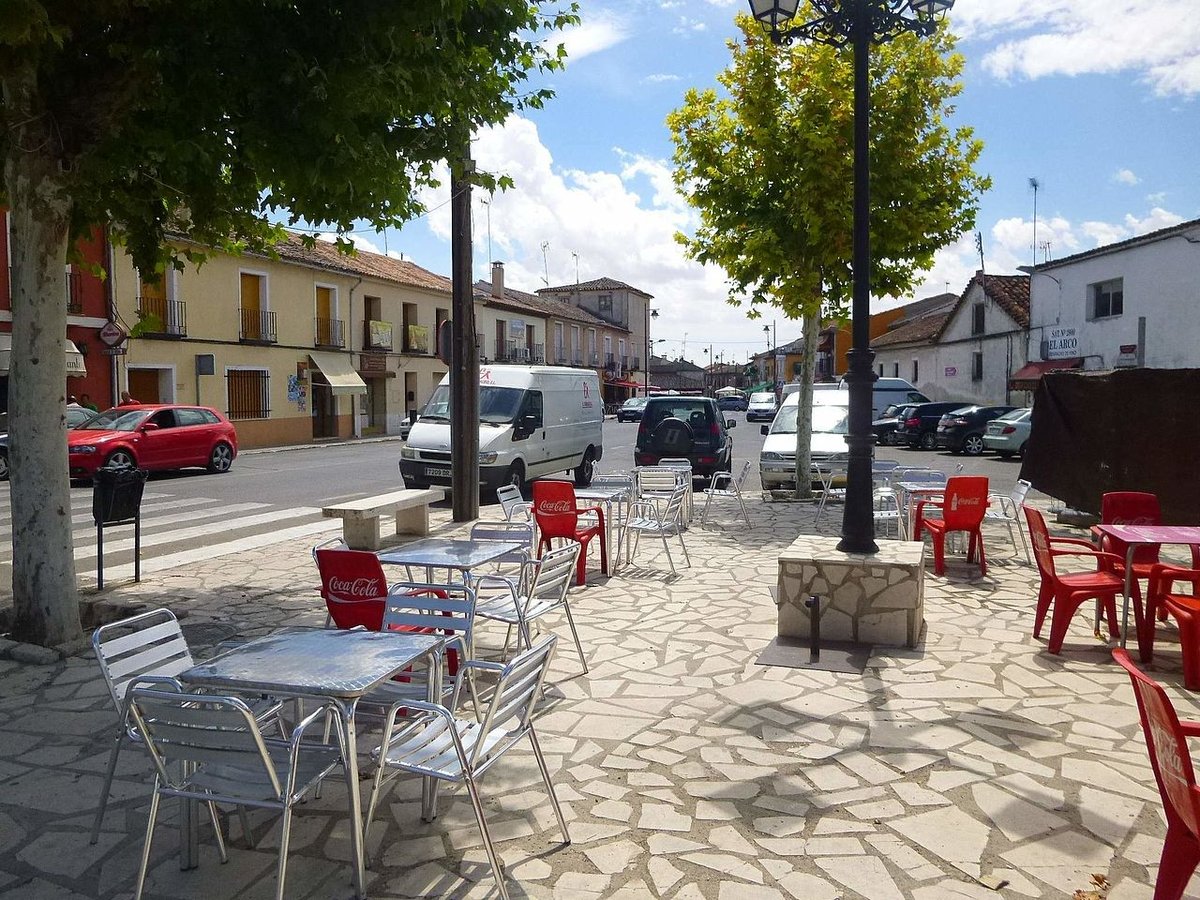
The storks arrive before anyone else. At half past seven in the morning, when the village still smells of freshly baked bread and the mist is slowly lifting from the wheat fields, the iron nests on the tower of San Bartolomé are already alive with beaks and clattering calls. From the Plaza de la Constitución, where a dog might be stretching beside a stone bench, their dark silhouettes stand out against a mercury-coloured sky.
Many days in Villarrubia de Santiago begin like this: with the village still half asleep and the dry sound of storks striking their nests carrying across the square.
The Village Beneath Your Feet
There is another Villarrubia underfoot. A maze of caves carved into the rock, hundreds according to local accounts, spread beneath several streets in the old quarter. Some began life as wine cellars, others as storage spaces that changed purpose over time.
La Cueva de la Yedra is one that is sometimes open to visitors if a tour is arranged through the town hall. It is worth checking in advance, as it is not always accessible. The descent is via a narrow staircase where the air shifts abruptly. It smells of damp earth, cold stone and old wine that seems to cling to the walls.
Inside, ashlar pillars support low vaults. On one wall, initials and old dates can still be made out, the kind that no one can fully explain any more. Some residents connect the caves to episodes from the War of Independence, the early nineteenth-century conflict against Napoleonic troops. Others suggest their purpose was far more practical: storing wine and grain at times when taxes were heavy.
The light below is dim and the silence presses gently on the ears. Returning to the surface, it is hard to picture that this hidden Villarrubia continues to stretch beneath the houses, largely unseen.
San Bartolomé and the Rhythm of the Square
The church of San Bartolomé dominates the centre of the village with an understated presence. Built in the late sixteenth century, it reflects the austere language associated with Herrerian architecture, a style linked to straight lines, clear volumes and stone that does not rely on elaborate decoration.
Its tower, visible from much of the surrounding area, carries the clock that sets the pace of life in the Plaza de la Constitución. More than one resident jokes that it does not always match the time on a mobile phone exactly, something accepted here with good humour.
Inside, the atmosphere shifts. There is the scent of wax and aged wood. The main altarpiece combines Renaissance elements with later Baroque additions, a common feature in churches that have evolved over the centuries. In a side chapel stands the image of San Blas, traditionally taken out in February for the blessing of throats, a ritual still observed in many parts of Spain.
From the choir loft, when it is open, the view slips through high windows towards the fields of the Mesa de Ocaña. This agricultural plateau turns green in spring and then, in summer, adopts a straw-coloured tone that seems to absorb the late afternoon light.
The Hill of El Castellar
About five kilometres from the village, along agricultural tracks that cut through cereal fields and olive groves, rises the cerro del Castellar. The old castle of Tormón once stood here. Today, little remains visible, but in the nineteenth century a small hermitage was built using some of the original stone.
El Castellar functions less as a monument and more as a meeting point. During the romería held towards the end of September, many residents walk up from Villarrubia. A romería is a traditional pilgrimage, part religious event and part community gathering. Groups move slowly along the dusty path, carrying food in backpacks and bags as the ground shifts under their steps.
At the top, the landscape opens wide. On clear days, the line of the Tagus valley can be seen in the distance, beyond olive groves and dry farmland. The wind often blows strongly across the summit, making the metal cross of the hermitage creak.
Stories circulate here too. Some speak of ancient tunnels linking the hill to the village, although no one seems to have found a clear entrance. Like many things in Villarrubia, the idea rests somewhere between memory and legend.
When the Countryside Sets the Calendar
Life in Villarrubia de Santiago continues to follow the rhythm of the fields. In April, the air carries the scent of freshly turned earth and bakery ovens lit early in the morning.
On the night of 30 April, the Mayos are sung. Groups of young people walk through the streets performing traditional songs beneath balconies. The lyrics, which change little from year to year, speak of spring and of loves that are just beginning or left unresolved. Some households respond with eggs, sweets or a few coins.
The following day, San Marcos, many people head out to the countryside to spend the day. Migas appear on improvised tables or on blankets laid directly on the ground. This humble dish, typical of rural Spain, is made from fried breadcrumbs with garlic, prepared by hand and shared outdoors.
In September, the patron saint festivities arrive. During these days the square fills with noise, music and the dust kicked up by people constantly coming and going. At night, once the heat drops, the streets are lit by lanterns and the atmosphere stretches on into the small hours.
Through it all, the storks remain on the tower of San Bartolomé, their nests perched above the Plaza de la Constitución. Beneath the streets, the caves stay cool and quiet. On the horizon, the fields of the Mesa de Ocaña shift with the seasons. Villarrubia de Santiago does not present itself with grand gestures. Its character lies in these layers: the visible and the hidden, the spoken history and the half-remembered stories, the daily routine shaped by land and tradition.