Full Article
about Villaminaya
A farming village near Orgaz, noted for its Roman bridge.
Hide article Read full article
A las siete de la mañana, el sol todavía bajo pinta las fachadas de un amarillo pálido y el aire huele a tierra húmeda y a leña quemada de la noche anterior. Una persiana sube con un traqueteo seco, un coche avanza despacio por la Calle Mayor, y después solo queda un silencio rural de verdad: pájaros en los cables, un perro que ladra a lo lejos, poco más.
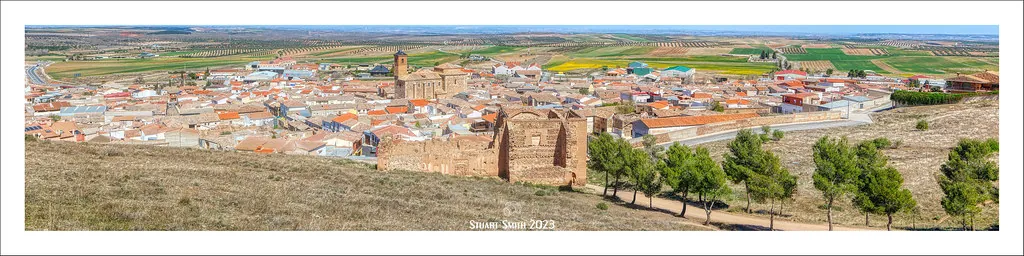
Villaminaya está en los Montes de Toledo, sobre una ladera suave de tierra arenosa. Viven algo más de quinientas personas. El trazado es sencillo: la Calle Mayor atraviesa el pueblo hacia la plaza, y de allí salen calles cortas. Algunas terminan en corrales donde se apoyan herramientas contra la pared, se apilan troncos para el invierno y las macetas resisten el calor del verano.
La torre y el compás del día
El edificio que sirve de referencia es la iglesia parroquial de Santa María. Su torre de campanas sobresale por encima de los tejados y te ayuda a orientarte entre las calles. No es una iglesia monumental. En el interior, la austeridad es la misma que en otras muchas iglesias de pueblos agrícolas de la provincia.
A su alrededor, las casas mezclan paredes encaladas con piedra vista en las esquinas. Los portones de madera están oscurecidos por el tiempo. Rejas antiguas dan a patios interiores pequeños; en algunos, una parra o una higuera dan sombra en los meses más calurosos.
Una calle que suele mencionarse es la del Convento. El nombre recuerda un monasterio que existió aquí siglos atrás. No queda ningún complejo reconocible, pero el nombre persiste en las placas de las calles.
La vida en Villaminaya no está organizada para un paseo contemplativo con cámara. Los vecinos van y vienen en coche, se paran a mitad de la calle a hablar un momento y siguen con su jornada. Los domingos por la mañana o al final de la tarde, el pueblo tiene algo más de movimiento. Entre semana, durante las horas laborables, muchas calles están casi vacías.
Veredas entre encinas y tierra clara
El campo empieza en cuanto sales del último edificio. Hay caminos rurales que se extienden entre parcelas cultivadas, zonas de matorral y dehesas salpicadas de encinas viejas. En los Montes de Toledo el paisaje rara vez busca lo espectacular. Son lomas suaves, colores que cambian entre marrones y verdes según la estación, y un cielo que casi siempre parece ancho y abierto.
Si sales temprano puedes ver fauna. Corzos y jabalíes aparecen a veces en los claros cerca de las dehesas, sobre todo antes de que empiecen a moverse los tractores por los campos. También es habitual ver buitres leonados, trazando círculos en las corrientes térmicas conforme avanza la mañana.
La señalización no es constante. Algunos recorridos son pistas de tierra claras; otros se estrechan hasta convertirse en rodadas entre cultivos o senderos usados por el ganado. Conviene llevar una ruta descargada en el móvil o un GPS sencillo para evitar rodeos innecesarios.
A pie o en bicicleta
Visto desde lejos, el terreno alrededor de Villaminaya puede parecer llano. Cuando empiezas a caminar, la realidad es otra: aparecen cuestas pequeñas pero constantes, una tras otra. Para quien vaya en bicicleta, esto se traduce en subidas cortas que se repiten cada pocos kilómetros.
En verano conviene madrugar. Para el mediodía, el cae directamente sobre los campos abiertos y la sombra escasea. El invierno tiene su propio atractivo: tras varios días de lluvia, la luz puede ser especialmente diáfana. La arena pálida del suelo resalta contra el verde oscuro de las encinas, dando al paisaje un contraste más nítido.
Aceite, campo y rutina
La agricultura sigue marcando el ritmo diario. Los olivares cubren buena parte del terreno circundante, y cuando llega la temporada de la recolección cambia el compás de las calles: pasan remolques cargados de aceituna, la gente sale al campo muy temprano y vuelve más tarde, marcando el progreso de la campaña.
El aceite que se produce por aquí suele tener un sabor robusto, muy ligado a estas tierras secas. En pueblos cercanos también es relativamente frecuente encontrar miel silvestre, procedente de colmenas dispersas entre encinas y jaras.
Fechas que devuelven gente
Agosto altera notablemente el ambiente. Muchos vecinos que viven fuera regresan esos días, y las calles se llenan de ruido, música y tertulias largas al anochecer. Las fiestas patronales suelen celebrarse entonces, con procesiones y actividades organizadas por la propia comunidad.
El invierno trae tradiciones más pequeñas. En torno a San Antón —cuya festividad en España está asociada a los animales y a la vida rural— aún aparecen hogueras en las calles al atardecer. La gente se reúne alrededor del fuego a hablar mientras el frío de enero se instala en el pavimento.
Cómo llegar y qué hay
Villaminaya está a menos de una hora en coche desde Toledo, por carreteras comarcales que cruzan campo abierto. El trayecto es sencillo, aunque algunos tramos son estrechos y es habitual encontrarse con maquinaria agrícola.
No es un destino turístico al uso. Los servicios son los propios de un municipio pequeño, y la vida diaria responde a las necesidades de sus residentes, no a las de los visitantes. El interés está en observar un lugar que sigue girando en torno al campo, al trabajo estacional y a las rutinas conocidas; donde el silencio de la mañana y la vuelta pausada de los vecinos en agosto dicen más que cualquier monumento.
Si vienes entre semana fuera del verano o del periodo navideño, encontrarás ese ritmo lento casi intacto; si coincides con una fiesta local o con el domingo después de misa, verás otra cara del pueblo —más ruidosa— pero igualmente real