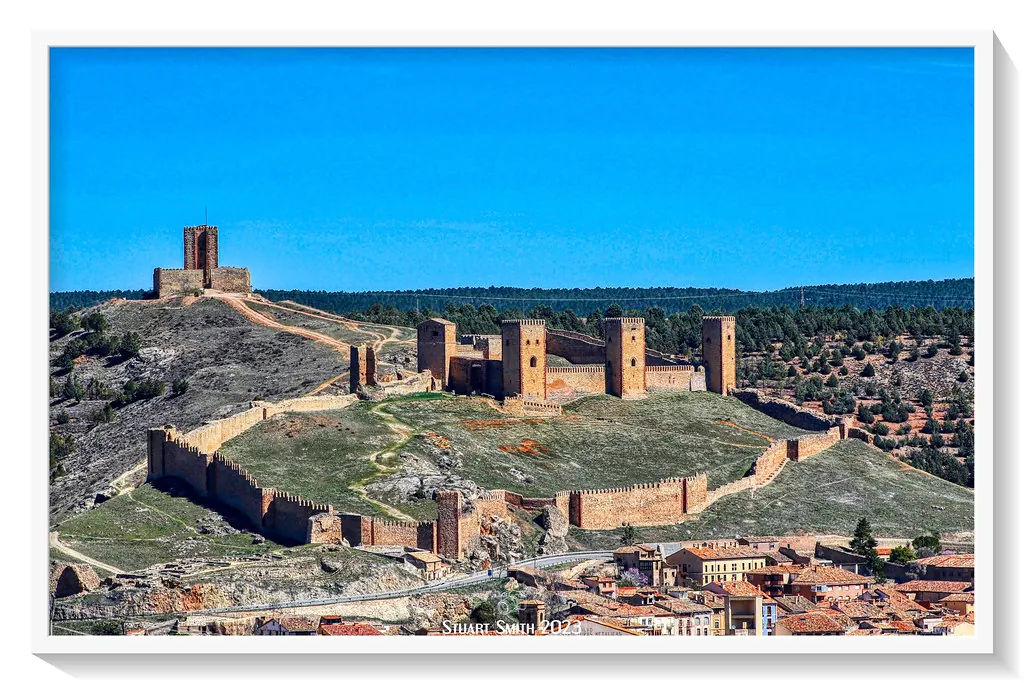
Vista aérea de Algar de Mesa
Instituto Geográfico Nacional · CC-BY 4.0 scne.es
Castilla-La Mancha · Land of Don Quixote

Algar de Mesa

The sheep outnumber people here by roughly three to one. At 911 metres above sea level, Algar de Mesa sits high enough that mobile phone signals wa...

44 inhabitants · INE 2025
911m Altitude

Why Visit

Mountain Church of Santo Domingo Hiking through the valley

Best Time to Visit

summer

Santo Domingo Festival (August) agosto

Things to See & Do
in Algar de Mesa

Heritage

  • Church of Santo Domingo
  • Mesa River

Activities

  • Hiking through the valley
  • Fishing

Festivals
& & Traditions

Fecha agosto

Fiestas de Santo Domingo (agosto)

Las fiestas locales son el momento perfecto para vivir la autenticidad de Algar de Mesa.

Full Article
about Algar de Mesa

Set in the Mesa river valley, known for its canyon scenery and irrigated orchards.

Ocultar artículo Leer artículo completo

The sheep outnumber people here by roughly three to one. At 911 metres above sea level, Algar de Mesa sits high enough that mobile phone signals waver, but low enough that the Sierra's snow line remains a distant white streak across winter horizons. This Guadalajara village—population 53, according to the last census—doesn't so much welcome visitors as tolerate them, provided they appreciate the currency that matters most: silence.

The Arithmetic of Emptiness

Drive 160 kilometres northeast from Madrid and the landscape begins its arithmetic. Villages shrink from thousands to hundreds to dozens. Algar de Mesa marks the logical conclusion of this progression, a place where every resident counts and every departure registers. The village name derives from Arabic—al-gar meaning cave or hollow—though the Moors who coined it would've recognised little beyond the topography. What remains is distinctly Castilian: limestone houses with tiny windows designed for winter defence, thick walls that absorb summer heat, and roofs tiled in the distinctive Moorish curve that somehow survived reconquest.

The village proper takes fifteen minutes to traverse, assuming you pause to read the stone plaques marking medieval property boundaries. Architecture follows function rather than aesthetics. Houses cluster together for warmth, their shared walls creating windbreaks against paramo gusts that can reach 80 kilometres per hour. Chimneys angle southwest, a practical consideration that prevents smoke from drifting into neighbours' windows during the eight months when fires burn continuously.

At the village's highest point, the Church of the Assumption squats like a weathered guardian. Built from the same limestone as every other structure, it differs only in scale and purpose. Sunday mass still draws attendees from surrounding hamlets, though winter services might unite only a dozen worshippers. The priest arrives from Molina de Aragón, twenty-five kilometres distant, his presence announced by the single working bell that chimes exactly three minutes before proceedings begin.

Walking Where Civilisation Thins

The surrounding parameras stretch towards horizons that seem mathematically precise. Mediterranean vegetation clings to thin soils: juniper and savin pine dominate, their roots splitting limestone into ever-smaller fragments. Walking tracks radiate from the village like spokes, each following ancient livestock routes that predate written records. The GR-90 long-distance path passes within two kilometres, though most hikers remain unaware of Algar de Mesa's existence.

Local walking requires minimal equipment but maximum respect for weather. Summer temperatures might reach 35°C by midday, then plummet to 15°C after sunset. Winter brings different challenges: ice forms on north-facing slopes from November through March, and the track to Tortuera—seven kilometres east—becomes treacherous after rainfall. Proper walking boots prove essential; the limestone fractures into razor-sharp shards that slice through trainer soles like paper.

Wildlife viewing demands patience rather than expertise. Griffon vultures circle on thermals, their three-metre wingspans casting moving shadows across scrubland. Iberian ibex occasionally descend from higher elevations during drought periods, though sightings remain rare enough that locals still discuss them months later. More common are red-legged partridges, their distinctive call echoing across valleys at dawn and dusk.

The Seasonal Mathematics of Village Life

August transforms everything. The population swells to perhaps 150 as former residents return for patronal festivals honouring the Virgin's Assumption. Suddenly, Algar de Mesa acquires infrastructure that belies its size: a temporary bar operates from someone's garage, selling Estrella Galicia at €1.50 per caña. Grandmothers who haven't spoken since last summer resume conversations mid-sentence, as if twelve months constituted merely an extended pause.

The remaining eleven months operate on different principles. The sole shop closed in 2008; bread arrives twice weekly from a Molina de Aragón bakery, ordered via WhatsApp and delivered to the plaza at 11:00 sharp. The nearest medical centre stands fourteen kilometres away in Checa—close enough for routine matters, terrifyingly distant for emergencies. Residents over sixty receive daily welfare calls from regional authorities; younger neighbours maintain informal surveillance systems that would shame metropolitan neighbourhood watch schemes.

Winter isolation approaches existential levels. When snow blocks the CM-2106—the single access road—villagers stockpile essentials and communicate via VHF radio. The 2017 storm that cut power for seventy-two hours became local legend, though conversations focus less on hardship than community cooperation. Everyone remembers who shared generator fuel, who risked driving to Checa for insulin, whose fireplace warmed elderly neighbours through three consecutive nights.

Practicalities for the Curious

Reaching Algar de Mesa requires deliberate intention. No public transport serves the village; the closest bus stop lies twelve kilometres away in Checa, served twice daily from Guadalajara. Car rental becomes essential, though winter visitors should request vehicles with snow tyres—November through March brings regular morning frost, and the final approach involves a 12% gradient that defeats summer-spec rubber.

Accommodation options number exactly three. Casa Rural El Sabinar offers four rooms from €65 nightly, though booking requires Spanish language skills—owner María answers calls only after 19:00 and expects immediate bank transfers to secure reservations. The two apartment complexes provide self-catering facilities, crucial given the village's complete absence of restaurants. Guests should arrive provisioned; the nearest supermarket stands twenty-three kilometres distant in Molina de Aragón.

Timing visits demands strategic thinking. Spring brings wildflower blooms that transform parameras into impressionist canvases, but also frequent gales that can reach 100 kilometres per hour. Autumn offers stable weather and mushroom foraging opportunities, though recent wildfire damage has restricted access to traditional collecting areas. Summer guarantees warmth and village activity, but temperatures regularly exceed 35°C with minimal shade. Winter delivers crystal-clear night skies—the Milky Way appears bright enough to cast shadows—but requires serious cold-weather preparation and acceptance that you might become snowbound.

The village offers no tourist office, no souvenir shops, no guided experiences. What exists instead is more valuable: a functioning example of Spain's depopulated interior, where tradition survives through necessity rather than performance. Visitors who arrive expecting entertainment leave disappointed. Those who come prepared to observe, walk, and—crucially—remain quiet, discover something increasingly rare: a place where human presence remains conditional upon environmental tolerance rather than economic imperative.

Leave before darkness falls, at least initially. The road back to Checa lacks barriers; sheer drops appear suddenly after blind corners. More importantly, leaving ensures you appreciate Algar de Mesa's fundamental characteristic: it's not waiting for you. The village existed before your arrival and continues after departure, its 53 residents maintaining rhythms that tourism cannot disrupt simply because it barely registers. Return if you must, but understand that seasonal changes matter more than visitor numbers, and silence remains the village's most precious—and fragile—resource.

Key Facts

Region
Castilla-La Mancha
District
Señorío de Molina
INE Code
19016
Coast
No
Mountain
Yes
Season
summer

Livability & Services

Key data for living or remote work

2024
Housing~5€/m² rent · Affordable
CoastBeach 17 km away
Sources: INE, CNMC, Ministry of Health, AEMET

Official Data

Institutional records and open data (when available).

  • Abrigo de los Prados
    bic Monumento ~4.8 km
  • Ca¤ada del Campillo I
    bic Monumento ~5.1 km
  • Roca Bened¡
    bic Monumento ~4.5 km
  • Las Cuestas del Hocino II
    bic Monumento ~1.9 km
  • TORRE DE LOS PALAFOX DE ARIZA
    bic Monumento ~2.7 km
  • Las Cuestas del Hocino III
    bic Monumento ~1.9 km
Ver más (1)
  • INSCULTURAS RUPESTRES
    bic Genérico

Planning Your Visit?

Discover more villages in the Señorío de Molina.

View full region →

More villages in Señorío de Molina

Traveler Reviews