Full Article
about Arbeteta
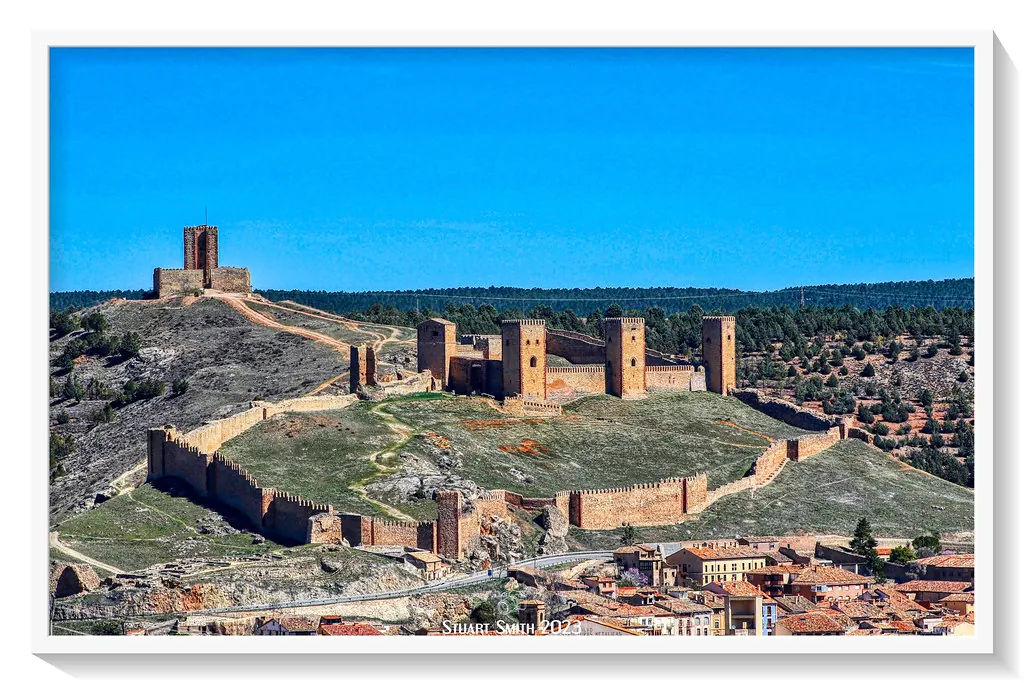
Rocky enclave with a ruined, impregnable castle; spectacular gorge landscape.
Hide article Read full article
Early Light on Stone Streets
At dawn, the stone streets of Arbeteta still hold the chill of the night. Light filters slowly between the houses, tracing the uneven lines of the masonry. Some façades show a muted ochre tone, others lean towards grey. Nothing feels arranged for effect. The textures and colours are simply the result of time and weather.
Today, Arbeteta has only a handful of registered residents, barely fifteen. In spring and autumn the quiet feels heavier. A blackbird might call from a rooftop, the wind may shift a dry branch, and little else interrupts the stillness. Life here has always moved at a slow pace, and the loss of population has left the village almost motionless, as if time had chosen to pass it by.
There is no background hum of traffic, no shop shutters rattling open. The sense of pause is constant. Morning arrives without ceremony, spreading across fields and stone in its own time.
San Pedro Apóstol and the Shape of the Village
The layout of Arbeteta follows the contours of the land. Streets are short, with the occasional unexpected turn and gentle slopes connecting one level to another. At the centre stands the parish church of San Pedro Apóstol, built in the 16th century. Its walls are plain and solid, and a square bell tower rises above the rooftops, visible from almost anywhere in the village.
The square is less a formal plaza and more a widening between houses. Here the structure of the settlement becomes clear. Homes have rectangular floor plans, reddish roofs and wooden doors that have changed little over the years. Details such as iron window grilles, stone lintels and worn thresholds speak quietly of generations who lived from agriculture and from a small number of flocks.
There is no grand monumentality. The church anchors the space, and the surrounding houses form a compact cluster shaped by practical needs rather than design. The impression is of continuity, even if many of the houses now stand closed for much of the year.
Paths, Fields and Open Horizons
Beyond the last houses, dirt tracks begin. They are not usually signposted, yet they link Arbeteta with other villages in the area, including Valtablado and La Torrecilla. These are narrow paths, sometimes partly covered by grass or low scrub. In several stretches their origins as livestock routes can still be recognised.
Spring changes the feel of the ground. After wetter months the soil softens, and if the year has been rainy, mushrooms may appear. Anyone considering gathering them should first check local guidance and respect the mycological regulations that typically govern this activity in the area.
From nearby valleys it is common to see birds of prey circling above fields of fallow cereal crops. The landscape opens widely towards the horizon. There are no large expanses of forest. Clearings, field edges and slopes covered in scrub dominate the view. The land feels expansive rather than enclosed, shaped by agriculture and grazing over centuries.
Walking here means accepting the lack of shade in many stretches and the absence of signposts. The appeal lies in the sense of space. Footsteps on dry earth, wind moving through low vegetation and the distant outline of another small settlement are often the only markers of progress.
Sky and Climate in the Señorío de Molina
Arbeteta sits at around one thousand metres above sea level, and the altitude is noticeable. Winters are usually cold, with frequent frosts. At times snow covers the fields for several days. Summer brings heat at midday, yet the air cools quickly once the sun goes down.
The village lies within the Señorío de Molina, a historic region in the province of Guadalajara. One of its defining features is the clarity of the night sky. With very little artificial lighting, the darkness is deep and clean. On clear nights, well-known constellations can be seen easily, and the surrounding silence makes the experience markedly different from that of any town or city.
Light plays a central role in how Arbeteta is perceived. The best light arrives early in the day, when the sun sits low over the fields and intensifies the ochre tones of the soil. By late afternoon the façades grow warmer in colour and the stone can appear almost orange. The same walls that looked grey at dawn take on a softer hue before dusk.
Seasonal change is clear and direct. Frost outlines roof tiles in winter. In summer, heat shimmers above the tracks at noon. Spring and early autumn offer milder conditions, which tend to be the most comfortable for walking in the surrounding countryside.
Practicalities and the Rhythm of the Year
Arbeteta lies roughly one hundred kilometres from the city of Guadalajara, within the Señorío de Molina. Access is by road, and having a car is advisable as public transport in this area is very limited.
Spring and early autumn are generally the most pleasant times to explore the paths around the village. In summer it is better to set out early in the day, as there is little shade along the tracks. Winter can bring ice or snow, so checking the forecast before travelling is sensible.
There are no shops or tourist services in the village. For supplies or a meal, it is necessary to drive to nearby towns. Even so, Arbeteta maintains small celebrations linked to its patron saint, San Pedro Apóstol. During these days, some residents and families who return in summer gather for a short period, briefly increasing the population and activity.
For most of the year, however, Arbeteta returns to its habitual state. Space and silence define it. The sound of boots on dry ground, wind shifting the scrub and, as evening falls, a village that empties once more. This is Arbeteta as it usually is: quiet, elevated and open to the sky.