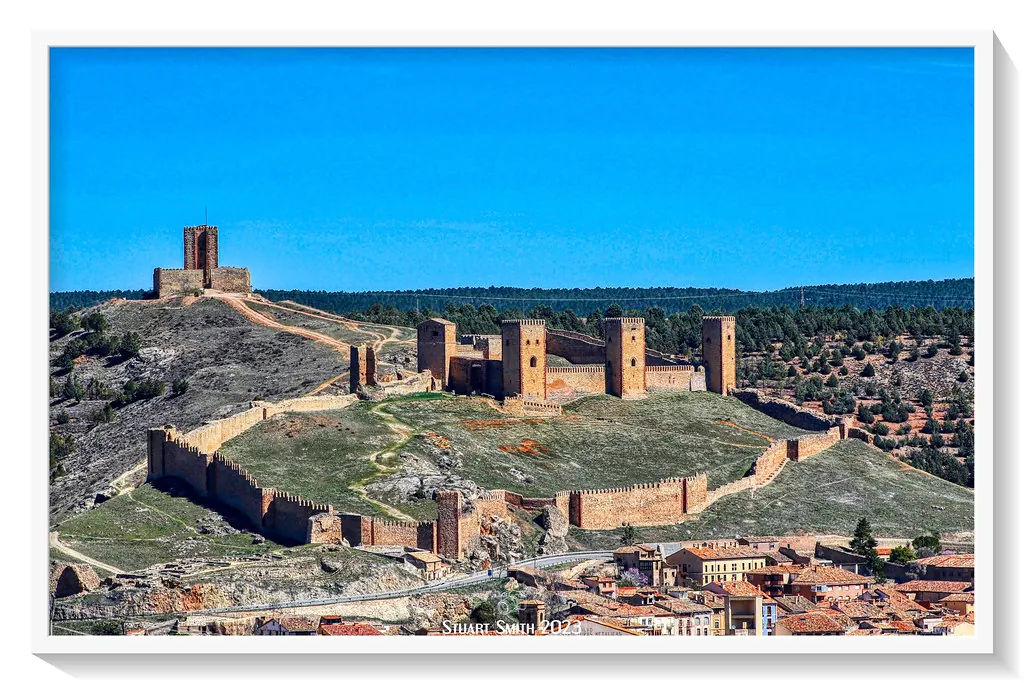
Vista aérea de Baños de Tajo
Instituto Geográfico Nacional · CC-BY 4.0 scne.es
Castilla-La Mancha · Land of Don Quixote

Baños de Tajo

The church bell strikes noon and nobody appears. Not a single door opens, no chatter drifts from windows, no diesel 4x4 coughs down the lane. At 1,...

13 inhabitants · INE 2025
1252m Altitude

Why Visit

Mountain Parish church Hiking

Best Time to Visit

summer

San Roque Festival (August) agosto

Things to See & Do
in Baños de Tajo

Heritage

  • Parish church
  • Tagus riverbank

Activities

  • Hiking
  • River bathing

Festivals
& & Traditions

Fecha agosto

Fiestas de San Roque (agosto)

Las fiestas locales son el momento perfecto para vivir la autenticidad de Baños de Tajo.

Full Article
about Baños de Tajo

Small town on the Tajo; known for its old thermal baths, now disused.

Ocultar artículo Leer artículo completo

The church bell strikes noon and nobody appears. Not a single door opens, no chatter drifts from windows, no diesel 4x4 coughs down the lane. At 1,252 metres above sea level, Baños de Tajo holds the unlikely honour of being one of Spain’s quietest inhabited places—fifteen registered souls scattered among stone houses so stubborn they outlasted the jobs that built them.

Most motorists shoot past the turn-off on the GU-218, hell-bent for the Alto Tajo viewpoints that Instagram prefers. That single decision to keep the wheel straight saves them a twelve-kilometre detour and, unknowingly, preserves the village’s preferred state: empty. Those who do swing left are rewarded with a landscape that feels older than the road itself. Scarred granite gives way to paramera heathland; the tarmac narrows; suddenly the Sierra de Ayllón looms like a granite wave about to break over the meseta.

A Village that Forgot to Shout

Baños de Tajo is not “unspoilt”—it is simply too high, too cold and too far from a cash machine for conventional spoiling. Half the houses stand part-reformed: new aluminium windows slapped onto chestnut lintels, fresh grout stopping mid-wall when euros or enthusiasm ran out. Others are sealed tight, keyholes stuffed with wire to stop the mountain wind whistling through. There is no high street, no souvenir tea-towel rack, no artisan anything. The last permanent shop closed when the proprietor died in 1998; the nearest loaf of bread is now an eighteen-minute drive back towards Checa.

What remains is the original blueprint of a Castilian mountain hamlet: stone walls eighty centimetres thick, terracotta roofs weighted with rocks against winter gales, and a communal washing trough fed by a spring that never quite freezes. The trough still runs; nobody uses it. Washing machines work, even at altitude.

Visitors expecting interpretive panels or QR codes will be disappointed. Information arrives by talking—usually to the man in the green boiler suit trimming dead branches with a machete. He is the mayor, the plumber and, on fiesta day, the trumpet player. Ask politely and he’ll point out the threshing circles on the ridge, now camouflaged by broom and wild lavender. Their stone lips are all that’s left of the cereal economy that once kept two hundred people here.

Walking into the Sound of Nothing

The real map starts where the asphalt ends. A web of livestock trails radiates from the last cottage, stitched together by dry-stone walls and the occasional iron wayside cross pock-marked by lichen. Head north and the path drops into the Tajo’s infant gorge within four kilometres; the river is still a stream narrow enough to hop across in June, but the basalt walls foreshadow the grand canyons further downstream. Turn south-east and you climb steadily through resin-scented pine towards the Puerto de la Hiruela at 1,540 m, a grassy col where shepherds from Guadalajara once met counterparts from Segovia to trade salt for wool.

Waymarking is sporadic—two red dashes on a boulder, then nothing for twenty minutes—so a GPS track or at least a 1:25,000 map (Adrados 411-4) is sensible. Mobile coverage vanishes in the first ravine; download beforehand. Summer hikers should start early: at this altitude the sun is merciless after eleven, and shade is confined to narrow gullies where wild boar like to siesta. In winter the same trails become snowshoe routes, though the GU-218 is often chained off after heavy falls, meaning you may spend the night whether you planned to or not.

Wildlife rewards patience. Dawn is the shift change for raptors: griffon vultures warm their wings on thermals above the village while a resident golden eagle launches from the crags behind the cemetery. Binoculars also pick out Spanish ibex on the limestone balconies across the valley; they move like pale ghosts against the grey rock. Sit still, and after twenty minutes the mountain forgets you are there.

The Seasons Tell You When to Come

April and May smother the lower slopes in yellow cytinus and purple sage—photographers arrive for that week, then leave. June to August is dry, often thirty degrees by midday, but nights drop to twelve; bring a fleece for the terrace. September brings the bellow of rutting red deer echoing around the barrancos; the sound carries for miles when the only competition is a distant chainsaw. October is mushroom month; locals guard their chanterelle spots like state secrets, and the Guardia Civil do patrol for illegal pickers—carry a permit (€8 from the Checa town hall website) and limit yourself to two kilos per day.

Winter is either brutal or magical, sometimes both. A week of Siberian airflow can drive the mercury to minus fifteen; pipes burst, the spring freezes, and even the mayor heads downhill. Yet a dusting of snow softens the stone geometry, and if the road stays open you will have the entire village soundtrack—your own breath, the creak of boots on powder, nothing else.

Where to Sleep, Eat, and Fill the Tank

Accommodation is limited to three privately owned cottages rented by the night (expect €70–€90, two-night minimum). None have hotel-style reception; keys wait in a coded box on the door. Electricity comes from the national grid but water is trucked in during drought years—short showers are good manners. There is no bar, so pack the makings of a picnic: local Manchego from Checa’s weekly market (Fridays, 9–14 h) and a bottle of crianza from the cooperative in Tamajón thirty minutes west.

The nearest filling station is in Molina de Aragón, forty kilometres east. Running the tank almost dry is a rite of passage for first-timers; don’t join them. If you need a proper meal, drive down to Checa and try Asador Señorío de Molina for roast segureño lamb (€22 per portion, feeds two). They open weekends year-round, weekdays only by reservation—ring before you set off, or you’ll find the lights off and the owner hunting partridge.

Silence as a Currency

Tour boards love to promise “authenticity”, but Baños de Tajo offers something narrower and more honest: silence you can trade for thinking time. The emptiness is not curated; it is the residue of a century-long drift to cities where Wi-Fi is stronger and heating bills are lower. That makes the village fragile. One harsh winter, one collapsed roof too many, and the demographic tipping point could tip right over.

For now the place survives on weekending madrileños who winter-proof their ancestors’ houses, on the odd German bird-watcher who has learnt not to expect signage, and on the fifteen locals who refuse to let the bell tower fall down. Come if you want to add your own footfall to that short list, but come prepared: bring provisions, download the map, and leave the village as you found it—quiet enough to hear the vultures scrape the sky. If you need reassurance that you chose correctly, stand by the washing trough at dusk. When the wind drops you will hear the river long before you see it, murmuring its way toward Lisbon, still only a child here in the mountains.

Key Facts

Region
Castilla-La Mancha
District
Señorío de Molina
INE Code
19048
Coast
No
Mountain
Yes
Season
summer

Livability & Services

Key data for living or remote work

2024
Housing~5€/m² rent · Affordable
January Climate2.8°C avg
Sources: INE, CNMC, Ministry of Health, AEMET

Planning Your Visit?

Discover more villages in the Señorío de Molina.

View full region →

More villages in Señorío de Molina

Traveler Reviews