Full Article
about Campillo de Dueñas
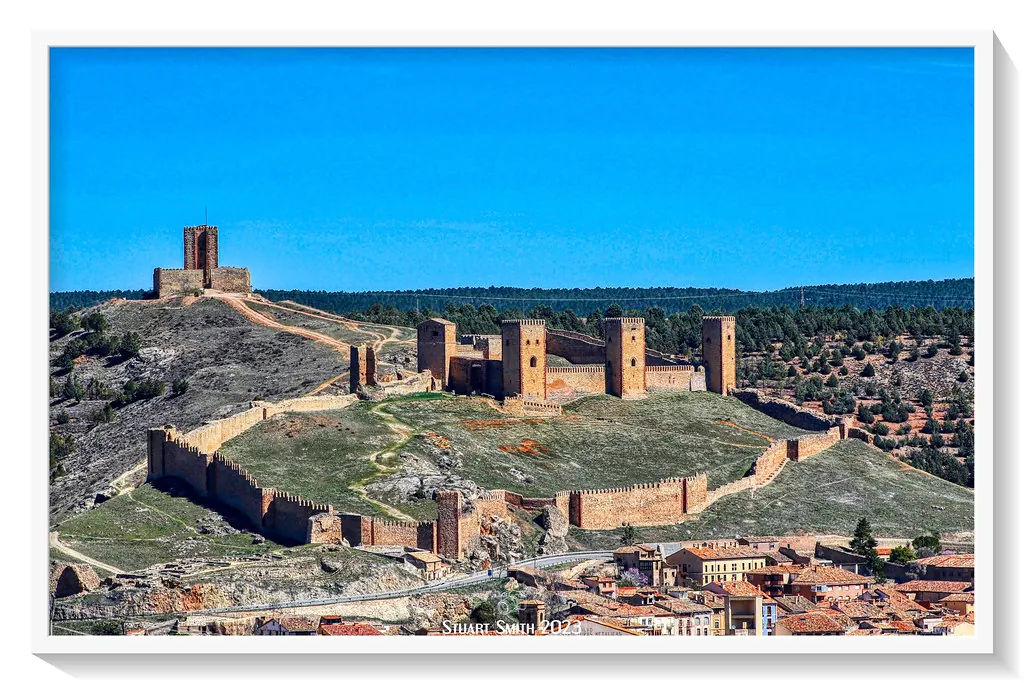
Border town with Aragón; noted for the nearby castle of Zafra.
Hide article Read full article
Early in the morning, as the sun begins to warm the stone, the main street of Campillo de Dueñas carries the scent of dry dust and old firewood. Limestone façades show fine cracks and muted tones, shaped year after year by the wind that sweeps across the paramera, the high plateau that defines this part of Spain. There is little noise: a door opening, a car starting slowly, air slipping around the corners of buildings.
Tourism in Campillo de Dueñas begins with understanding where you are. This is the Señorío de Molina, a vast comarca in the province of Guadalajara, known for its open landscapes and harsh winters. Around the village stretches the paramera molinesa, a high plain where the horizon feels distant and the sky appears larger than usual.
A Small Village on the High Plain
Campillo de Dueñas has only a few dozen residents and a compact cluster of houses gathered around the parish church. Stone homes line short, slightly irregular streets. Many walls still have large wooden gateways, reminders of a time when each household kept livestock or stored tools inside.
The church, dedicated to San Bartolomé, stands solidly at the centre. Its thick walls and small windows reflect a practical approach to architecture. It is not monumental or ornate. Instead, it conveys the restraint typical of villages in this area, where buildings have always been designed to withstand the climate rather than to attract attention.
Winter brings wind that pushes through the streets without hesitation. In summer, the sun falls directly onto the façades. For that reason, many doorways face onto narrow streets that offer a strip of shade during the hottest part of the day. The layout feels shaped as much by weather as by history.
Looking Outwards: Open Fields and Quiet
Walk a few metres uphill along any of the streets leading out of the centre and the landscape reveals itself in full. Gentle rises roll into the distance. Fields change colour with the seasons. Patches of low vegetation cling to stony ground.
Summer brings ochres and subdued greens. After the first autumn rains, the earth darkens and the air turns noticeably damper. Silence is part of the character here, though it is rarely absolute. Wind brushes through grasses. A bird crosses overhead. In the distance, a tractor works the fields.
The scale of the land is what leaves the strongest impression. There are few trees and little interruption to the view. The sensation is of breadth and exposure, a landscape that does not close in around you.
Tracks Across the Paramera
Several agricultural tracks begin at the edge of the village and extend into the paramera. They are not marked hiking routes but dirt paths used by farmers and livestock keepers. Even so, walking along them is straightforward with a map or a mobile phone equipped with GPS.
The altitude, around 1,000 metres above sea level, makes itself felt. Even at the height of summer, the air can turn cool towards evening. In winter, cold conditions arrive easily. Carrying water and protection from the sun is sensible, as there is almost no shade along many stretches.
For those who enjoy unhurried walks, these tracks provide a clear introduction to the landscape of the Señorío de Molina. The sense of space is constant. Trees are scarce. There is an ongoing impression of being far removed from larger towns and busy roads.
Daily Life in a Very Small Community
Life in Campillo de Dueñas moves at a calm pace. It is common to see a flock passing along nearby tracks or to notice working corrals on the outskirts. Livestock and agriculture have long shaped the character of the place.
Inside the houses, substantial dishes are still prepared, the sort that help people through long winters. Hot stews appear on the table. Lamb features regularly, as do cured sausages preserved in the area’s dry climate. These are meals associated with family life and slow conversation, more than with restaurants or formal dining.
The rhythm of the village reflects its size. With only a few dozen inhabitants, encounters are familiar and routines steady. Activity follows the needs of the land and the seasons rather than the clock.
Dark Skies and Very Quiet Nights
Night falls quickly here. Public lighting is minimal, and just a short walk beyond the centre brings a clear view of the sky. On cloudless evenings, the milky band of the Milky Way stretches across the darkness.
Silence deepens after sunset. A distant dog may bark. Wind might move a loose door. Otherwise, the stillness is part of the experience of staying in such a small settlement. The absence of light pollution makes the sky feel close and sharply defined.
When to Visit
Spring and autumn are usually the most comfortable times to explore the surrounding tracks. The sun is less intense and the wind tends to be easier to manage.
In summer, the middle of the day can be demanding because of the lack of shade, although nights cool down noticeably thanks to the altitude. Winter in the Señorío de Molina is serious. Frosts are frequent. Wind is common. In some years, snow makes travel along secondary roads more complicated. Anyone visiting at that time of year should check the forecast in advance and drive carefully through the comarca.
Campillo de Dueñas does not rely on monuments or busy attractions. Its appeal lies in scale, climate and quiet. To spend time here is to experience the open high plain of Castilla La Mancha in its most direct form: stone houses shaped by weather, fields that stretch towards a distant horizon, and a sky that grows darker than many travellers expect.