Full Article
about Corduente
Large municipality with the Santuario de la Virgen de la Hoz; spectacular spot
Ocultar artículo Leer artículo completo
The petrol station shuts at two o'clock. Not for lunch – it simply locks up until five, leaving the A-board propped against the pump like a sleeping sentry. This is your first lesson in Corduente: nothing stays open just because you might need it. The village sits at 1,050 metres on the wind-scoured plateau of Guadalajara province, and the 300 souls who live here have long since stopped apologising for the silence.
The Arithmetic of Emptiness
Drive north-east from Madrid for ninety minutes and the maths changes. Four lanes shrink to two; traffic thins to the occasional tractor; villages appear every twenty kilometres instead of every two. Corduente marks the spot where Spain's population density drops below ten per square kilometre – roughly the same as the Scottish Highlands, only with added vultures. Golden eagles ride the thermals above cereal fields that run to the horizon without a hedge to break them. The only vertical features are the stone church tower and, on a clear day, the distant outline of the Moncayo massif, 120 kilometres away.
At this altitude the climate performs neat tricks. July afternoons touch 35°C, yet nights fall to 15°C – perfect sleeping weather if the hotel existed. In January the thermometer can plunge to -10°C; snow lies long enough to cut the village off for days. Spring and autumn provide the sweet spot: warm days, crisp nights, and a chance of seeing the plateau carpeted with wild crocus. British visitors who arrive expecting Andalucían softness usually unpack their fleece first.
Stone, Wood and Whatever the Land Provides
The houses huddle round a small ridge, their walls built from the same grey limestone that pokes through the thin soil. Oak beams darker than pub ceiling timbers support terracotta roofs originally hauled up from the valley by mule. Many doorways still have the low lintel designed for livestock rather than humans; step through and you find rooms added piecemeal as families grew, then shrank. Roughly one building in three stands empty, keyholes stuffed with tissue to keep out the wind. Estate agents don't bother with Corduente – word of mouth handles the few sales, usually to descendants returning for weekends.
The church of San Pedro keeps village time. Its single bell rings the hours, the half-hours, and any funeral that needs announcing. Inside, the nave is plain whitewash except for a sixteenth-century fresco of Saint Christopher whose paint has faded to the colour of weak tea. Sunday mass draws a congregation of twelve on a good week; feast days swell the numbers with returning emigrants who fill the pews and the collection plate. There is no guidebook, no audio tour, and the priest pockets the €2 candle money in full view. Refreshing, somehow.
Walking the Sheet-Metal Sky
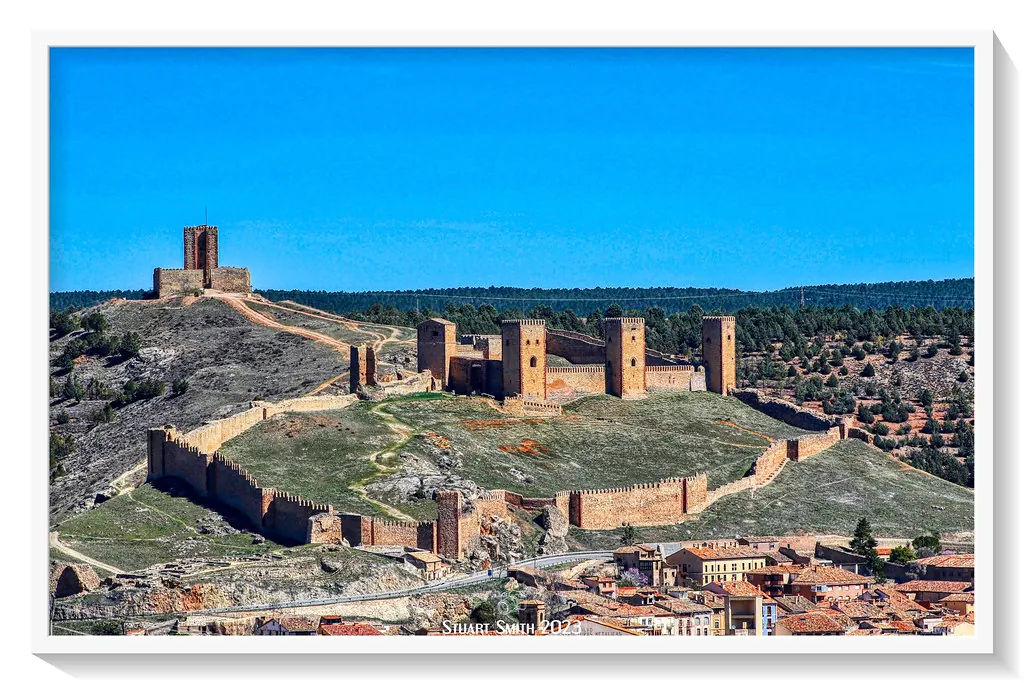
Leave the plaza by the upper lane and a signed footpath strikes north across the paramera. The GR-86 long-distance trail passes through here, though the way-marks are painted directly onto limestone blocks and can vanish under August dust. A ninety-minute circuit climbs gently to the ruins of Castillo de Santiuste, a Moorish outpost that once controlled the salt route between Zaragoza and Toledo. What remains is knee-high masonry and a view that stretches eighty kilometres – enough emptiness to reset any overcrowded mind. Take water; there is none en route, and mobile signal dies after the first ridge.
The same trail links into a weekend network used by local hunters. From October to February you will meet men in green fatigues carrying shotguns and a lunch of bread, chorizo and a litre of red wine. Walk quietly, greet them with "Buen día" and they will point out fresh boar tracks in the mud. The animals root along the stream beds at dusk; listen for the rustle that sounds like a clumsy dog but isn't.
What Passes for Nightlife
Corduente has two bars. La Posada opens at seven for coffee, closes at three, reopens at seven for beer, and shuts when the last customer leaves – usually well after midnight. They serve a fixed-price menú del día for €12 that starts with garlic soup and ends with quince jelly and sheep's cheese. Ask for half portions ("media ración") unless you are genuinely hungry enough for a trencherman's lunch. The house red comes from Cariñena, thirty kilometres north, and costs €1.80 a glass. No one will offer you a gin and tonic; this is cereal country, not the Costa.
The other bar, Casa Herminio, doubles as the village shop. Bread arrives from the Molina bakery at ten; if you want a baguette, be on the doorstep by quarter past. They stock UHT milk, tinned tuna, and those foil packets of paella seasoning that no local has ever used. The fridge holds a single shelf of vegetables – whatever grew in the owner's huerta yesterday. Payment is cash only; notes larger than twenty euros provoke a sigh.
Seasons of Silence and Sudden Noise
August brings the fiesta: three days when the population quadruples. Emigrants who left for Zaragoza or Barcelona in the 1970s return with grandchildren who speak Catalan and stare at the sky. A sound system appears in the plaza, playing Spanish eighties rock until four in the morning. The lamb roast starts at midday on Sunday and runs until the meat runs out – about three o'clock. British visitors are welcome but will be the only foreigners; expect to be quizzed about Brexit and whether it rains every day in London. Book accommodation early – the nearest rooms are in Molina de Aragón, twenty-five minutes away, and they sell out months ahead.
Winter strips the place back to essentials. Snow can block the CM-210 for forty-eight hours; villagers keep freezers stocked and woodpiles higher than the front door. On clear nights the Milky Way feels close enough to snag a fleece. Bring chains if you plan to drive between December and March, and fill the tank in Calatayud before you leave the main road. The petrol station still shuts at two, snow or shine.
Getting Here, Getting Fed, Getting Gone
Fly to Madrid, pick up a hire car at Barajas T1, and head north-east on the A-2. After ninety minutes take the N-211 towards Molina de Aragón, then peel off onto the CM-210. The final twenty kilometres narrow to a single track with passing places; meet a tractor and someone has to reverse. There is no railway, no bus, and the nearest cash machine is in Molina – withdraw before you climb.
Sleep in Molina if you need Wi-Fi and a shower that doesn't gasp. The Parador there occupies a tenth-century castle and charges £95 a night including breakfast. Alternatively, rent an apartment in Torremocha del Pinar, fifteen minutes south, where washing machines and central heating come as standard. Camping is technically allowed beside the river, but the guardia civil may move you on if fires risk spreading.
Eat what the land offers: roast lamb that falls off the bone, wild mushrooms in autumn, migas – fried breadcrumbs with chorizo – that taste like savoury bread pudding. Vegetarians can manage on tortilla and salad, but vegan options stop at almonds. Drink the local red; it costs less than bottled water and travels better in a rucksack.
Leave before noon on Monday. Both bars close, the baker stays in bed, and the silence that drew you here suddenly feels less romantic when your stomach is growling. As you drop back towards the motorway the plateau folds away in the rear-view mirror, a sheet-metal sky pressed onto a land that refuses to shout about itself. Corduente doesn't do souvenirs; the empty tank gauge and the layer of dust on your shoes are the only proof you were ever there.