Full Article
about Fuentelsaz
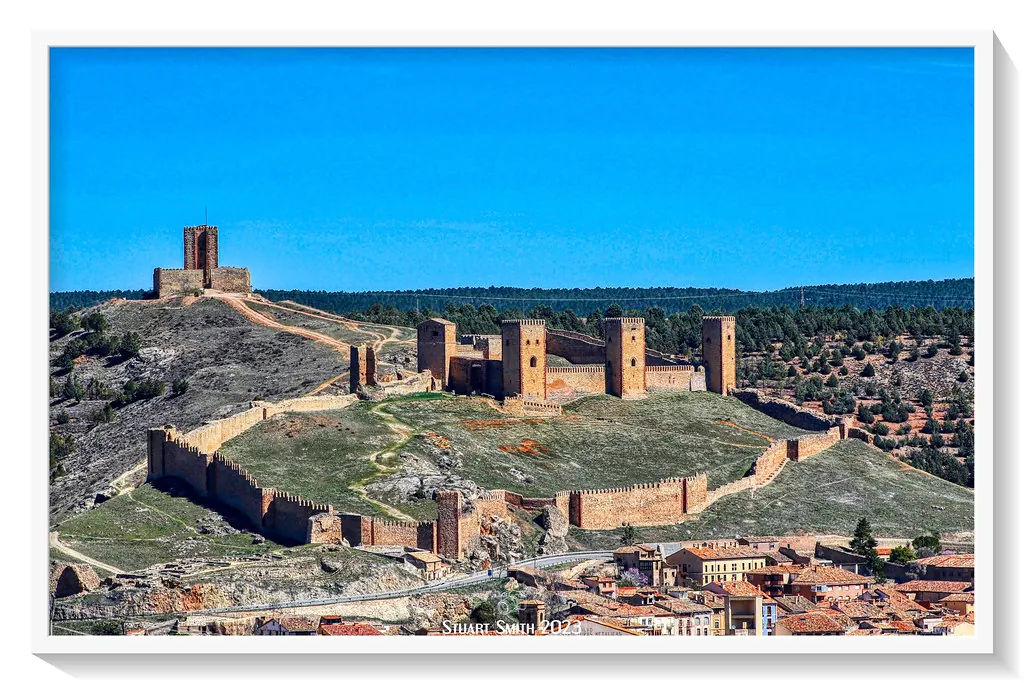
Known for its geological stratotype (Golden Spike); a noble village with a castle
Ocultar artículo Leer artículo completo
At 1,120 metres above sea level, Fuentelsaz sits high enough for the air to taste different. The village—just 90 souls—straddles the last ripple of the Iberian System before it collapses into the vast Castilian plateau. From here, the horizon runs uninterrupted for kilometres, a browning canvas of cereal stubble and fallow earth that shifts from ochre to deep green depending on the month. Silence is not a marketing line; it is the default setting. A tractor, a dog, the wind changing direction—this is the daily soundtrack.
The altitude matters. Winters arrive early and stay late. Snow can cut the single access road for days, and temperatures drop below –10 °C most January nights. Summer compensates with 14-hour daylight and a sun so fierce that locals schedule walks at dawn or dusk. Spring and autumn are the sweet spots: light soft enough for photography, air warm enough to sit outside the one bar without a fleece, soil damp enough to keep the dust down.
Stone, Adobe and the Logic of Survival
There is no postcard plaza or baroque tower. Instead, Fuentelsaz offers a lesson in rural pragmatism. Houses are built from whatever the ground yielded when the foundations were dug: limestone below, adobe brick above. Walls are a metre thick, window openings are small, and south-facing balconies are deep enough to shade in July yet admit low winter light. Roof tiles are weighted down with stones the size of loaves—insurance against the Atlantic storms that occasionally ride over the plateau.
The parish church, probably medieval but patched in the 18th and 19th centuries, is the only building that tries to impress. Its tower acts as a lightning rod and a nesting site for red-billed choughs. Step inside and the temperature drops ten degrees; the interior smells of candle wax, old timber and the frankincense that still drifts through Spanish villages at festival time. There is no ticket desk, no audio guide, simply a notice board listing the four masses held each year.
Walk the lanes slowly. A pair of 19th-century stone troughs survive outside Number 23, fed by a spring that never quite dries up even in August. Halfway up the hill you will pass a disused bread oven whose iron door still shuts with a satisfying clunk. These details are easy to miss if you march through looking for ‘sights’. Pause, and the place explains itself.
Paths that Remember Shepherds
Fuentelsaz is a launchpad rather than a destination. The old drove roads that once moved sheep to winter pasture now serve as way-marked footpaths. One of the gentlest loops heads south-east to the abandoned hamlet of Algar de Palancos—6 km out, 6 km back, mostly on level ground. Expect to see boot prints from the previous weekend and perhaps a set of wild-boar trotters pressed into the mud, but nobody else.
For something stiffer, follow the GR-90 long-distance trail north towards the Alto Tajo. The section as far as Cueva de Ágreda climbs 400 m through juniper and sabina woods, then drops into the headwaters of the Tagus. Allow five hours, carry more water than you think necessary, and remember that phone coverage vanishes after the first ridge. In April the slopes are violet with grape hyacinth; by late June every leaf is edged with dust.
Birdlife rewards patience. Golden eagles patrol the thermals above the escarpment; a pair usually nests on the south-facing crags two kilometres west of the village. Bring binoculars, sit on the stone wall by the cemetery, and within half an hour you will almost certainly see griffon vultures sliding past at eye level. For something smaller, scan the telephone wires for azure-winged magpies—an Iberian speciality that has crept northwards as the climate has warmed.
The Gastronomy of “Sort Yourself Out”
There is no restaurant, no Saturday market, no deli selling local cheese. Self-catering is obligatory. Molina de Aragón, 19 km away (30 minutes by car), has two small supermarkets and a Saturday farmers’ stall where you can buy lamb from the village of Tamajón and jars of honey scented with rosemary and thyme. If you want to eat out, the asador in Molina does a respectable cordero asado—half a suckling lamb roasted in a wood-fired oven, enough for three hungry walkers, €22 per person including wine that arrives in a plain glass jug.
Back in Fuentelsaz, knock on the door of the house with the green persiana opposite the church. María Jesús still keeps chickens and will sell you half a dozen eggs for €1.50; the yolks are the colour of sunflower heads and will turn your packet tortilla mix into something worth eating. The village tap runs potable water, high in calcium and cold enough to numb your fingers—perfect for chilling beer overnight.
When the Village Returns to Itself
Fuentelsaz empties every September when grandchildren go back to city schools. August, therefore, is when the place briefly remembers its own voice. The fiestas patronales fall on the weekend nearest the 15th: a mass at noon, a procession that covers the 300 metres between church and ermita in twenty minutes, then plastic tables dragged into the single street for a communal lunch. Visitors are welcome but not announced; turn up with a bottle of something cold and you will be fed tortilla slices and asked polite questions about Brexit.
Easter is quieter. Ten or twelve elderly residents carry the paso at dawn; the only music is a drum and a single trumpet echoing off stone walls. If you come then, dress soberly and keep your phone in your pocket—this is liturgy, not folklore.
Getting There, Staying There, Leaving
Public transport is theoretical. A weekday bus links Molina de Aragón to Guadalajara at 07:15 and 19:00; it will drop you at the junction of the A-2 and the village road, 7 km short of Fuentelsaz. From there you need pre-booked taxi (€20) or legs of steel. Driving from Madrid takes two hours and forty minutes: A-2 east to Zaragoza, exit 175, then CM-2106 through landscapes that grow emptier with every kilometre.
Accommodation is limited to three self-catering cottages restored with EU grants. Casa Amparo sleeps four, has Wi-Fi that works on alternate Tuesdays, and costs €70 a night with a two-night minimum. Bring slippers—the stone floors are beautiful and glacial. Heating is by pellet stove; instructions are in Spanish but the owner, Paco, will demonstrate on arrival and quietly check the next morning that you have not carbonised yourselves.
Leave early if you must be back in Madrid for lunch. The plateau wakes in slow motion: first a stripe of orange on the eastern skyline, then the silhouettes of grain silos, finally the sound of a neighbour’s door scraping open. Fill your lungs with air so clean it tastes faintly of pine resin and dust, and remember that places this quiet are becoming harder to find even in Spain’s forgotten interior.