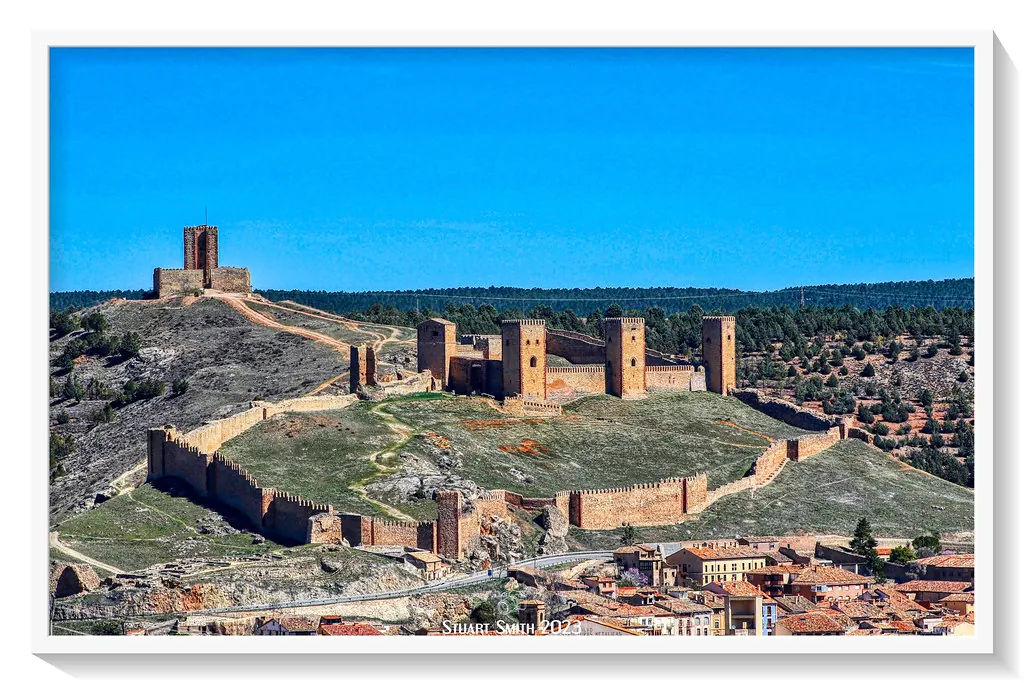
Maranchón - Flickr
Castilla-La Mancha · Land of Don Quixote

Maranchón

A mile above sea level, the wind arrives with nothing to slow it. It skims across the Iberian plateau, whistles through stone doorways, and reminds...

225 inhabitants · INE 2025
1254m Altitude

Why Visit

Mountain Church of the Assumption Routes across the paramera

Best Time to Visit

summer

Fiestas de la Virgen de los Olmos (August) agosto

Things to See & Do
in Maranchón

Heritage

  • Church of the Assumption
  • Clock Tower

Activities

  • Routes across the paramera
  • Historical tour

Festivals
& & Traditions

Fecha agosto

Fiestas de la Virgen de los Olmos (agosto)

Las fiestas locales son el momento perfecto para vivir la autenticidad de Maranchón.

Full Article
about Maranchón

Cold, windy town with a wind farm; colonial-style mansions and a merchant past.

Ocultar artículo Leer artículo completo

A mile above sea level, the wind arrives with nothing to slow it. It skims across the Iberian plateau, whistles through stone doorways, and reminds visitors that Maranchón sits higher than Ben Nevis's summit. This is Castile, but not the sunflower-flat version most travellers know. Here, the province of Guadalajara crumples into the Sistema Ibérico, and the village's 213 inhabitants have learned to live with weather that can flip from May sunshine to October frost within hours.

The approach tells the story. From the A-2 motorway you climb the CM-210, a wriggling 30-kilometre ascent that leaves the cereal plains behind and enters a landscape of sandstone outcrops and sparse juniper. Phone signal flickers. Stone walls appear, built low to let the wind pass over. Then the village: houses the colour of burnt toast, roofs weighted with old tractor tyres, and the 16th-century tower of San Juan Bautista rising like a lookout post.

Inside the single-street centre, the altitude is written on the buildings. Doorways are narrow, shutters thick, and every house has a corner pile of almond branches ready for the hearth. Winter is serious business. Temperatures drop to –12 °C, snow can cut the road for days, and the bar owner keeps a shovel by the espresso machine. Summer, by contrast, is a revelation: midday warmth hovers around 26 °C, nights demand a jumper, and British walkers who arrive expecting La Mancha heat are pleasantly startled.

Walking the Paramera

There are no ticket booths, way-marked loops or souvenir kiosks. What Maranchón offers is 360-degree access to empty ridge country. Park by the stone laundry trough at the lower entrance and simply choose a track. South-west leads onto the Paramera de Maranchón, a rolling upland grazed by sheep wearing traditional copper bells. Their clonk accompanies you for kilometres, the only sound besides wind and the occasional Golden Eagle overhead.

A gentle two-hour circuit follows the cattle grid past the abandoned cortijo of El Sabinar, drops into a hidden valley of Holm oak, then climbs back to the village via a shepherd's path wide enough for mules. Stout footwear is non-negotiable: the soil is thin and limestone shards slice through trainers. Carry water; there are no fountains once you leave the houses behind. In October the same tracks become a mushroom hunter's maze: penny bun, saffron milk-cap and, if you mis-identify, a stomach pump in Guadalajara hospital an hour away.

Spring brings a different palette. Between late April and mid-May the páramo turns neon with thyme and purple with viper's bugloss. Photographers arrive for the colour contrast, though rarely more than a handful at a time. The village has yet to install a single pay-and-display meter, and the best sunrise viewpoint—an old threshing floor ten minutes above the church—still has room for three cars.

Calories for the Cold

High-altitude hunger is best tackled with food designed to keep shepherds upright. Bar Restaurante La Nava, halfway along the main street, opens at seven for farmers and refuses to close before midnight if anyone is still drinking. Breakfast is torreznos: strips of pork belly fried until they puff into crunchy ribbons. Brits tend to compare them to warm pork scratchings; locals just dip them in strong coffee and carry on.

Midday menus hover round €12 and change daily. Expect migas—fried breadcrumbs laced with garlic and grapes—followed by cordero al estilo de Maranchón, lamb slow-roasted with bay leaves in a wood-fired oven so tender it submits to a spoon. Vegetarians get a thick pisto manchego topped with egg, though anyone strictly plant-based should warn the kitchen; "sin jamón" is still a foreign concept.

The bakery, Panadería Joaquín de Pedro, fires its oven at four each morning. By nine the shelves hold flat country loaves, almond shortbread and jars of mountain honey crystallised into fudge. Bring cash; the card machine is temperamental and the owner keeps a handwritten ledger of IOUs for neighbours. Sunday is hopeless: bread sells out before eleven and the metal shutters stay down until Monday.

When the Village Throws a Party

For most of the year the soundtrack is wind, dogs and the odd tractor. The decibel level spikes during the last weekend of June when fiestas honour San Juan Bautista. Former residents drive back from Madrid, Zaragoza even Valencia, doubling the population overnight. A makeshift bar installs itself in the square, brass bands play until three, and teenagers who left for university suddenly rediscover their village accent. Visitors are welcome; there's no tourist office to buy tickets, just pull up a plastic chair and someone will hand you a calimocho.

August repeats the formula with added children. The highlight is the "encierro infantil", a gentle mock-bull run where youngsters chase a hessian "bull" stuffed with fireworks through the streets. Health-and-safety consultants would faint; everyone else laughs. If you prefer silence, avoid both fiestas. Accommodation is booked months ahead by returning families, and the single cash machine (inside the pharmacy) runs dry.

Getting There, Staying Warm

Maranchón sits 165 km east of Madrid Barajas. Fly in, collect a hire car, and allow 1 hour 45 minutes on the A-2 and CM-210. Petrol stations are scarce after Sigüenza; fill the tank. Public transport is fiction: the weekday bus from Guadalajara was axed in 2011 and the nearest railway halt, Calatayud, is an €80 taxi away.

Overnight options fit on one hand. Casa Rural El Cid has four beamed rooms around a courtyard where swallows nest in the eaves. Rates run €70–€90 including breakfast—expect strong coffee, supermarket jam and a bowl of almonds from the tree outside. The attached Hostal La Fonda offers cheaper, thinner-walled rooms for €35–€45; fine for a night en-route to the coast, but you will hear the bar's television until closing time. Neither has a reception desk; ring ahead and someone meets you with a key and a set of Wi-Fi instructions that may or may not work.

Whatever the season, pack layers. Even in July the wind can knife through a T-shirt, and an August storm once dropped hail the size of marbles. Winter visitors should carry snow chains; the CM-210 is cleared eventually, not immediately. Phone coverage is patchy—download offline maps and tell someone your walking route.

Leave the village before dawn on a clear day and you might see the Sierra de Albarracín silhouetted 80 km south, a jagged ink line against orange sky. Closer, the only movement is a shepherd's headlamp bobbing across the ridge. There are no souvenir shops selling fridge magnets, no audio guides, no queue for the viewpoint. Just cold air, space and the growing realisation that Castille can feel remarkably like the edge of somewhere much wilder.

Key Facts

Region
Castilla-La Mancha
District
Señorío de Molina
INE Code
19170
Coast
No
Mountain
Yes
Season
summer

Livability & Services

Key data for living or remote work

2024
Connectivity5G available
HealthcareHealth center
EducationElementary school
Housing~5€/m² rent · Affordable
Sources: INE, CNMC, Ministry of Health, AEMET

Official Data

Institutional records and open data (when available).

  • ESCUDO (MARANCHÓN)
    bic Genérico ~0.5 km

Planning Your Visit?

Discover more villages in the Señorío de Molina.

View full region →

More villages in Señorío de Molina

Traveler Reviews