Full Article
about Mazarete
Mountain village surrounded by pine forests; church with fortified tower
Ocultar artículo Leer artículo completo
The frost on the stone walls hasn't melted by eleven o'clock, even in late March. At 1,235 metres above sea level, Mazarete sits higher than Ben Nevis's summit, and the altitude announces itself with every breath of thin, sharp air. This isn't the Spain of coastal brochures or city break guides—it's a granite shoulder of Castilla-La Mancha where winter lingers well into April and summer nights require a jacket.
Drive thirty-five minutes northeast from Guadalajara on the A-2, then peel off onto the CM-201. The motorway chatter fades. Olive groves give way to scrub oak, then to something wilder. By the time the road climbs past the 1,000-metre contour, mobile reception flickers and dies. What remains is a landscape that feels closer to the Scottish Highlands than to Toledo—open moorland rolling towards distant ridges, stone walls stitching together small fields, and silence that accumulates like snow.
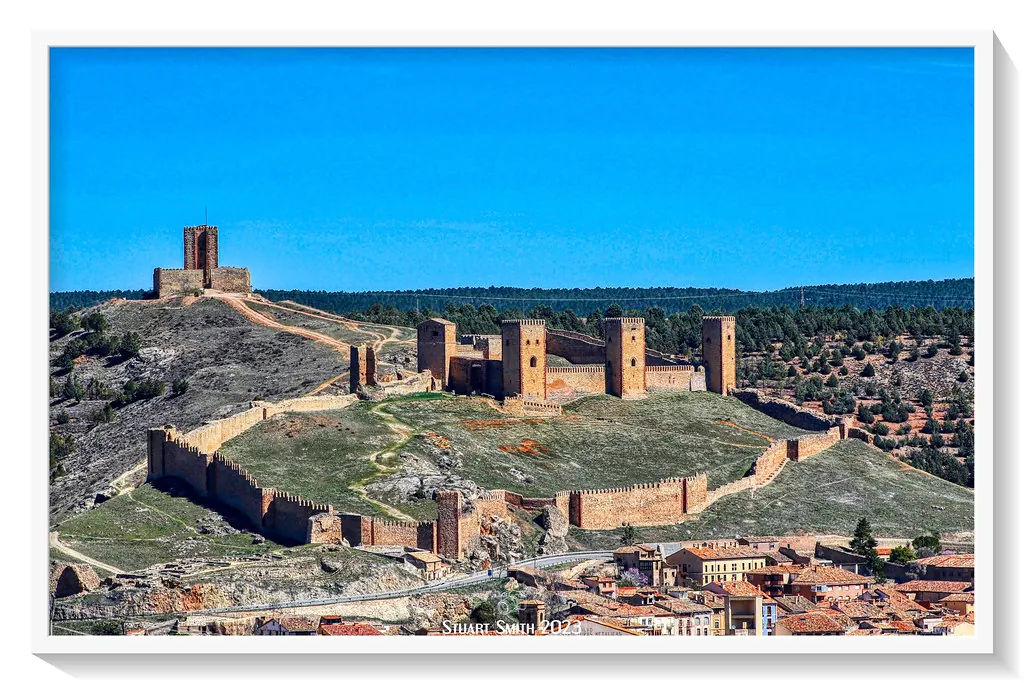
Mazarete appears suddenly: a cluster of slate roofs huddled on a south-facing slope, the church tower acting as both landmark and weather vane. Permanent residents number fewer than fifty. Many houses stand shuttered, their owners having left for Madrid or Zaragoza decades ago, returning only for August fiestas and to check that roofs haven't collapsed under winter snow. The place isn't abandoned—it's seasonal in the most honest sense, a village that breathes in summer and hibernates through the long continental winter.
Stone, Slate and Survival
The architecture here speaks of necessity rather than ornament. Thick masonry walls—some approaching a metre wide—insulate against temperature swings that can top 40°C between seasons. Roofs pitch steeply to shed snow; gutters are oversized to handle summer cloudbursts that arrive without warning. Even the colour palette is dictated by geography: local granite for walls, dark slate from nearby quarries, timber beams cut from Pyrenean oak that grows stubbornly on north-facing slopes.
Wander the single main street and you'll notice details that rarely survive in more accessible villages. A bread oven built into a house wall, its chimney still blackened. A stone basin where women once washed clothes, fed by a spring that never freezes. Corrals for sheep and goats, now empty, their gates reinforced with iron strapping. These aren't museum pieces—they're simply unused, waiting for hands that may never return.
The Iglesia de San Pedro frames the village's southern edge. Its tower, rebuilt after lightning struck in 1892, houses two bells cast in Soria. One bears the inscription "Para llamar a los fieles"—to call the faithful. On still evenings you can hear them from three kilometres away, the sound carrying across the páramo like a distress signal. Inside, the nave is refreshingly plain: no baroque excess, just whitewashed walls and a retablo painted directly onto plaster. Temperature inside hovers around 8°C even in July—bring a jumper.
Walking the Empty Tracks
This is walking country, but not as the Peak District knows it. Marked trails exist, yet they're maintained by use rather than wardens. The GR-88 long-distance route passes within two kilometres, linking Mazarete to neighbouring villages across 30 kilometres of high moorland. More rewarding are the old livestock tracks—cañadas—that radiate outward like spokes. Follow one east for ninety minutes and you'll reach Carramolina, population twelve, where the bar opens on Saturdays if someone remembers the key. Head west and the path drops into the Rio Molina valley, gaining 400 metres of elevation before delivering you to a river pool deep enough for swimming, even in drought years.
Spring brings the most dramatic transformation. By late May, the páramo turns briefly green, punctuated by purple patches of thyme and yellow carpets of Spanish broom. Beekeepers arrive with mobile hives; the resulting honey, sold from farm gates at €8 a jar, carries hints of rosemary and lavender. Autumn is equally brief but spectacular—oaks flare copper against the grey stone, and mushrooms push through the leaf litter. But don't underestimate the altitude: snow can fall from October onwards, and the CM-201 becomes impassable without winter tyres.
What to Eat (and Where to Find It)
Mazarete itself offers no restaurants, cafés, or shops. Zero. The last grocer closed in 2003 when its proprietor, Doña Carmen, retired at 82. Planning is essential. Stock up in Molina de Aragón—25 minutes drive north—where Supermercado López sells decent Manchego and local chorizo made with smoked paprika from La Vera. Better still, time your visit for the monthly farmers' market in Sigüenza (first Sunday), where producers from surrounding villages sell cheese, honey, and lamb raised on these high pastures.
If you're staying overnight, self-catering is the only option. Rental houses—there are three—come fully equipped, including wood-burning stoves and emergency gas heaters. Prices range from €60–€90 per night, with a two-night minimum. The most comfortable is Casa del Páramo, restored by a Madrid architect who summers here. Its kitchen includes a traditional cast-iron plancha perfect for searing the region's excellent lamb chops, best sourced directly from a local shepherd (ask at the church—someone will know someone).
For a proper meal out, drive 40 minutes to Molina de Aragón. Restaurante El Parador serves cocido molinero, a hearty chickpea stew flavoured with morcilla and cured pork, followed by ternasco—milk-fed lamb roasted until the skin crackles. A three-course lunch with wine costs €18. They'll adjust portions for British appetites if you ask politely.
Seasons of Silence
August transforms Mazarete. Population swells to perhaps 200 as former residents return with children and grandchildren. Suddenly the plaza hosts evening card games, someone fires up a barbecue, and teenagers compare mobile photos of city life. The fiesta—usually the second weekend—features a procession, brass band imported from Sigüenza, and paella cooked in a pan the size of a satellite dish. Visitors are welcome but not courted; this is community first, tourism never.
Winter is the real test. Daytime temperatures hover around 3°C; nights drop to minus twelve. Snow arrives heavy and early, drifting against doors, silencing even the church bells. Electricity cuts are common when ice weighs down the overhead cables. Those few who remain burn wood constantly—mostly holm oak, split and stacked in sheds that dwarf the houses they serve. Photography is spectacular but risky: mobile batteries drain within minutes, and the road becomes a toboggan run.
Spring and autumn offer the best compromise. April brings almond blossom against a backdrop that might be Tibet. October delivers crisp air and visibility stretching 50 kilometres to the Moncayo massif. Both seasons demand flexibility—weather changes fast at altitude—but reward with emptiness that's increasingly rare in southern Europe.
The Honest Truth
Mazarete won't suit everyone. Access requires a car and confidence on mountain roads that ice over unpredictably. The silence can feel oppressive rather than peaceful. There's no Wi-Fi, no mobile signal, no backup plan if you forget coffee. Yet for those willing to trade convenience for authenticity, the village offers something increasingly precious: a place that makes no concessions to visitors, that exists entirely on its own terms.
Come prepared, come respectful, and come with time to spare. Mazarete doesn't reveal itself quickly. But stay three days, walk the surrounding tracks, let the altitude clear your head, and you'll understand why some people choose to live at 1,235 metres in a village the world forgot. Just remember to fill up with petrol before you leave the motorway—and maybe bring an extra bottle of wine. The shops definitely won't have any.