Full Article
about Riba de Saelices
Famous for the Cueva de los Casares (Paleolithic carvings); natural setting
Hide article Read full article
A small village that explains itself
Some places take time to understand. Others make sense almost at once. Riba de Saelices belongs to the second group. It is like stepping into the kitchen of an old house and recognising, from the smell of wood smoke alone, that meals have been cooked there for generations. Tourism in Riba de Saelices works in much the same way. It does not need grand statements to show what it is about.
This small village in the Señorío de Molina, in the province of Guadalajara, lies a little under three hours by car from the city of Guadalajara. Around 113 people are registered here. Stone houses gather along streets that rise and dip without much order, as if the settlement grew wherever there was space. Walking through these lanes brings to mind old town centres where cars feel unnecessary and you find yourself slowing down without realising.
There are no headline monuments and no packed calendar of activities. Instead, there is a different kind of appeal: the sense that time moves at another speed. The houses have thick walls and wooden doors weathered by long winters. They look practical rather than decorative, built to be lived in rather than photographed.
Beyond the houses stretches the typical landscape of the Señorío de Molina. Open high plains known as parameras spread out under wide skies. Ravines cut sharply into the terrain. In some areas, Mediterranean vegetation clings on as best it can. The proximity of the Alto Tajo Natural Park is evident in the shape of the land. At times it seems level and calm, then suddenly drops away into a gorge, like walking across a smooth tabletop and finding an unexpected edge.
History in the everyday
The parish church is the building that draws the most attention in the village. Not because it is large or richly decorated, quite the opposite. Built from local stone, with simple lines, it has the solid presence of a structure that has stood here for a long time doing its job.
Around it you can still spot old corrals, threshing floors known as eras, and small spaces that once supported daily agricultural work. Anyone familiar with farming villages in inland Spain will recognise the layout. It feels like opening an old shed and finding tools exactly where someone left them decades ago.
The interest here does not centre on a single monument. It lies in the whole. In the way the village fits into the land around it. Step out along any track and within minutes you are in open countryside.
Across the molinés plateau
Riba de Saelices works well as a base for exploring this part of the Señorío de Molina on foot or by bicycle. Many of the paths follow old routes used by shepherds or as links between villages. They were not designed as tourist trails. They are simply the traditional tracks that have always been there.
From a distance, the parameras can look easy to cross. They can be deceptive. What appears flat from the car often rises and falls constantly once you are on it. Even so, for unhurried walks they are well suited.
Along the cliffs and in the ravines it is common to see birds of prey circling. With patience, you may spot eagles or buzzards riding the air currents. When the wind picks up, the dry shrubs rustle in a way that recalls the sound of a broom sweeping a large courtyard.
Food here follows long-established patterns. Lamb features prominently, alongside hearty spoon dishes, migas made from fried breadcrumbs, and gachas, a thick, savoury preparation associated with rural cooking. In season, wild mushrooms appear, especially boletus. These are recipes designed for cold weather and long days outdoors. They are filling rather than decorative.
Exploring the wider Señorío
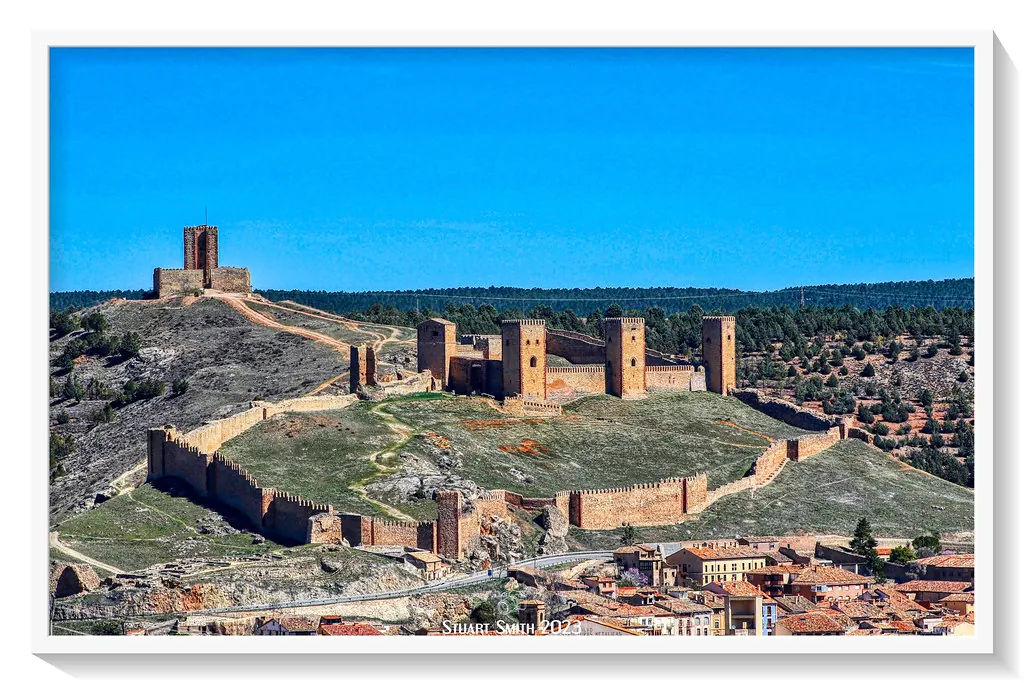
From Riba de Saelices it is straightforward to move around this part of the Señorío de Molina. Molina de Aragón is relatively close. Its castle can be seen from afar, rising in a way that brings to mind the fortresses drawn in school history books.
It is also possible to head into the Alto Tajo Natural Park and explore some of its ravines and natural viewpoints. The park is known for its dramatic relief, which echoes the landscape around the village itself.
For those who enjoy looking around small rural settlements, there are other hamlets in the area where life follows a similar rhythm. Quiet streets, old houses and open countryside stretching to the horizon define much of this region. The pattern repeats from one village to the next, with subtle variations shaped by the terrain.
August, when voices return
Festivities are usually concentrated in August. Many residents who live elsewhere during the year return to Riba de Saelices at that time. The atmosphere shifts noticeably. Where there is normally silence, conversations begin to fill the square. Cars appear in spots that remain empty for most of the year.
These are not large-scale fiestas. They feel more like village gatherings. There is a mass, perhaps a small procession, and shared meals. The mood resembles a family reunion that starts quietly and gradually stretches on because someone always has another story to tell.
The road in
Reaching Riba de Saelices means accepting that the final stretch is along regional roads. From Guadalajara, the usual route heads towards Molina de Aragón and then continues along the roads that connect the villages of the Señorío.
The journey itself has a sense of transition. Motorways give way to quieter roads where fields outnumber cars. The change happens gradually, like turning down the volume step by step.
Riba de Saelices does not try to compete with better-known destinations. It is the sort of place you visit knowing what you will find: a small village in Castilla La Mancha, shaped by its landscape and its history, where daily life still sets the pace.