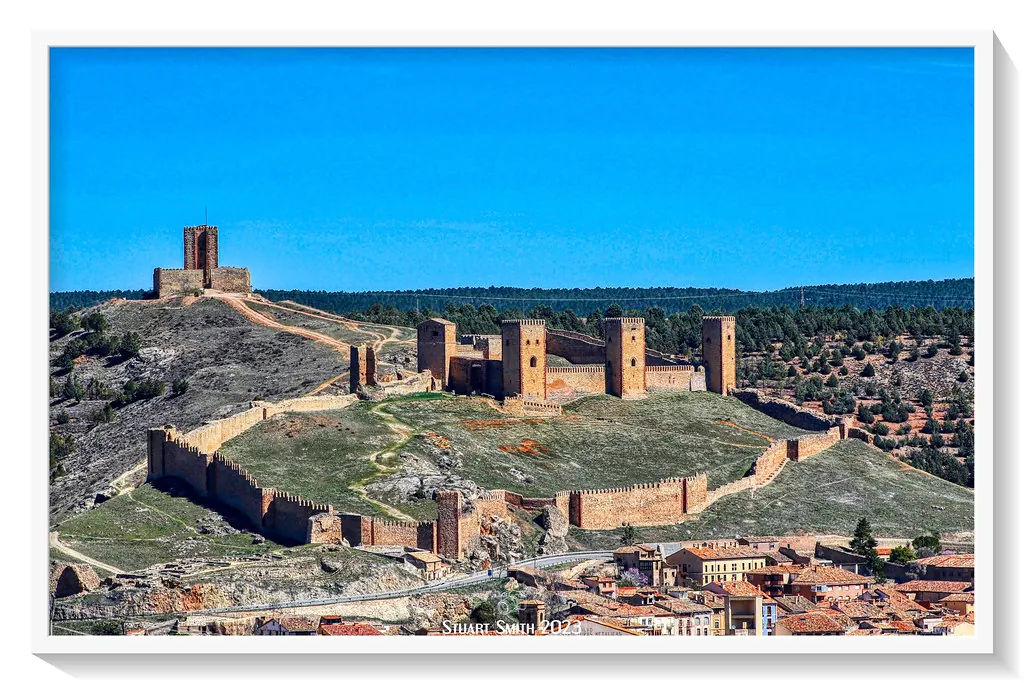
Rueda de la Sierra - Flickr
arquidiodebucar · Flickr 10
Castilla-La Mancha · Land of Don Quixote

Rueda de la Sierra

At 1,200 metres, the Sierra de Guadalajara thins the air until every footstep on granite sounds like trespass. Rueda de la Sierra appears without c...

38 inhabitants · INE 2025
1200m Altitude

Why Visit

Mountain Stone monolith Hiking

Best Time to Visit

summer

Feast of the Virgen de las Nieves (August) agosto

Things to See & Do
in Rueda de la Sierra

Heritage

  • Stone monolith
  • Church of the Assumption

Activities

  • Hiking
  • Cultural visit

Festivals
& & Traditions

Fecha agosto

Fiestas de la Virgen de las Nieves (agosto)

Las fiestas locales son el momento perfecto para vivir la autenticidad de Rueda de la Sierra.

Full Article
about Rueda de la Sierra

Charming village with a stone monolith; home of the Vallejo family

Ocultar artículo Leer artículo completo

The Sound of 38 People Breathing

At 1,200 metres, the Sierra de Guadalajara thins the air until every footstep on granite sounds like trespass. Rueda de la Sierra appears without ceremony: stone roofs the colour of weathered pewter, a single church tower punching above the ridge line, and silence so complete you can hear the village's one generator wheeze into life each morning. The name translates roughly to "wheel of the mountain range," a nod to the waterwheels that once turned in the gullies below, though today only the wind moves anything at a pace faster than geological.

Thirty-eight residents remain on the padron—fewer than the number of British tourists who spill off a single coach in nearby Sigüenza on any given Saturday. Most are over sixty; several houses stand locked since their owners died or moved to Molina de Aragón for chemotherapy, Wi-Fi, or grandchildren. What looks abandoned, however, is simply waiting. On feast days emigrants return, inflate the population to perhaps ninety, and the plaza fills with folding tables, stewpots of conejo al ajillo, and portable speakers that play pasodobles until the Guardia Civil cruise past at 02:00 and ask them, politely, to let the mountain sleep.

Stone, Wood, and the Smell of Rain on Piñón

There is no interpretive centre, no gift shop selling fridge magnets shaped like Don Quixote. The village museum is the village itself: corrals carved into bedrock, communal bread ovens still blackened from the 1950s, threshing circles now colonised by wild fennel. Granite blocks the size of hatchbacks form terrace walls; without them the thin soil would have slipped into the Tajuña basin centuries ago. Oak doors hang on hand-forged iron hinges that squeal in exactly the same note as their medieval predecessors—architectural tinnitus that reassures returning locals they are home.

Walk the single paved lane at 07:00 and you'll meet Antonio driving three goats to pasture. He will nod, perhaps tell you the temperature plummeted to minus fourteen last January, then add that his father measured minus twenty-three in '52. These are men who keep meteorological records the way others keep football scores. If you ask about WIFI, he'll gesture towards the antenna bolted to the church roof and admit it works "cuando quiere"—when it feels like it—then invite you for coffee so strong it could etch glass.

Tracks that Remember Moorish Traders

The GR-86 long-distance footpath skirts the village, following drove roads that once funnelled merino sheep towards Toledo. Markers are scarce; instead look for cairns the height of a shepherd's crook or blazes chopped into pine bark. Within twenty minutes the settlement dwindles to a smudge of terracotta among sabina shrubs that grow horizontally, sculpted by a wind that has clearly read the instruction manual on bonsai.

Spring brings sheets of lavender-coloured flax and the risk of boar encounters—females with striped young can be aggressive from April to June. Autumn trades flowers for fungi: milk-caps, chanterelles and, if you know the altitude and aspect, the prized níscalo that fetches €40 a kilo in Guadalajara markets. Winter is serious: the CM-2016 from Molina is chained-tyre territory once snow settles, and the sole bar closes when stocks of coal for the brasero run out. Summer, by contrast, offers 25 °C highs and night skies so dark the Milky Way feels like a low ceiling—perfect for watching Perseid meteors streak above the bell tower.

Where to Eat When Nobody Sells Food

Rueda itself has no restaurant, no shop, not even a vending machine. Self-catering is mandatory unless you've befriended a resident with a vegetable plot. Thursday is market day in Molina, 24 km north-east: fill a rucksack with queso de oveja, chorizo de bellota and pan de pueblo before the single afternoon bus heads back up the pass. Alternatively, drive twenty-five minutes to Checa (population 502) where Mesón de la Virgen serves cordero asado for €18; weekend booking advised because every family from here to the provincial border treats it as their dining room.

Water is drinkable from any of the three public fountains—look for the 1890 iron spouts shaped like dragon mouths. Locals swear it prevents kidney stones, though they also swear by anisado at breakfast, so calibrate advice accordingly.

The Arithmetic of Getting Lost

Sat-nav gives up 3 km short; the road narrows to a single track where stone walls remove paint from careless wing-mirrors. From Madrid, take the A-2 towards Zaragoza, exit at km 91 for Medinaceli, then follow the N-211 to Molina. Turn south on the CM-2016 and climb 600 m of switchbacks until the landscape resembles the Scottish Highlands re-imagined by someone who has only read about them. Total distance: 190 km, 2 h 45 min in good weather, add one hour if the pass is fogged in.

Public transport exists but requires stoicism: a twice-daily bus from Guadalajara reaches Molina at 14:10 and 19:30; from there a county minibus continues to Rueda on school-day mornings only, returning at 14:00 sharp. Miss it and you're walking 24 km with 700 m of ascent, which focuses the mind wonderfully.

Accommodation is likewise binary. Casa Rural La Fuente (three doubles, shared kitchen, €70 per night) opens when owner Pilar remembers to check her email; enquire in Spanish via WhatsApp +34 666 12 78 45. The alternative is wild camping below the village on the firebreak—legal with a free permit printed from the Junta de Castilla-La Mancha website, though you must carry water because the stream dries by July.

A Quiet that Outlives You

Stay three nights and the place begins to calibrate your heartbeat. Church bells ring only for funerals nowadays; when they do, every inhabitant appears within ten minutes wearing the same black coat, regardless of heat. The cemetery occupies a terrace barely wider than a tennis court, graves aligned so the deceased can watch sunrise over the Cuenca cliffs. Newest headstone reads 2021; oldest 1833, half-erased by hail. Space remains for perhaps another decade of departures, after which the village will have to expand upwards or start doubling occupants—an intimate form of gentrification.

Leave early, before the sun lifts above the pine ridge, and you'll meet the bread van from Molina idling in the plaza, hazard lights blinking red against stone. The driver hands loaves through windows, collects gossip like small change, then rumbles away. His departure is the daily census: if tomorrow he counts fewer than thirty-eight, Rueda edges closer to becoming the architectural equivalent of an echo—roofline intact, pulse gone. Visit while the echo still answers back.

Key Facts

Region
Castilla-La Mancha
District
Señorío de Molina
INE Code
19243
Coast
No
Mountain
Yes
Season
summer

Livability & Services

Key data for living or remote work

2024
Housing~5€/m² rent · Affordable
January Climate2.8°C avg
Sources: INE, CNMC, Ministry of Health, AEMET

Official Data

Institutional records and open data (when available).

  • CASTILLO
    bic Genérico ~0.2 km
  • ESCUDO EN CASONA 1
    bic Genérico ~0.3 km
  • ESCUDO EN CASONA 2
    bic Genérico ~0.4 km
  • ESCUDO EN CASONA
    bic Genérico ~2.9 km

Planning Your Visit?

Discover more villages in the Señorío de Molina.

View full region →

More villages in Señorío de Molina

Traveler Reviews