Full Article
about Tierzo
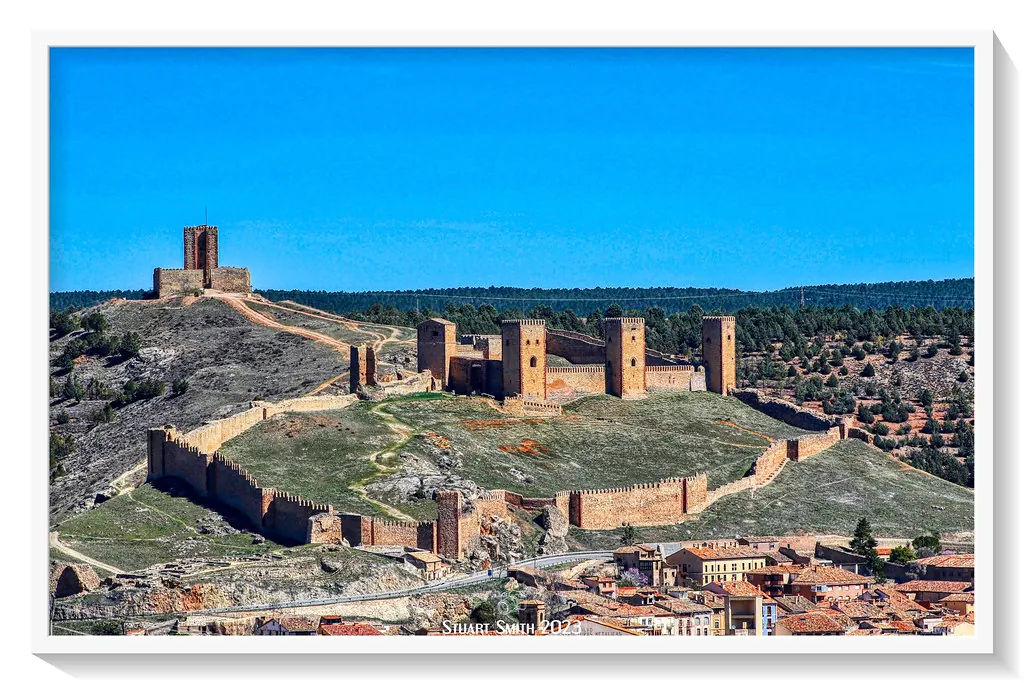
Known for the Casa Fuerte de Vega de Arias and its salt pans.
Hide article Read full article
A Village You Mean to Visit
Some villages appear clearly on the map. Others feel almost like a cartographer’s afterthought. Tierzo belongs to the second group. You drive along the long, open roads of the Señorío de Molina, a historic region in the province of Guadalajara, thinking there cannot be much more ahead, and then it appears.
Tourism in Tierzo is not accidental. This is not a place stumbled upon while passing through. If you come here, it is because you have decided to see what lies up in these highlands.
The village is small. Very small. Today it has around 32 residents. Stone houses cluster without much ceremony around a simple square. There are no decorative façades designed for quick photographs, no streets arranged as a backdrop. Tierzo still works as a village rather than a display.
First Impressions at Over a Thousand Metres
Arrival is by car, and the first thing you notice is the silence. The kind found in places where traffic is rare and the wind is louder than engines.
Tierzo sits in the upper part of the sierra molinesa, more than a thousand metres above sea level. The altitude shapes both the landscape and the climate. Winters are serious here. Frost is not unusual, and the cold lingers. Summers, by contrast, are considerably milder than in other parts of Guadalajara.
The houses follow the architectural patterns seen across the Señorío de Molina: solid stone walls, sloping roofs, little in the way of ornament. Some still have large wooden gates and enclosed yards that recall a life long tied to livestock and agriculture.
It is common to find doors closed for much of the year. As in many villages in this part of Spain, some homes fill mainly in summer, when families with roots here return for a few weeks. For the rest of the year, Tierzo moves at a quieter pace.
The Plaza and the Church of San Andrés
The centre of Tierzo is, quite simply, the square and the Iglesia de San Andrés. There is no grand narrative attached to them, and none is required.
The church is sober and built in stone, probably dating from the early modern period, as is the case with many parish churches in the area. Inside, it tends to preserve the restrained feel typical of rural parishes: thick walls, limited decoration and the occasional older element that has survived successive repairs and alterations.
The fountain in the square and the open space around it remain the point where the village’s limited daily life crosses paths. If there is conversation on the street, it is usually here. A few neighbours talking, a greeting exchanged, a pause in the day.
Nothing about this setting seeks attention. Its interest lies in continuity rather than spectacle.
Walking the High Plains of Molina
Anyone making the journey to Tierzo will likely want to explore beyond the houses. The landscape of the Señorío de Molina often resembles an unfolded map laid across a table: wide expanses, few obstacles, long horizons.
Around Tierzo, pine woods alternate with juniper and pastureland. Tracks connect the village with other small settlements in the comarca, a term used in Spain for a local district. Some of these routes have been used for generations, linking municipal boundaries and supporting farm work.
Do not expect signposted walking routes every hundred metres. This is terrain for following forest tracks and traditional paths. In return, there is a calm that is difficult to find in more widely known destinations. The sense of space is constant, and the absence of noise becomes part of the experience.
In autumn, the pine forests draw people in search of mushrooms. It is a common activity throughout the area. As elsewhere in Spain, foraging is popular, though caution is essential and knowledge matters. The rhythm of the seasons is still visible here, from grazing livestock to the quiet anticipation of the colder months.
The elevation and exposure give the surroundings a particular character. Light changes quickly, and the sky feels expansive. There are no dramatic landmarks competing for attention, only the steady presence of woodland and open ground.
When the Village Fills Again
For much of the year, Tierzo is calm even by rural standards. Days pass with little disturbance. Then summer arrives, and the atmosphere shifts.
Many of the village’s descendants return for a time. Houses reopen, voices carry further across the square, and movement becomes noticeable. Simple events are organised, neighbours gather and celebrations take place around the patron saint, San Andrés.
These are traditional village festivities: shared meals, long conversations and reunions between people who may not have seen one another for months or even years. The focus is internal rather than outward-facing. They are not designed to attract visitors. Instead, they are the way Tierzo continues to come together.
The contrast between winter quiet and summer reunion says much about life in this part of inland Spain. Continuity depends as much on those who left and return as on those who remain all year.
Reaching Tierzo
The usual approach is from Molina de Aragón, which remains the main reference point for almost everything in this part of Guadalajara. From there, regional roads cross a series of small villages before climbing towards Tierzo.
They are quiet roads, the sort travelled without hurry. In winter, it is sensible to check the weather beforehand, as frost at this altitude can be significant.
One practical piece of advice follows simple common sense: arrive with what you need. In villages of this size there are no shops open all day and no continuous services. Tierzo does not operate to the rhythm of convenience.
This is not a place for a packed itinerary. There are no queues, no major sights to tick off. Tierzo suits those willing to pause for a while, walk a little and observe how this part of the Señorío de Molina still breathes. Sometimes that is enough.