Full Article
about Traíd
High town of the Señorío; surrounded by paramera and juniper groves
Ocultar artículo Leer artículo completo
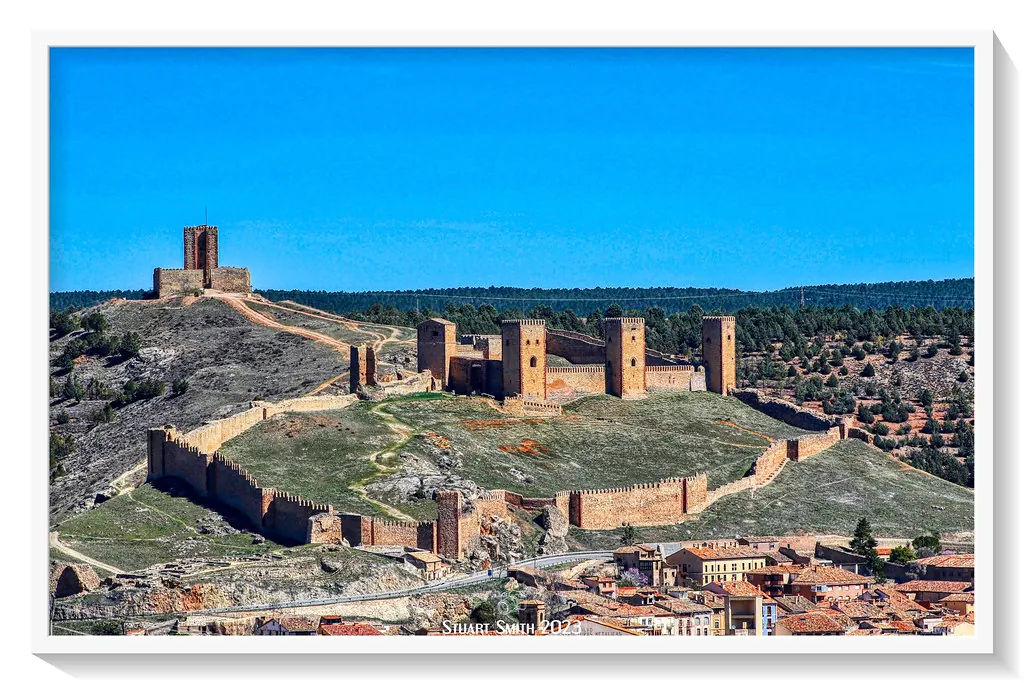
The stone houses appear to grow directly from the mountainside, their weathered walls the same grey-brown as the rock beneath. At 1,373 metres above sea level, Traíd doesn't announce itself with fanfare—it simply exists, clinging to the slope like it has for centuries, indifferent to whether visitors come or not.
This is Spain's empty quarter, the Señorío de Molina, where villages shrink rather than expand and the landscape dictates everything. From Traíd's modest height, the view rolls out across parameras—vast high plateaux—that stretch towards horizons softened only by the occasional sabinar, those ancient juniper forests that have learned to bend rather than break in the relentless wind.
The Architecture of Survival
Traíd's buildings tell their own story, one written in stone and timber rather than guidebooks. The parish church stands solidly at the village's heart, its masonry tower more watchman than ornament. Inside, there's no baroque excess or gilded altarpieces—just the essential elements of worship, built to withstand winters that can stretch from October to May.
Walk the narrow lanes and you'll read a manual of mountain construction techniques. Houses huddle together for warmth, their chimneys disproportionately large for the modest dwellings beneath. These aren't aesthetic choices but survival strategies carved from necessity. Corrals for livestock sit directly beside human dwellings, the stone walls thick enough to buffer both sound and weather. Pajares—stone granaries—stand on stilts, keeping grain safe from rodents while allowing air circulation in a climate where damp can destroy harvests faster than drought.
Many buildings incorporate bodegas, those cave-like cellars dug into the rock itself. Temperature remains constant year-round at twelve degrees, perfect for storing wine and preserving the embutidos that still sustain families through winter. The technique predates written records, a practical solution that modern refrigeration hasn't quite rendered obsolete.
Walking the Ancient Networks
Traíd functions as a node in an ancient network of paths that once connected these mountain communities before roads arrived. These aren't constructed hiking trails but traditional routes worn smooth by centuries of foot traffic—shepherds moving flocks, mules carrying goods, families walking to neighbouring villages for markets and marriages.
From the village, several paths strike out across the paramera. One leads towards the ruins of a Roman watchtower, three kilometres of steady climbing rewarded by views that on clear days reach the Sierra de Albarracín. Another follows an ancient drove road south towards Masegoso, where the landscape drops into a different world of almond groves and irrigated terraces.
Navigation requires attention. These paths don't indulge walkers with colour-coded waymarks every hundred metres. A proper map or GPS track proves essential, particularly where multiple routes converge at ancient water sources. The walking itself isn't technically demanding—this isn't alpine terrain—but the altitude makes itself felt. At 1,373 metres, even fit walkers notice the thin air on steep gradients.
The Weight of Seasons
Winter arrives early and departs late. From December through March, Traíd sits above the snowline more often than not. Access becomes problematic—the CM-2105 from Molina de Aragón gets cleared sporadically, and the final two kilometres to the village can require chains even when the main road runs clear. Those stone houses with their tiny windows and massive chimneys suddenly make perfect sense.
Spring transforms everything, but briefly. By late April, wildflowers puncture the ochre landscape—purple thyme, yellow cytinus, white asphodel creating impressionist splashes across the paramera. The sabinars release pollen that hangs visible in morning air, and the silence fractures with bird song returning to claim territories.
Summer brings a different kind of visitor—descendants of those who left for Madrid, Barcelona, Zaragoza decades ago. The fiestas patronales in July see Traíd's population multiply tenfold, temporary but vital resuscitation for a village that otherwise drifts towards demographic extinction. Houses closed eleven months open their shutters. The single bar (open only weekends) extends hours. For forty-eight hours, Traíd almost resembles a living Spanish village rather than a monument to rural decline.
Autumn proves the sweet spot for visiting. Temperatures moderate, crowds dissipate, and the paramera turns burnt gold under skies that seem impossibly high. Mushroom hunters appear—boletus edulus, níscalos, and the prized trumpet of death appear after September rains. Local knowledge determines success more than formal permits, though the Guardia Civil do occasionally check baskets.
Practical Realities
Traíd offers no accommodation within the village itself. The nearest hotels sit fifteen kilometres away in Molina de Aragón, a small town with sufficient services but little charm. Better options include the casa rural in Masegoso, twelve kilometres south, or the remarkably comfortable parador in Sigüenza, forty minutes west through landscapes that shift from paramera to pine forest to river gorge.
Driving remains the only practical access. From Madrid, the A-2 east to Guadalajara, then north on the A-23 towards Zaragoza before turning east on the CM-2105. Total journey time: two and a half hours on good roads, though the final stretch demands attention—mountain roads built for necessity rather than tourism, with gradients that test both brakes and nerves.
Bring everything you need. Traíd's single shop closed years ago. The nearest supermarket stands twenty kilometres distant, and the village fountain, while potable, won't sustain a full day's walking. Mobile coverage exists but proves patchy—Movistar works best, Vodafone struggles, and O2 might as well not exist.
The Future Written in Stone
Traíd embodies the dilemma facing rural Spain. Its architectural integrity remains intact precisely because development bypassed it completely. The houses that make it photographically interesting exist because families couldn't afford to modernise. The silence that visitors find restorative results from demographic collapse rather than deliberate preservation.
Yet something stubborn persists here. New roofs appear on old houses—weekend repairs by city dwellers reclaiming family homes. Solar panels glint on south-facing slopes, bringing twenty-first century comfort to sixteenth century structures. A British couple recently bought two ruined houses, rebuilding them using traditional techniques learned from local masons who remember when these skills meant survival rather than heritage.
Traíd won't suit everyone. Those seeking tapas trails, boutique hotels, or Instagram moments should look elsewhere. But for travellers willing to engage with a place on its own terms—accepting silence instead of soundtrack, substance rather than spectacle—Traíd offers something increasingly rare: a Spanish village that remains exactly what it has always been, altitude and attitude intact.