Full Article
about Villel de Mesa
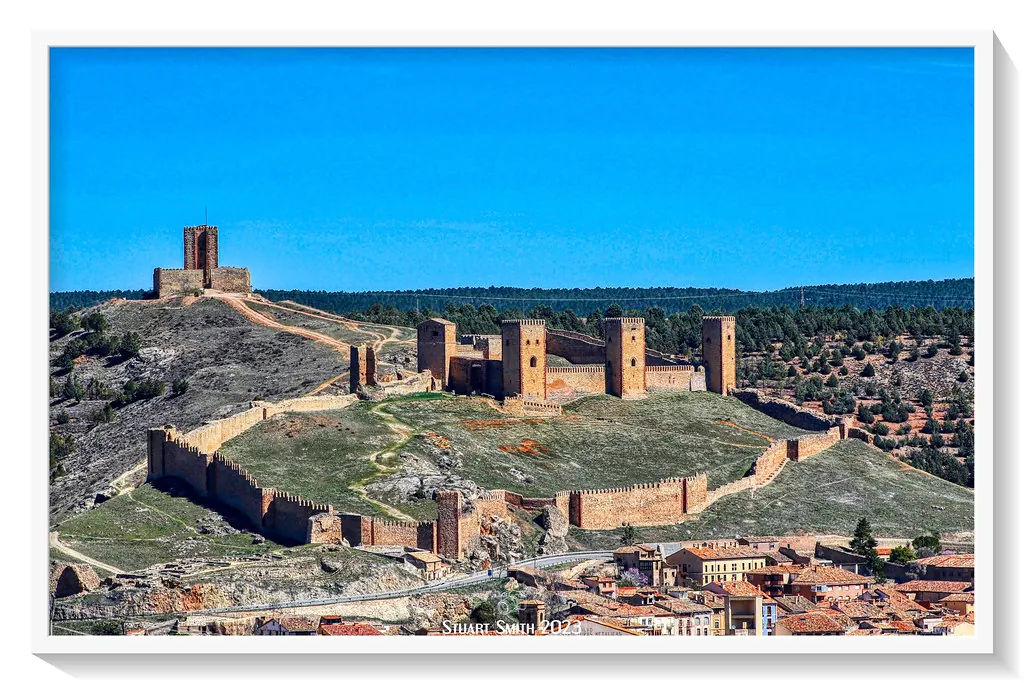
Spectacular location in the Mesa valley beneath a cliff-top castle
Hide article Read full article
Villel de Mesa sits on a plateau above the valley of the River Mesa, in the eastern part of Guadalajara province. It belongs to the historic Señorío de Molina, a territory defined by its sparse population and a landscape of high plains. The village has about 160 inhabitants.
The geography here dictates the patterns of life. This is an exposed, open country of cereal fields, cut through by ravines that descend to the river. The climate is dry, with harsh winters. The village’s position on higher ground follows the logic of medieval repopulation in this frontier zone: it allowed control over farmland and the natural routes into the valley below. That relationship between the settlement and its terrain is still the most visible fact about the place.
La iglesia y la estructura del pueblo
The parish church is the most prominent building, built in masonry with a simple, functional structure. Its current form is likely the result of modifications over centuries, not a single design. This is common in the villages of the Señorío.
The housing stock shows the typical rural architecture of the Molina area: stone walls, deep eaves, restrained doorways. Some houses preserve wooden galleries; old pens and barns remain integrated into the village fabric. These elements speak directly of its agricultural past, where livestock and storage were part of domestic life.
The streets follow an irregular layout, adapting to the slope of the land. They occasionally open into small, widened areas that function as casual meeting points. There is no formal monumentality, but the ensemble offers a clear lesson in how a farming community in this part of Guadalajara was organized.
El paisaje: meseta y barranco
A short walk from the village reveals the defining transition. The plateau fractures into ravines that drop towards the River Mesa. From certain points, you can see the layers: cultivated fields above, then the broken terrain of the valley slopes.
The vegetation is a mix of cereal crops, Mediterranean scrub, and Spanish juniper (sabina albar). Griffon vultures are common over the rocky escarpments. The sense is one of breadth and quiet, interrupted only by the wind, which is frequent here.
Seasonal changes are pronounced. Spring brings sharper contrasts between green crops and the greys and browns of the scrubland. Winter on the plateau means hard frosts, occasional snow, and a landscape stripped back to its structure.
Por los caminos agrícolas
A network of agricultural tracks leads out from Villel de Mesa. They connect to other hamlets in the valley or to upland fields, and are walkable without special equipment.
These are not signposted hiking trails. If you plan to walk any distance, carry a map or a GPS track. The terrain isn’t technical, but distances are deceptive under an open sky. In summer, the lack of shade is total; in winter, the wind sweeps across the plateau without obstruction.
Walking here is less about a destination and more about reading the landscape. You see how fields, scrub, and rock interact, and understand why the village was built precisely here.
Festividades y vida local
The main patron saint festivities are in summer. This is when former residents return, and the population temporarily swells. The events are organized by the village committee and blend religious observance with communal activities.
Throughout the year, some traditional observances are maintained, though their scale depends entirely on who is in residence. The festive calendar mirrors the demographic reality of a small, scattered population.
Cómo llegar y notas prácticas
Villel de Mesa is in eastern Guadalajara. The usual route from the provincial capital is the N‑211 towards Molina de Aragón, turning onto local roads for the Mesa valley.
Services in the area are limited. If you walk, bring water, sun protection, and navigation aids. Conditions vary drastically with the seasons.
Villel de Mesa is best understood as part of its territory. It is a small village where the connection between settlement, farmland, and raw geography remains legible. The plateau, the ravines, and the river continue to shape life, as they have for centuries.