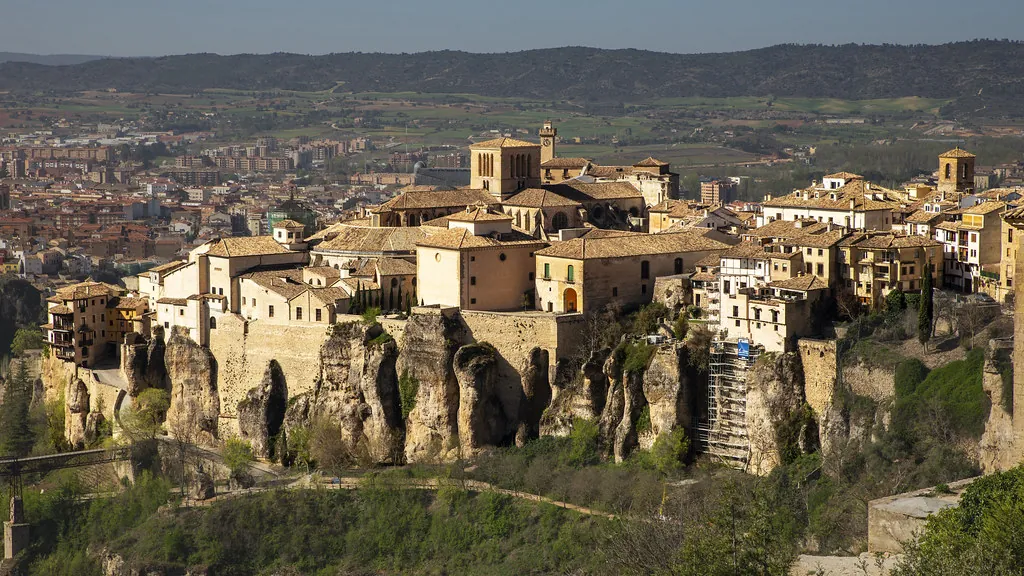
Vista aérea de Cañada del Hoyo
Instituto Geográfico Nacional · CC-BY 4.0 scne.es
Castilla-La Mancha · Land of Don Quixote

Cañada del Hoyo

The morning bus from Cuenca wheezes to a halt beside a stone trough where two men in overalls are washing potatoes straight from the field. One gla...

221 inhabitants · INE 2025
1020m Altitude

Why Visit

Mountain Lakes of Cañada del Hoyo Lagoon Route

Best Time to Visit

year-round

Feast of the Virgen de los Ángeles (September) agosto

Things to See & Do
in Cañada del Hoyo

Heritage

  • Lakes of Cañada del Hoyo
  • Cañada Castle (private)

Activities

  • Lagoon Route
  • Nature photography

Festivals
& & Traditions

Fecha agosto

Fiestas de la Virgen de los Ángeles (septiembre)

Las fiestas locales son el momento perfecto para vivir la autenticidad de Cañada del Hoyo.

Full Article
about Cañada del Hoyo

Famous for its color-shifting lakes; a unique natural phenomenon

Ocultar artículo Leer artículo completo

The morning bus from Cuenca wheezes to a halt beside a stone trough where two men in overalls are washing potatoes straight from the field. One glance upwards explains why Cañada del Hoyo sits at 1,050 m: the surrounding sierra rolls like a frozen swell, pine-dark and chalk-white in equal measure. At this altitude the air carries the scent of resin and cold iron; even in July you might want a jumper after sundown.

Stone, timber and silence

The village grid is a five-minute stroll from end to end. Houses are built from the mountain itself—chunks of limestone mortared with mud the colour of weathered oak—while upper floors jut out under curved terracotta tiles designed to shrug off snow. Timber balconies, once handy for drying maize, now hold geraniums and the occasional mountain bike. Traffic is so light that dogs nap in the middle of Calle Real; the only reliable clock is the church bell that rings the quarters because nobody can be bothered to reset the mechanism for daylight-saving.

Inside the single-aisled parish church an 18th-century retablo glints with guilt-ridden gold leaf, but the real artefact is the roof: centuries-old beams branded with the mason’s mark still carry their original Roman numerals, a reminder that everything here was slotted together like a giant piece of flat-pack furniture. Mass is sung once a weekend; on other days the building doubles as the coolest place in town, thanks to metre-thick walls.

Following the sinkholes

Two kilometres east the road dissolves into a forestry track signed simply “Lagunas”. Within minutes the limestone plateau begins to look moth-eaten: first a modest dent filled with reeds, then a crater the size of a cricket pitch whose water glows an improbable green. These are the lagunas karsticas, seven dollops of mineral-rich water created when the ground collapsed into subterranean cavities. No rivers feed them; they survive on rainfall and snow-melt, which means levels can drop by late summer and colours shift from jade to pale turquoise according to the sky’s mood.

A 12-kilometre loop links the largest—Laguna de la Cruz and Laguna del Tejo—through pine and savin woodland. The path is way-marked but rocky; trainers are fine outside winter, yet open-toed sandals will earn you a blistered souvenir. There are no cafés, no bins, no mobile signal for long stretches, so take water and carry rubbish out. In May the undergrowth erupts with white peonies and the air rings with oropendola song; by October migrant hawkers patrol the pond surfaces and the only sound is the crack of falling pine cones.

What the mountain gives the pot

Mealtimes revolve around what can be coaxed from the sierra. Lamb grazes on thyme-scented pastures, mushrooms appear after autumn rain, and every household seems to keep a few vines for robust, purple-tinged table wine. The single bar-restaurant, Mesón de la Sierra, opens only when the owner feels like it—ring ahead or risk a closed door. If the hearth is lit, order morteruelo, a pâté-like spread of game liver and spices served with warm baguette; it arrives in the same terracotta dish used to grind the mixture, a living link to medieval recipes. A three-course lunch with wine rarely tops €14, but cash is essential; the card machine gave up during a thunderstorm in 2019 and nobody has replaced it.

For self-caterers the Friday morning van in the plaza sells queso manchego aged in nearby caves; ask for curado if you want the nuttier 12-month version. Bread arrives at noon in a dust-coated van—follow the queue of grandmothers wielding cloth bags.

How to get here without tears

From the UK the simplest route is a Stansted–Madrid flight, then a two-hour hire-car dash down the A-3 to Tarancón before turning onto the CM-2106. The final 40 km snake through pine plantations where wild boar wander at dusk; allow extra time and keep headlights on. Buses reach the village twice daily from Cuenca’s main station (€4.85, 55 minutes), but the midday service is axed if schools are closed, so check timetables the night before. Once here everything is walkable, though a spare pair of lungs helps on the steep climb back from the lagunas.

Accommodation is limited to four rural houses (casa rural) sharing a booking office beside the bakery. Expect stone walls, wood-burning stoves and patchy Wi-Fi—fine for emails, hopeless for streaming. Weekends in May and September fill with Madrid families fleeing the capital’s heat; mid-week visitors often have the place to themselves. Winter brings crisp sun and occasional snow, turning the village into a bargain bolthole provided you’re happy with sub-zero nights and the possibility of being snowed in for a day.

A calendar of very local events

The fiesta mayor (15 August) is less Instagram parade, more village AGM. Morning mass segues into a communal paella cooked in a pan two metres wide; bring your own spoon and donate €5 towards the wine. At midnight teenagers set off fireworks recycled from nearby town displays, while elders retreat to the bar to argue about tomato prices.

In late October the mycological society runs guided mushroom walks (€10 including permit) followed by a tasting of sautéed níscalos on toast. Places are capped at 25; sign up at the tourist point, a desk in the library open Tuesday and Thursday 17.00–19.00. January’s feast of San Antón blesses any pet brave enough to face the cold; last year the headcount included three hunting dogs, one bewildered cat and a chicken in a cardboard box.

The honest verdict

Cañada del Hoyo will never compete with the Moorish dazzle of Andalucía or the wine-luxe of La Rioja. Facilities are basic, the nearest cinema is 50 km away, and if the wind blows from the north the tap water tastes faintly of pine disinfectant. Yet for travellers who measure value in breathing space and geological oddity, the village delivers. Arrive expecting modest comforts and you’ll leave understanding why 212 people refuse to swap their limestone ridge for anything coastal or cosmopolitan.

Key Facts

Region
Castilla-La Mancha
District
Serranía Media
INE Code
16046
Coast
No
Mountain
Yes
Season
year-round

Livability & Services

Key data for living or remote work

2024
Connectivity5G available
TransportTrain station
HealthcareHospital 23 km away
Housing~6€/m² rent · Affordable
January Climate5.1°C avg
Sources: INE, CNMC, Ministry of Health, AEMET

Official Data

Institutional records and open data (when available).

  • CASTILLO DEL BUEN SUCESO
    bic Genérico ~0.2 km

Planning Your Visit?

Discover more villages in the Serranía Media.

View full region →

More villages in Serranía Media

Traveler Reviews