Full Article
about Cañamares
Set in the Escabas river gorge; known for its river beach and natural setting.
Hide article Read full article
A small village with a bigger setting
Some places feel familiar before you even arrive. You park, walk along the main street, and think it matches the picture you had in mind. Tourism in Cañamares works in a similar way, with one important twist. The village itself is small and fairly simple, but the landscape around it plays by different rules.
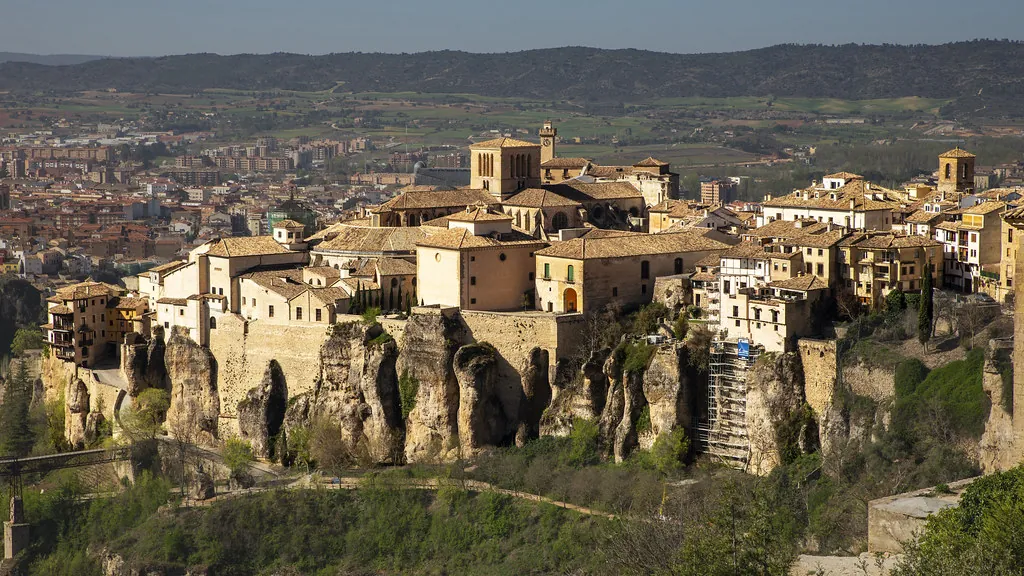
Cañamares sits in the Serranía Media of Cuenca and has a population of just over four hundred people. This is not a place for ticking off monuments one after another. People come here for the surroundings: hills covered in forest, pale limestone rock, and a river that has shaped the land over centuries.
A quick walk through the village
The centre of Cañamares does not take long to explore. Streets are short, the houses built in stone or finished in light render, and the occasional slope reminds you that this is a mountainous area.
The church of San Andrés stands out slightly above the rooftops. It is not a building that demands long attention, but it marks the heart of the village. Nearby, traces of older daily life still appear: former washhouses and well-worn wooden gates. These details tend to show up when wandering without a plan rather than following signposts.
Life here moves at a pace where little seems to happen, yet nothing feels missing.
The Escabas canyon and the pine forests
The reason Cañamares exists in this spot becomes clear once you reach the river. The Escabas runs close by and has carved a canyon with solid limestone walls over time. A short visit to the river area helps explain the wider landscape of this part of Cuenca.
Pine forests cover many of the slopes. On clear days, the contrast between the dark green of the pines and the pale rock stands out, especially as the sun begins to drop and the stone shifts in colour.
There are no large, purpose-built viewpoints. Often it is enough to climb a little along any path and take in what is around you.
Walking the surrounding hills
Exploring the nearby hills is straightforward for anyone who enjoys walking without too much complication. Forest tracks and footpaths have been used by local people for years, and they form a loose network across the area.
Signposting is not consistent. In some stretches, the most obvious path is the one to follow. A map or a mobile app with routes can make a real difference, particularly when moving beyond the immediate surroundings of the village.
The terrain alternates between gentler sections and short, stony climbs. Nothing feels extreme, but decent footwear is a sensible choice.
Quiet routines and mountain food
Food in places like this tends to follow a familiar pattern: hearty dishes and recipes that have been repeated over generations.
Roast lamb is typical across this part of the Serranía. Stews also appear regularly, the kind that call for bread on the side. In autumn, when conditions in the forest allow it, many people head out to gather níscalos and other pine forest mushrooms. Care is essential, as not everything that grows from the ground is suitable for cooking.
This is not elaborate cuisine. It is food designed to satisfy.
Summer gatherings
August brings a noticeable change in atmosphere. As in many villages in the area, people who live elsewhere for most of the year return, and the population grows for a while.
Religious events usually take place, along with music in the main square and gatherings that continue late into the evening. These are not festivities aimed at attracting large crowds. They are closer to an annual reunion for those who still see this place as home.
That, in the end, says a lot about how Cañamares works. It is a small village surrounded by serious countryside, where what matters lies more beyond the streets than within them. Those who enjoy walking and stopping now and then to look at the landscape will find plenty here. Those looking for something else may find it limited.