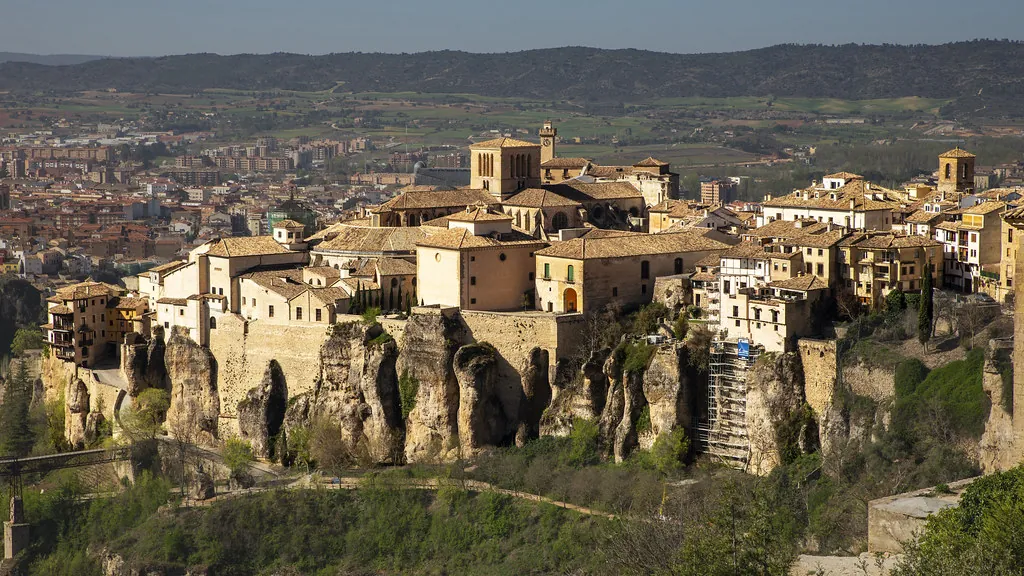
Vista aérea de Reíllo
Instituto Geográfico Nacional · CC-BY 4.0 scne.es
Castilla-La Mancha · Land of Don Quixote

Reíllo

The streetlights switch off at one. That’s the first thing you notice after the engine stops and the night air drops ten degrees. At 1,050 m on the...

106 inhabitants · INE 2025
1020m Altitude

Why Visit

Mountain Church of El Salvador Hiking

Best Time to Visit

summer

Feast of the Lord (September) agosto

Things to See & Do
in Reíllo

Heritage

  • Church of El Salvador
  • Reíllo Spring

Activities

  • Hiking
  • Visit to springs

Festivals
& & Traditions

Fecha agosto

Fiestas del Señor (septiembre)

Las fiestas locales son el momento perfecto para vivir la autenticidad de Reíllo.

Full Article
about Reíllo

Known for its mineral waters and the river’s “burlas” phenomenon; karst landscape

Ocultar artículo Leer artículo completo

The streetlights switch off at one. That’s the first thing you notice after the engine stops and the night air drops ten degrees. At 1,050 m on the Serranía de Cuenca ridge, darkness is thorough and silence has weight. Stand still long enough and you hear the village’s single bar pulling its metal shutter down, a sound that travels clean through the stone alleys because nothing else is moving.

Reillo doesn’t do after-hours economy. The head-count hovers around 110, the cash machine vanished years ago, and the only shop keeps school–office hours. What the place does offer is a ready-made antidote to the Costa motorway crawl: granite houses the colour of winter wheat, pine planks stacked beside every door, and a sky so free of light pollution that the Milky Way looks like cloud.

A village built for winter

The houses huddle shoulder-to-shoulder along a saddle-backed ridge, their back walls fused into a natural wind-break. Roofs pitch steeply for snow load; walls are a metre thick, mixing limestone, adobe and the occasional railway sleeper. You’ll spot the original farm layout—stable below, living quarters above, hay loft in the roof—because nobody has bothered to disguise it. Planning regs here mean “repair what your grandfather started”, so PVC windows sit inside centuries-old frames and satellite dishes cling like barnacles to medieval stone.

Walk uphill to the plaza and the cold hits harder; even in May the wind carries pine resin and wood-smoke. The 16th-century church is locked unless Saturday mass is due, but the stone bench outside works as a viewing platform. Southwards the land folds into a beige and green patchwork; northwards the pine plantations run uninterrupted to the Alto Tajo. On a clear afternoon you can clock the snow on the Iberian cordillera 80 km away, a jagged white ruler balanced on the horizon.

Tracks without signposts

Forget way-marked trails. Reillo’s walking routes are the same dirt tracks used by the timber lorries and goat herds. Head east past the cemetery and the tarmac dissolves into a camino of crushed limestone that winds down to the Hoz de Beteta gorge. Thirty minutes of easy descent brings you to an abandoned flour mill, wheels long gone but the sluice still gushing February melt-water. Turn back when you’ve had enough; nobody sells maps and phone reception flat-lines after the first bend.

Keener hikers can string together a six-hour loop linking Reillo with Beteta and the Cañón de Almadenes, but you’ll need Ordinance Survey-style navigation skills. Paths junction at cairns the size of a fist; occasional red-daubed dots mean “probably this way”. Pack lunch, water and a wind-proof—the same altitude that keeps July temperatures tolerable (average 26 °C) makes April feel like Northumberland in October.

Birdlife rewards patience. Short-toed eagles ride thermals above the pine edges, and a resident family of griffon vultures nests on the basalt crags west of the village. Bring binoculars, but leave the scope at home: there’s nowhere flat enough to plant a tripod.

Eating by appointment

The Bar de Reillo opens when the owner feels like it, which translates to weekends, fiesta days and any afternoon the temperature tops 30 °C. Inside you’ll find two tapas choices—tortilla the diameter of a steering wheel, and morteruelo, a pâté-like spread of pork liver and spices best approached with toast and beer. Prices hover at €1.80 a caña, but bring cash: the card reader “only works when the moon is full”, or so the landlord claims, straight-faced.

No restaurant means self-catering is default. The ultramarinos stocks UHT milk, tinned asparagus and local chorizo sealed with string. The bakery (doorbell on the right) bakes once a day at dawn; queue at 09:00 for still-warm pan candeal, a dense loaf that keeps four days and doubles as hiking rations. If you crave fresh vegetables, drive 18 km to Beteta’s Thursday market—Reillo’s single taxi charges €25 each way and prefers 24 hours’ notice.

For an impromptu picnic buy Queso de Cuenca semi-curado, a sheep’s-milk cheese milder than Manchego, and a jar of mountain honey sold in repurposed jam glasses. Both pass UK customs, so you can smuggle a taste of the sierra home in your hold luggage.

Seasons that decide for you

Spring arrives late and all at once. By mid-April almond blossom is finished and the broom is fluorescent; migrant swallows dive-bomb the plaza fountain, newly reinstalled after winter drain-down. Daytime nudges 18 °C but nights stay stubbornly above freezing—perfect walking weather before the flies wake up.

Summer is brief, dry and surprisingly busy. Grandchildren of emigrants flood back from Madrid and Valencia, inflating the population to maybe 250. August’s fiesta means amplified folk music until 03:00 and a communal paella cooked in a pan the size of a satellite dish. Book accommodation early—there are nine rental cottages, all owned by cousins whose surname appears on half the door knockers.

Autumn brings mushroom permits and the smell of wet resin. The forestry commission opens controlled zones where boletus and níscalo fetch €28 a kilo in Cuenca’s Saturday market. Picking without a €6 day licence risks a €300 fine; buy the paper slip from the village office, open Tuesday mornings only.

Winter is serious. The CM-2106 can ice over as early as November; carry chains and a thermal blanket because the snowplough prioritises the Nacimiento highway 12 km north. Daylight is scarce—sunrise after 08:00, dusk before 18:00—so plan walks accordingly. On the plus side, the council switches on the church floodlights for Christmas, giving amateur astronomers a rare patch of illuminated stone to focus against the Milky Way.

Getting here, getting out

Cuenca city, 82 km south, is the nearest practical gateway. The AVE high-speed line from Madrid reaches Cuenca in 55 minutes; car hire desks sit opposite the station exit. From there the CM-2106 snakes north through Uña and Beteta—scenic but narrow, with a 1,200 m pass where lorries creep at 30 km/h. Allow 75 minutes in summer; double that if snow warnings flash on the electronic boards.

Petrol is cheaper at the Repsol outside Cuenca—fill up because the village pump closed in 2019. There is no bus back to civilisation after 15:00, and the school service refuses non-residents. A taxi to Cuenca rail station costs €90 pre-booked; cheaper to sleep an extra night and catch dawn light on the ridge.

The bill at the end

Reillo will not entertain you. It offers instead a scale model of rural Spain before rural became a marketing term. Expect stone floors that numb bare feet, star fields that reset your circadian rhythm, and a soundtrack of goat bells and distant chainsaws. Come prepared—with cash, calories and a full tank—and the village repays in silence, space and the slow realisation that clocks really are optional.

Key Facts

Region
Castilla-La Mancha
District
Serranía Media
INE Code
16177
Coast
No
Mountain
Yes
Season
summer

Livability & Services

Key data for living or remote work

2024
Connectivity5G available
TransportTrain nearby
HealthcareHospital 29 km away
EducationHigh school & elementary
Housing~5€/m² rent · Affordable
January Climate5.1°C avg
Sources: INE, CNMC, Ministry of Health, AEMET

Official Data

Institutional records and open data (when available).

  • CERRO DEL CASTILLO
    bic Zona arqueológica ~0.8 km

Planning Your Visit?

Discover more villages in the Serranía Media.

View full region →

More villages in Serranía Media

Traveler Reviews