Full Article
about Valdemorillo de la Sierra
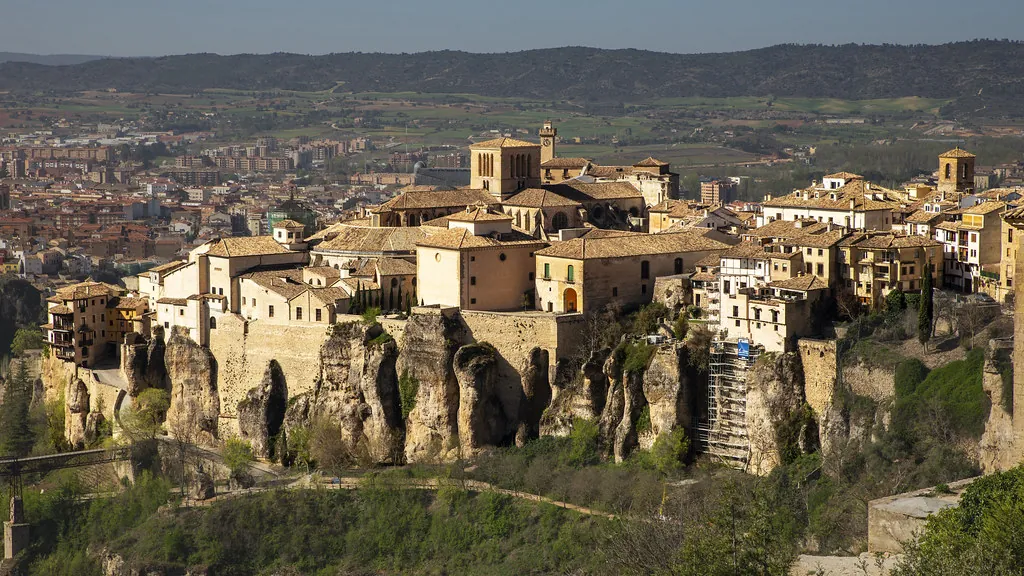
Mountain village with a karst landscape and seasonal lagoons; unspoiled nature
Ocultar artículo Leer artículo completo
The village's only streetlight flickers on at 7:43 pm, whether anyone's watching or not. At 1,260 metres above sea level, Valdemorillo de la Sierra doesn't need to announce itself—it simply exists, 53 souls wrapped in stone houses that have learned to shrug off winter temperatures dropping to minus fifteen. This is Spain stripped of flamenco and tapas tours, where the nearest traffic jam is a shepherd moving his flock across the CU-910 mountain road.
Getting here requires commitment. From Cuenca city, the drive takes ninety minutes along switchbacks that demand second gear and steady nerves. The final approach climbs through pinewoods where wild boar outnumber humans, emerging onto a ridge where the village appears as a cluster of ochre roofs and conical chimneys. There's no train station, no bus service on Sundays, and the single petrol pump in the neighbouring hamlet of Huerta del Marquesado closes for siesta. This isolation isn't a marketing angle—it's daily reality for residents who stock up on firewood in October and don't expect fresh milk between January and March.
The houses tell their own story. Built from local rodeno stone that glows rust-red at sunset, each dwelling sports those distinctive chimneys—wide at the base, tapering to a point like inverted ice cream cones. They're not architectural whimsy but survival mechanisms, designed to prevent snow from drifting into living rooms and to draw smoke upwards through houses where central heating remains a foreign concept. Step inside one during February and you'll understand why locals wear coats to bed; the walls might be two feet thick, but winter here lasts six months and bites hard.
The Forest That Pays the Bills
Beyond the last stone wall lies the real employer. Pinus sylvestris forests stretch for miles, managed by the same families for generations. October brings mushroom hunters wielding wicker baskets and encyclopaedic knowledge of boletus edulis haunts. They'll nod politely at visitors wielding phone apps, but won't reveal their patches—even the village bar owner claims ignorance, though his autumn menu suddenly features "setas a la plancha" when the conditions are right. The going rate for wild mushrooms in Cuenca's Saturday market runs €18 per kilo, making a successful morning's forage worth more than a pensioner's weekly income.
Spring delivers a different harvest. Pine resin collectors appear like ghosts at dawn, making careful incisions in tree trunks and attaching small metal gutters that channel the amber liquid into tin cans. It's backbreaking work that pays €2.30 per kilo, requires specialist tools forged in Solana de Henares, and explains why the village co-op still operates a truck that hasn't seen a MOT test since 1998. The resin ends up in everything from violin varnish to the chewing gum manufactured in Bilbao, though nobody here connects their labour to London's symphony halls.
Walking Into the Past
The GR-160 long-distance path skirts the village boundary, marking an ancient route that once connected mountain communities before asphalt made them redundant. Follow it east for forty minutes and you'll reach the abandoned hamlet of Las Navas, where a stone church missing its roof stands guard over empty houses. Ivy grows through windows where someone last closed shutters in 1963; inside the nave, swallows nest where candles once burned during Sunday mass. It's not curated heritage—just Spain's rural exodus made manifest in limestone and silence.
Serious hikers should stock up in Cuenca before arrival. The village shop (open 9-1, 4-7, closed Tuesday afternoons) sells tinned tuna, UHT milk, and not much else. Water sources exist but require local knowledge—streams marked on OS maps dried up during the 2017 drought and haven't recovered. Mobile phone coverage disappears completely three kilometres north, so the emergency number 112 becomes academic unless you've invested in a satellite beacon. Winter walkers need more than stout boots; when snow falls, it stays for weeks and the CU-910 becomes impassable without chains.
Night Falls Hard
Darkness arrives suddenly at this altitude. Summer sunsets paint the surrounding peaks in gradients of orange and violet that would make a Turner look muted, but by 10 pm the temperature drops ten degrees and constellations appear with planetarium clarity. The village installed LED streetlights in 2019, then removed half of them following complaints about light pollution obscuring the Milky Way. Amateur astronomers gather during August's Perseid meteor shower, spreading blankets on the football pitch that's more goat-grazing territory than sports facility. They bring telescopes, thermal flasks of coffee laced with cognac, and stories of satellites mistaken for shooting stars.
Winter nights demand different preparations. When the mercury hits minus twenty, diesel cars refuse to start and even the village dogs sleep indoors. Locals stack pine logs against walls in November, each household burning through six tonnes before March thaws arrive. The smoke creates an inversion layer that sits in the valley like a grey毯子, occasionally clearing to reveal a full moon that turns the snowscape into something approaching daylight. It's beautiful, certainly, but beauty that kills the unwary—every winter brings stories of walkers who underestimated conditions and required rescue by Guardia Civil helicopters based 120 kilometres away.
Eating on Mountain Time
The bar opens at seven for workers heading to the forests, serving coffee that could etch glass and tostadas rubbed with tomato and garlic. Breakfast costs €2.50 if you stand at the counter, €3.50 if you require a table—though tables remain stacked until ten unless Maria's feeling generous. Lunch happens at two sharp; miss it and you'll wait until eight-thirty for dinner, by which time the kitchen's closed if trade was slow. The menu del dia runs €12 including wine, featuring whatever Miguel collected that morning—partridge in season, wild boar when someone's been lucky, pork and beans when hunting failed.
Dietary requirements receive blank looks. Vegetarian? "There's eggs." Vegan? "Eggs come from chickens, that's vegan." Gluten-free? A shrug that suggests you should have considered this before driving up a mountain. The wine arrives in unlabelled bottles, produced by Miguel's cousin in La Mancha and transported in plastic jerrycans that once contained antifreeze. It tastes of terroir and disregard for EU regulations, costs €1.50 a glass, and delivers a hangover that makes the morning climb to your car feel like Everest.
Valdemorillo de la Sierra doesn't need visitors. It needs people who understand that mountain life operates on different terms—where weather dictates plans, where neighbours matter more than news, where silence isn't absence but presence wearing different clothes. Come prepared, come respectful, and come with time to waste. The village will still be here when Instagram has moved on to somewhere with better phone signal and artisanal coffee. Whether you will be the same person when you leave depends entirely on how well you listen to what the mountains are saying.