Full Article
about Valdemoro-Sierra
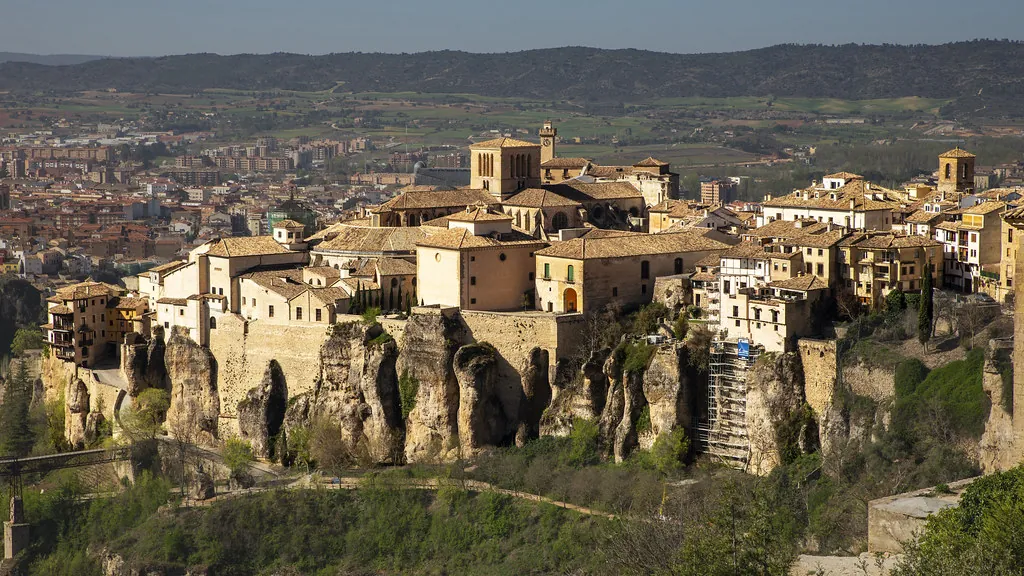
A village ringed by gorges and waterfalls (La Balsa); a landscape of water and rock.
Ocultar artículo Leer artículo completo
The church bell strikes noon, yet nobody appears. Not a single shop door opens, no lunch crowd hurries past. In Valdemoro Sierra, time is negotiable. At 1,100 metres on the southern lip of the Serranía de Cuenca, this scatter of stone houses operates on its own rhythm—one governed by pine shadows, snowfall forecasts and whoever happens to be behind the bar counter that day.
The Village That Isn’t on the Way to Anywhere
Road maps show the place as a minor detour off the CM-2106, itself a wriggle of tarmac linking barely-known hamlets. Most traffic whistles past the turning, bound for the better-publicised waterfalls of the Alto Tajo or the wine route around Requena. What misses the turn loses nothing in the way of facilities—Valdemoro Sierra has no cash machine, no petrol station, no supermarket—but it gains the sudden hush of high-country Castile.
Park on the ridge before dropping into the single-lane main street and the view explains the altitude: a rolling carpet of black pine crests and limestone bluffs that looks, from above, like the Yorkshire Dales minus the dry-stone walls. The air is already cooler than on the baking plateau around Cuenca city, 60 kilometres back. In July that difference is welcome; in January it can mean the difference between a scenic drive and a white-knuckle crawl on packed snow. Winter tyres are not show-offs’ accessories here; they are the reason you get home.
A Fifteen-Minute Walk That Could Take All Afternoon
From the tiny plaza, a paved lane slips between stone façades the colour of burnt cream and into an alley signed simply “La Balsa”. The path follows a brook that even locals struggle to name; within five minutes the houses thin out, replaced by allotments of onions and lettuce protected by waist-high walls. Within ten, the only neighbours are Iberian magpies arguing in the poplars.
Then the limestone gorge narrows, the temperature drops another degree, and a low roar announces the waterfall. La Balsa is no show-stopper: a 15-metre curtain of water seeping through moss into a turquoise bowl you could swim across in twenty strokes—though nobody does; the water temperature hovers around ten degrees even in August. What makes the spot special is how few pairs of feet reach it. On a weekday in May you are likely to share the pool with a single grey heron and, if you linger quietly, the splash of stag beetles landing on the surface film. Bring a picnic by all means, but bring a bin-bag too; there are no litter bins and the village wants to keep it that way.
Where to Eat When Nothing Is Open
Valdemoro Sierra supports two bars, though “support” is optimistic terminology. One shuts on Tuesdays, the other whenever the owner drives to Cuenca for supplies, and both observe the medieval-siesta truce of 3.30–5.30 p.m. The safest strategy is to treat food as a lottery with decent odds. Turn up around one o’clock, push the door of whichever façade still has cigarette smoke drifting out, and ask for “lo que haya” (whatever there is). The answer is usually migas: fried breadcrumbs laced with garlic, paprika and strips of bacon that taste like a Spanish answer to stuffing. A plate costs €6 and arrives with a glass of La Mancha tempranillo that costs another €1.50; card machines are considered urban nonsense, so carry cash.
If the bar is shuttered, drive ten minutes north to Cañada del Hoyo, where the reasonably named Bar Serrano keeps more conventional hours and serves cheese platters heavy enough to double as doorstops. Vegetarians should remember that “ensalada” may arrive topped with tuna; state “sin pescado” up front or surrender gracefully.
Forest Tracks and Phone-Signal Deserts
There are no way-marked trails, which thrills some and terrifies others. The village sits on the GR-66 long-distance footpath—an ambitious title for a route that here consists of two red-and-white stripes painted on the occasional pine. Southwards the path drops into the Huécar gorge and eventually reaches the Roman bridge of Priego; northwards it climbs to the 1,400-metre ridge of the Parameras de Molina, where griffon vultures cruise at eye level. Either makes a satisfying half-day if you download the track the night before; Google Maps is useless once the pine canopy closes.
Mobile reception dies within 200 metres of the last house. download offline maps, tell someone where you are going and, if you fancy the full ridge circuit, carry water—there are no fountains above the village and summer temperatures can still touch 30 °C despite the altitude. The reward is solitude rare even in rural Spain: an hour can pass without voices, engines or the metallic throb of a quad bike.
When the Village Comes Back from Holiday
August turns the social calendar upside down. Former residents return from Madrid and Valencia, the population quadruples overnight and the main street hosts an impromptu tapas crawl that would seem boisterous in Seville, let alone here. The fiestas honour the Assumption around the 15th: one evening a DJ rigs speakers to the church buttress, another night the village square becomes a bullring for young calves with padded horns—controversial, but still the heartbeat of local identity. Visitors are welcome, rooms are not. The single three-bedroom casa rural books six months ahead; if you miss it, the nearest beds are in Cañada del Hoyo or a string of rural cottages 25 kilometres away in the Alto Tajo. September returns everything to whisper-level.
Getting There and Away (Spoiler: You’re Driving)
Public transport ends at the provincial capital. From Madrid’s Barajas airport, take the A-3 to Tarancón, then the CM-2106 into the hills—2 h 15 min if you resist photo stops, longer if you don’t. Valencia is an alternative gateway, adding 30 minutes but sparing you Madrid’s ring-road lorries. Car-hire desks at both airports understand British licences; winter travellers should insist on a model with ABS, because the final 12 kilometres twist through cork-oak forest where ice lingers in the shade. Fill the tank before leaving the motorway; night-time petrol stations are thin on the ground and Spanish garages still occasionally observe the medieval custom of closing for lunch.
Should You Bother?
Valdemoro Sierra will never feature on a “Top Ten Instagram Spots” list; the waterfall is modest, the menu limited and the mobile signal absent. That, paradoxically, is the sales pitch. Come if you want to remember what quiet sounds like, if you measure a walk in black redstart sightings rather than Strava kilometres, and if you’re content to let the day’s plan be decided by whether the bar owner felt like cooking. Leave disappointed if you need craft-beer menus, boutique soaps or a souvenir fridge magnet. The village isn’t hiding from the modern world; it simply never saw the need to hurry and meet it.