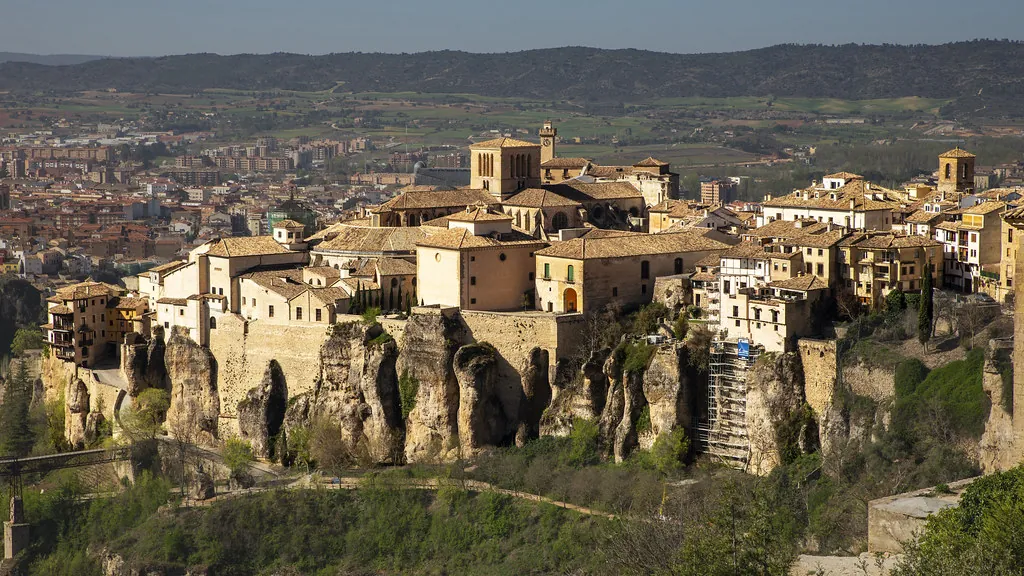
Vista aérea de Zarzuela
Instituto Geográfico Nacional · CC-BY 4.0 scne.es
Castilla-La Mancha · Land of Don Quixote

Zarzuela

At 1,020 metres above sea level, Zarzuela sits high enough that mobile phone signals waver between Spanish networks. The village's 154 residents do...

174 inhabitants · INE 2025
1050m Altitude

Why Visit

Mountain Church of the Assumption Hiking

Best Time to Visit

veranoabánades

Festival of the Virgen del Rosario (October) Junio y Octubre

Things to See & Do
in Zarzuela

Heritage

  • Church of the Assumption

Activities

  • Hiking
  • Mushroom foraging

Full Article
about Zarzuela

Mountain village near Villalba; surrounded by pines and oaks

Ocultar artículo Leer artículo completo

At 1,020 metres above sea level, Zarzuela sits high enough that mobile phone signals waver between Spanish networks. The village's 154 residents don't seem to mind. They've chosen altitude over connectivity, trading WhatsApp notifications for the wind's whisper through stone alleyways where their grandparents once walked.

This isn't one of those mountain villages that bursts with day-trippers on weekends. The road up from Cuenca winds through 90 kilometres of changing landscape—olive groves giving way to pine forests, the air thinning as the asphalt narrows. By the time you reach Zarzuela, the Sierra's continental climate has already made its presence felt. Summer mornings here start cool enough for a jumper, even when the plain below swelters at 35 degrees. Winter arrives early and stays late, sometimes isolating the village for days when snow blocks the CM-2105.

The altitude shapes everything. Spring arrives briefly, painting the surrounding slopes green for just a few weeks before the dry season takes hold. Autumn stretches longer, turning the landscape ochre and copper, while winter can transform the village into something resembling a Pyreneean outpost rather than Castilla-La Mancha. Local farmers time their activities accordingly—lambing happens in late winter when the worst weather has passed, mushroom foraging begins after September rains, and the traditional pig slaughter waits for January's frost.

Stone Against Sky

Zarzuela's architecture reflects its relationship with height and weather. The parish church squats low against prevailing winds, its simple stone construction typical of mountain villages that learned harsh lessons about winter storms. Houses cluster together for warmth, their thick masonry walls pierced by small windows that frame views across the Serranía Media. Arabic tiles, chosen for their ability to shed snow, crown weathered stone that has witnessed centuries of mountain life.

These buildings weren't designed for passing trade. You won't find gift shops or tapas bars here—Zarzuela has no commercial premises at all. The village functions much as it always has, centred around agriculture and livestock rather than tourism. This presents logistical challenges for visitors. Planning becomes essential: pack lunches, fill water bottles, check fuel gauges. The nearest restaurant sits fifteen kilometres away in the valley town of Beteta, where the Mesón de la Villa serves mountain cooking at prices that haven't caught up with Spain's coastal inflation—expect to pay €12-15 for a three-course menú del día.

Walking the Old Ways

The absence of signposted trails isn't an oversight but a reflection of how walking works here. Paths exist—they've connected Zarzuela to neighbouring villages for centuries—but they're working routes rather than leisure infrastructure. Shepherds still use them, their dogs barking warnings from distant slopes. The most accessible walk follows the track towards Talayuelas, eight kilometres through pine and juniper forest where griffon vultures ride thermals rising from the valleys below.

Early morning offers the best hiking conditions, before afternoon winds pick up. Even in July, temperatures rarely exceed 25 degrees at this elevation, though the sun burns fierce through thin air. Carry layers—the weather changes fast when clouds roll in from the Cuenca plateau. Winter walking demands proper equipment; snow can arrive unexpectedly, and the road down becomes treacherous without chains.

For gentler exploration, circumnavigate the village itself. A thirty-minute circuit reveals abandoned terraces where wheat once grew, stone walls now hosting wild thyme and lavender. The views stretch south across rolling sierra towards the Tagus valley, a patchwork of forest and pasture that looks unchanged since medieval times. Binoculars prove useful—golden eagles hunt these slopes, and with patience you might spot one diving on unsuspecting rabbits.

Night Sky Economics

Darkness brings another dimension. At this altitude, with no light pollution and minimal humidity, the Milky Way appears so bright it casts shadows. The village's position above the surrounding landscape creates natural viewpoints perfect for astronomy—bring a star chart and red torch. August's Perseid meteor shower transforms the sky into nature's fireworks display, though you'll need a jacket even at the height of summer.

Accommodation requires advance planning. Zarzuela itself offers no beds, but neighbouring villages provide rural houses at €60-80 nightly. Casa Rural el Cercado in Beteta converts a sixteenth-century manor into comfortable apartments, while smaller options scatter through the sierra. Book early for autumn weekends—Spanish city dwellers increasingly seek mountain escapes, though most stick to better-known destinations further north.

The Reality Check

This isolation cuts both ways. Medical emergencies mean a 45-minute drive to Cuenca's hospital. Mobile reception remains patchy—Vodafone works better than O2, but neither guarantees coverage inside stone houses. Winter visitors should carry snow shovels and emergency supplies; the Guardia Civil occasionally closes the access road entirely.

Yet these challenges preserve something increasingly rare: a mountain community that functions on its own terms. August's fiesta patronal draws returning emigrants rather than tour buses. The village fills with three generations of families who left for Madrid or Valencia but return annually for the procession and outdoor dance. Visitors welcome, but this remains firmly local territory—don't expect bilingual menus or souvenir stalls.

Zarzuela rewards those seeking mountain Spain without Alpine prices or crowds. It offers altitude-adjusted perspectives both literal and metaphorical, where days measure themselves against sunrise over pine-covered ridges and sunset bleeding across the central plateau. Just remember to fill your tank before the climb—the nearest petrol station lies 35 kilometres away, and walking that distance at a thousand metres elevation feels considerably further than the map suggests.

Key Facts

Region
Castilla-La Mancha
District
Serranía Media
INE Code
16280
Coast
No
Mountain
Yes
Season
veranoabánades

Livability & Services

Key data for living or remote work

2024
Connectivity5G available
HealthcareHospital 19 km away
EducationElementary school
Housing~5€/m² rent · Affordable
CoastBeach nearby
January Climate5.1°C avg
Sources: INE, CNMC, Ministry of Health, AEMET

Planning Your Visit?

Discover more villages in the Serranía Media.

View full region →

More villages in Serranía Media

Traveler Reviews