Full Article
about Campisábalos
Famous for Spain’s cleanest air; notable Romanesque heritage
Hide article Read full article
Campisábalos, en la paramera de Guadalajara
Campisábalos se asienta en la vertiente norte de la Sierra de Pela, por encima de los 1.300 metros, en el límite septentrional de la provincia de Guadalajara. Es aquí donde la llanura manchega se eleva y se abre hacia Soria, en una transición geográfica que marca el carácter del pueblo.
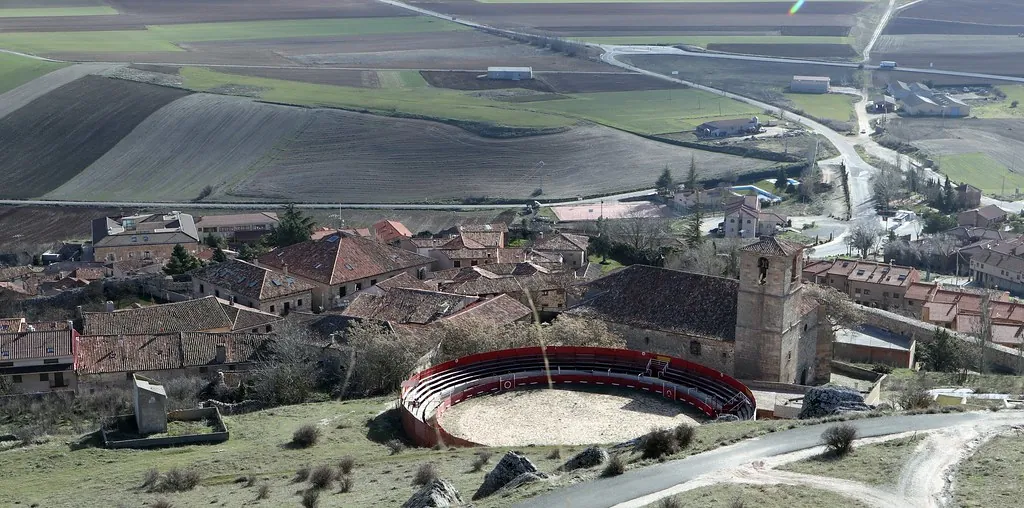
Su trazado es el de una aldea serrana: calles breves y casas de mampostería agrupadas, una disposición compacta que responde más a la necesidad de resguardo del viento que a un crecimiento planificado. La población, escasa, ha vivido tradicionalmente de la ganadería extensiva, un hecho aún legible en las piedras. Corrales adosados y cerramientos de lancho se mezclan con las viviendas, recordando que muchas de estas construcciones servían tanto para personas como para el ganado.
El clima explica el resto. Los inviernos son largos y fríos, con heladas persistentes y nevadas que pueden aislar el pueblo. Los veranos son cortos y las noches, incluso en agosto, suelen ser frescas. La arquitectura local, con sus muros gruesos, ventanas pequeñas y aleros pronunciados, está pensada para este régimen de temperaturas.
La iglesia de San Bartolomé y la arquitectura del páramo
La parroquia de San Bartolomé, del siglo XII, es el testimonio de que Campisábalos tuvo cierta relevancia en la red de caminos medievales que cruzaban la sierra. Se trata de una construcción románica rural, sobria y bien conservada para su tamaño.
Lo más notable es su galería porticada. Los arcos de medio punto se apoyan en columnas con capiteles tallados donde se distinguen motivos vegetales, animales y alguna escena figurada. La erosión ha suavizado algunos relieves, pero el trabajo se aprecia. El ábside semicircular y la espadaña completan una silueta que domina el caserío desde cualquier punto.
Alrededor de la iglesia se mantiene un conjunto homogéneo de arquitectura popular. Las casas, de mampostería irregular con sillares en las esquinas, tienen tejados a dos aguas y puertas con dintel o arco de medio punto. Algunas muestran reformas recientes; otras mantienen el aspecto original, a menudo con los corrales aún adosados. Un paseo por las pocas calles basta para ver cómo el material —la piedra— es el mismo para las casas, los muros y los cercados, creando una continuidad visual con la paramera.
El sabinar y los caminos ganaderos
El entorno inmediato del pueblo forma parte de uno de los sabinares albares más extensos de Guadalajara. La Juniperus thurifera es un árbol de crecimiento lento, adaptado a suelos pobres y a los inviernos rigurosos de la zona. Los ejemplares más viejos tienen portes retorcidos por el viento dominante.
No es un bosque cerrado, sino un mosaico de sabinas dispersas y pastos abiertos. La sensación es de amplitud. Es frecuente ver rapaces planeando sobre las lomas, y con algo de suerte, algún corzo al atardecer. Muchos de los senderos son en realidad vías pecuarias o caminos tradicionales de ganado, por lo que la señalización es escasa. Caminar por aquí implica seguir más la lógica del terreno que un itinerario marcado.
La altitud y la casi nula contaminación lumínica hacen que las noches despejadas sean excepcionalmente estrelladas. Un detalle que los vecinos mencionan a menudo. En invierno, sin embargo, el frío se hace presente poco después de la puesta de sol.
Cómo visitar Campisábalos
Campisábalos se recorre en poco más de media hora. No hay infraestructura turística propiamente dicha: ni oficina, ni museos, ni tiendas dedicadas. La visita consiste en ver la iglesia —cuyo acceso depende a veces de encontrar al vecano que tiene la llave—, pasear por el pueblo y salir al campo.
Dentro del término no hay bares ni restaurantes. Quienes pasan el día suelen llevar comida o desplazarse a alguna localidad cercana de la Sierra Norte.
Las fiestas patronales en honor a San Bartolomé se celebran a finales de agosto. Son sobre todo un encuentro para los vecinos que viven fuera durante el año. No están pensadas para foráneos.
El interés de Campisábalos no está en una lista de monumentos, sino en comprender la relación entre el pueblo y su territorio. La iglesia románica habla de su pasado medieval; el sabinar y las estructuras ganaderas, de su economía tradicional. Es un lugar definido por la altitud, el aislamiento y una adaptación práctica al medio. Para quien busca los destinos masificados, resultará escaso. Para quien quiera entender cómo se habita la paramera castellana, ofrece una lección clara y sin adornos.