Full Article
about Cincovillas
Municipality of Guadalajara
Ocultar artículo Leer artículo completo
The Village That Forgot to Grow
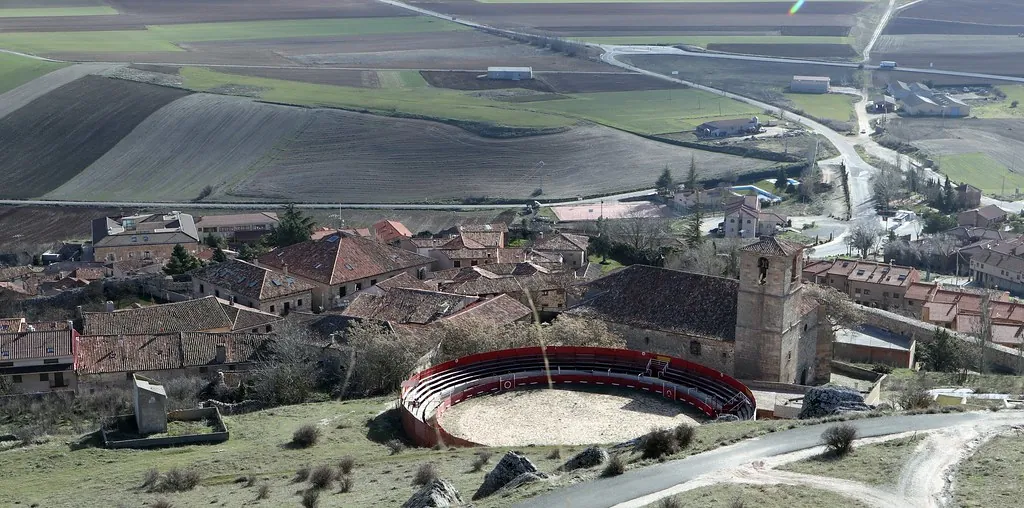
At 1,015 metres above sea level, Cincovillas sits high enough to make your ears pop on the drive up. Twenty-seven permanent residents call this place home – fewer people than you'd find in a London coffee queue at 8am. The village name translates roughly to "five hamlets," a reminder that this was once an administrative marriage of several tiny settlements sharing the harsh paramera landscape.
The approach road winds through cereal fields that stretch until they dissolve into heat haze. Stone houses huddle together as if seeking comfort from the wind that scours these heights year-round. It's the sort of place where mobile phone reception becomes theoretical rather than actual, and where the nearest shop sits twenty kilometres away in Tamajón.
This is Spain's interior stripped bare of tourism gloss. No souvenir stalls, no tapas bars with English menus, no boutique hotels occupying restored palaces. Just stone, sky, and the persistent whistle of wind across empty fields.
What Passes for Action Around Here
The village itself takes fifteen minutes to traverse at a leisurely pace. The parish church squats at the centre, built from the same grey stone as everything else, its bell tower more functional than decorative. Local families still use it for baptisms and funerals, though Sunday mass draws barely a handful of worshippers.
Walk beyond the church and you'll find eras – stone threshing circles where villagers once separated grain from chaff. Most lie abandoned now, their surfaces cracked and weed-filled, but they make decent vantage points for watching the light change across the surrounding plains. The agricultural calendar still dictates life's rhythm here: planting in autumn, harvest in summer, maintenance of ancient stone walls during the shoulder seasons.
Winter transforms everything. Temperatures regularly drop below freezing from November through March, and snow isn't uncommon at this altitude. The access road becomes treacherous after even light snowfall – locals keep chains in their boots and know which sections ice over first. Summer brings relief from cold but not from exposure; the sun burns fierce at this height, and shade remains precious commodity in streets barely two metres wide.
Walking Into Nothing (and Loving It)
The real draw lies beyond the village boundaries. A network of agricultural tracks spiderweb across the paramera, used more by tractors than hikers. These make for easy walking – the gradient remains gentle for kilometres in every direction, though the altitude means you'll feel breathless sooner than expected.
Head south towards the abandoned hamlet of El Botoso, three kilometres distant. The track passes through fields of wheat and barley that shift from emerald in spring to gold by July. Keep walking and you'll reach the edge of the Alto Tajo Natural Park, where limestone canyons cut deep into the landscape and Spanish juniper forests provide rare patches of green in this ochre world.
Birdwatchers should bring binoculars. Griffon vultures ride thermals above the plains, their wingspans casting shadows across the fields. Red kites hunt along field margins, while eagle owls emerge at dusk to hunt rabbits among the stone walls. Spring migration brings honey buzzards and black kites passing through in their thousands – stand on the village's western edge at dawn and you'll see them streaming past at eye level.
The Seasonal Resurrection
August transforms Cincovillas completely. The village's population swells to perhaps a hundred as former residents return for the fiesta patronal. Generations of families who left for Madrid, Barcelona or beyond come back to houses their grandparents built, reconnecting with neighbours they haven't seen since last summer.
The celebrations remain stubbornly local. No orchestrated folklore shows or craft fairs here. Instead, neighbours share paella cooked over wood fires in the street, children play football until midnight, and someone inevitably produces a guitar for traditional songs that predate Spotify by centuries. The church bell rings more in these three days than throughout the rest of the year combined.
Come September first, the exodus begins. Houses shutter once more, streets empty, and Cincovillas returns to its natural state of beautiful, wind-swept isolation.
Practicalities for the Curious
Reaching Cincovillas requires commitment – and a car. From Madrid, take the A-2 towards Guadalajara, then the CM-101 north towards Molina de Aragón. Turn off at Tamajón and follow the local road for another twenty kilometres of increasingly narrow tarmac. The journey takes two hours from the capital, longer if you stop to photograph the landscape (and you will).
Bring everything you'll need. The village has no shops, no bars, no petrol station. The last place to buy bread is Tamajón, so stock up before the final ascent. Water flows from village fountains but tastes heavily mineralised – consider bringing your own if you're fussy about these things.
Accommodation options remain limited. A handful of village houses rent rooms to visitors, booked through word-of-mouth or the occasional listing on Spanish rental sites. Expect basic facilities: stone walls that keep interiors cool in summer but frigid in winter, wood-burning stoves for heat, and bathrooms that were clearly afterthoughts in houses built centuries earlier.
The altitude affects more than just temperature. Sunscreen becomes essential even on overcast days, and dehydration hits faster than at sea level. Pack layers regardless of season – weather changes quickly at this height, and that gentle breeze can become a gale within minutes.
When to Cut Your Losses
Cincovillas isn't for everyone. If you need nightlife beyond star-gazing, restaurants beyond your own cooking, or activities beyond walking and watching, stay elsewhere. The village suits those comfortable with their own thoughts, happy to trade stimulation for space, willing to find fascination in stone walls and shifting light across empty fields.
Come for the silence that only exists at altitude, where the wind carries no traffic noise from distant roads. Stay for sunsets that paint the cereal fields copper and gold, watched from the village edge with nothing between you and the horizon but kilometres of open space. Leave understanding why twenty-seven people choose isolation over convenience, why they remain tied to land their families have worked for generations.
Just remember to fill up with petrol before you arrive. The nearest station sits forty kilometres away, and walking down for fuel would take considerably longer than the drive.