Full Article
about Condemios de Abajo
High-mountain village; black architecture and dense pine forest setting
Hide article Read full article
At nine in the morning, in the small atrium of the church of San Juan Bautista, someone stands on a ladder checking roof tiles. A sharp knock, a pause, then another. In Condemios de Abajo, the day begins like this: no traffic, no shop shutters lifting, just the sound of tools and the occasional bird crossing the open sky of the sierra. At this height, the air stays cool even in summer, and the silence feels almost tangible, as if it clings to the stone walls.
Condemios de Abajo lies in the Sierra Norte of Guadalajara and today has barely fifteen registered residents. For much of the year, only a handful of houses are open. In summer, relatives and former inhabitants return, gardens are tended again, and voices drift through the streets in the evening. The village holds that uneasy balance between continuity and abandonment seen across this part of the sierra.
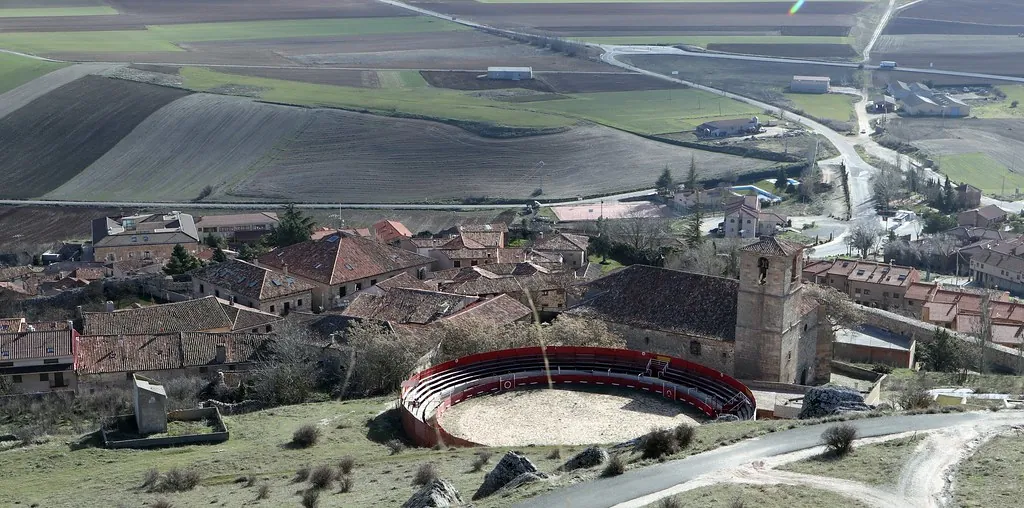
The houses follow a shared pattern: thick stone walls, sloping roofs, and small enclosed yards attached to the home. Some have been carefully restored, others remain shut, their wooden doors darkened by long winters. Walking slowly brings out small details: the hollow sound of footsteps on cobbles, the faint smell of old firewood, the wind slipping down from the nearby hills and finding its way into every corner.
A small village in the high sierra
The church occupies one of the most visible points in the village. It is simple, built of stone, with a bell gable standing out against the clear sky of the sierra. On certain days, it still gathers those who live here year-round and those who return from time to time. These are quiet meetings, closer to neighbours catching up than to large celebrations.
Beyond the cluster of houses stretches a stark, open landscape. The hills alternate between wild pine, patches of oak, and low scrub. In autumn, the ground is covered with damp leaves and the smell of the forest becomes stronger, especially after a night of rain. Small streams run down towards the Sorbe valley, carrying cold water for much of the year.
Walking the surrounding land
Tracks leave directly from the village, once used for livestock and to connect nearby settlements. Not all are signposted, but they can be followed with care. As you move away from the houses, the sound shifts. First voices fade, then the echo of footsteps, until only the wind through the trees remains.
This is still a place where signs of wildlife are easy to spot. Footprints in the mud, disturbed earth by the paths, sometimes a roe deer crossing quickly at dawn if there are few people around. It makes sense to walk without rushing and to keep a respectful distance. Human presence is still limited here, and it shows.
Anyone heading out on foot should carry water and something warm, even in milder months. The sierra changes quickly. A clear morning can turn windy within hours, particularly in more exposed areas.
Autumn, mushrooms and quiet paths
With the first autumn rains, mushroom enthusiasts begin to appear in the nearby hills. This is a common activity across this part of Guadalajara, although it is sensible to check local guidance before collecting anything and to follow any rules in place. Many prefer simply to walk through the damp forest, where fallen leaves leave a rich, earthy smell.
Winter brings a harsher side to the landscape. Snow is not unusual in some years, and the smaller roads can become difficult. If planning a visit at that time, it is wise to check the weather before heading up into the sierra and to avoid driving at night along these narrow roads.
When the village fills again
The moment when Condemios de Abajo feels most alive usually comes with the festivities dedicated to San Juan. During those days, people return to family homes, gates that stay closed for most of the year are opened, and the usual quiet gives way to long conversations, tables set out in the street, and children running between the houses.
It does not last long. Once those days pass, the village settles back into its usual rhythm: few lights at night, smoke rising from a chimney in winter, and paths that fall almost empty again.
Anyone who comes here will not find services or constant activity. What exists instead is something simpler: a very small village in a wide sierra, where it is still possible to walk for a long time without meeting anyone and to hear the sound of wind moving across the rooftops.