Full Article
about El Cardoso de la Sierra
High-mountain municipality in the Sierra de Ayllón; alpine landscapes and forests
Hide article Read full article
Early in the morning, before any cars pass through, El Cardoso de la Sierra is defined by sound. Water runs somewhere nearby. Wood creaks. A door opens, boots strike stone, and smoke rises from a chimney with the scent of damp holm oak. It is a place where daily life still makes small, tangible noises.
This village sits in the Sierra Norte of Guadalajara and today has fewer than fifty residents. That scale shapes everything. Streets are easy to walk without meeting anyone, and the pace is unhurried almost by default.
La luz sobre la pizarra
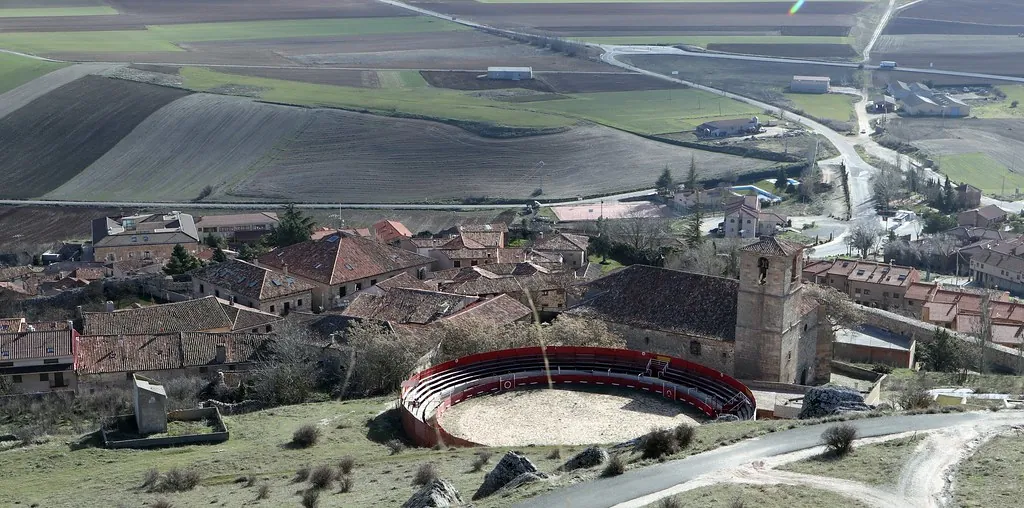
Many of the houses are built with dark slate, gathered along narrow streets where shade lingers for much of the winter day. After rain, the smell of wet earth drifts down from the hills and settles between the walls. The light, when it finally breaks through the cloud, turns the damp slate roofs a deep, metallic grey.
Beyond the last houses stand oaks, beech trees at higher elevations, and small meadows bound by low stone walls that have started to buckle and soften with moss.
Una carretera que se estrecha
Reaching El Cardoso de la Sierra from Guadalajara takes time. The 130-kilometre journey feels longer as the road pushes deeper into the mountains. The final stretches wind through forests and ravines, the tarmac narrowing until it’s just wide enough for one car in places. You pass hollow-sounding bridges over streams and hamlets of three or four houses. Distances here are measured in bends and gear changes, not kilometres. Arrive with a full tank and without a schedule.
El bosque cercano
Nature here is not a backdrop. El Cardoso forms part of the Parque Natural de la Sierra Norte. A short drive away lies the Hayedo de Tejera Negra, one of the southernmost beech forests in Europe. Access is sometimes regulated; they limit the number of cars, so it’s wise to check before you go.
Inside the forest, the trees rise tall and close together. Light filters through the canopy in broken pieces. In October, the ground is covered with a thick layer of copper-coloured leaves that silence your steps. On a still weekday, you might hear only the crack of a falling branch.
Closer to the village, footpaths follow the course of the river Berbellido, which runs discreetly through dense vegetation. In winter, sunlight barely reaches its banks.
Caminar sin prisa
The most direct way to understand this terrain is to walk it. Paths leave from the edge of the village, some heading into woodland, others climbing towards rocky outcrops where you can see the lines of successive mountain ridges.
This area is part of the route known as the “pueblos de arquitectura negra”. Most people connect the slate villages by car, but you can link some sections on foot if you don’t mind a full day of walking.
Winter changes everything. Snow can cover tracks and obscure waymarks. There are no alpine facilities; this is terrain for experienced walkers with proper equipment and an eye on a detailed forecast. The cold is damp and gets into your bones quickly.
Wildlife is more present than it first appears. You’re more likely to see tracks than animals: roe deer prints in mud, wild boar rooting at the edge of a pine grove. The best moments are dawn and dusk, when shadows are long and movement begins at the forest’s edge.
Come autumn, cars park haphazardly along forest tracks during mushroom season. In damp clearings under pines, people search for níscalos. If you join them, be certain of what you’re picking—local pharmacies often offer identification services during these months.
El ritmo de las fiestas
For much of the year, El Cardoso remains quiet. August changes that. People with roots here return, and the atmosphere shifts. The single bar spills its tables onto the square, conversations stretch into the warm night, and you hear laughter from open windows after midnight.
The patron saint celebrations happen then. They involve a mass, a procession, and large shared meals prepared by villagers. It’s not a spectacle for outsiders; it’s for those who come back.
At the start of February, for San Blas, a few families still bake ring-shaped roscas at home to be blessed. It’s a small event. Some years it feels like a genuine tradition; other years, with so few people in residence, it feels like going through motions.
Cuándo ir y qué esperar
The journey is part of the experience. Your mobile signal will drop in and out. The last place for groceries is in a larger village about twenty minutes back down the valley.
Each season delivers a different version. Winter is for silence, fog that sits until noon, and early nights by a fireplace if your accommodation has one. Spring brings rushing water in the streams and wildflowers on south-facing slopes. August is for social rhythm and warmer walks. Autumn draws you into the forest.
There is no single best moment to visit El Cardoso de la Sierra. There are only different states of light, different temperatures on your skin, and different sounds—or lack thereof—when you wake up in the morning